
Blade Application Guides / Application Guide / Energy storage manufacturing
Zinc-Air Battery Separator Paper Contour-Cutting Blades
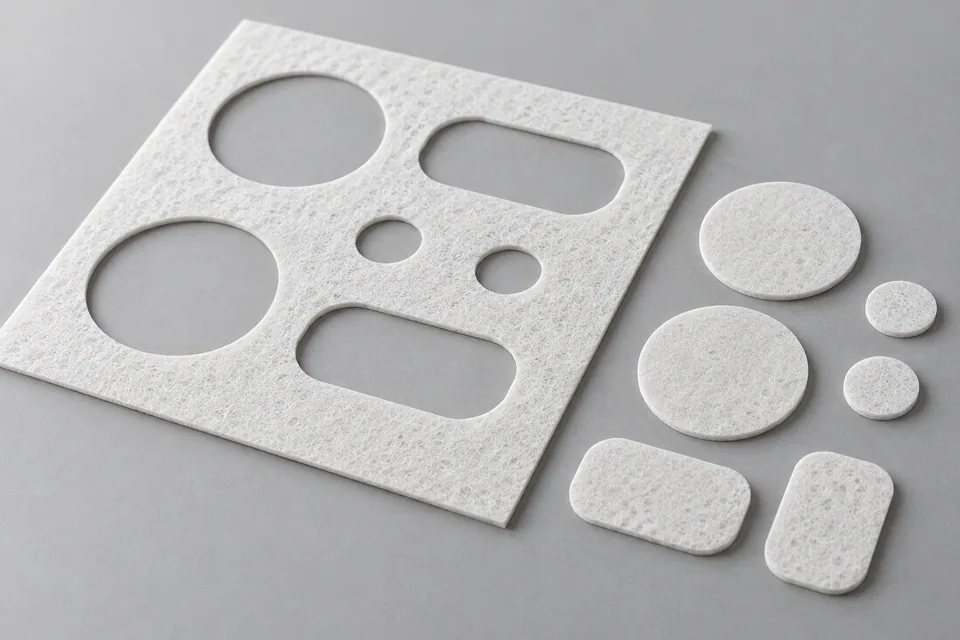
Contour cutting turns zinc-air separator sheet into individual profiles with corners, tabs or internal openings. The separator must continue to block migration of solid particles between electrodes, yet its fiber construction cannot be inferred from the word “paper”; metal-air materials include different nonwoven types. Begin with the finished-part drawing and the customer’s edge-particle and handling tests. Compare each released part with its surrounding matrix, especially at narrow bridges and inside corners. A profile die or programmable knife is a machine-specific option, not a claim that one tool fits every separator grade.
Updated
Where This Cutting Application Appears
Define the profile
Supply a dimensioned part drawing showing corners, radii, orientation and any registration datum. Specify how the finished part will be separated from the surrounding matrix and how small cutouts are removed.
Control hold-down and sequence
Review sheet support, hold-down and the order of cuts. The blade path or die closure can pull delicate stock at corners. A trial must check the first cut and the part after release.
Inspect critical features
Measure the profile in the buyer's stated measurement condition. Inspect inside corners and narrow bridges for tears or loose particles. Compare the contour against a reference part, not merely the tool outline. For a zinc-air separator profile, pay particular attention to small internal openings and narrow bridges because detached specks can remain inside a cutout even when the outside contour meets its drawing.
Release and collect the parts
Observe how parts and matrix are removed. Ejection marks, trapped fragments or manual picking can damage an otherwise acceptable cut. Include the release method in the tooling review.
Material-specific acceptance
Release contour-cut pieces from the surrounding matrix before judging them. Check internal windows, tabs and corners for loose particles or tears, then apply the buyer’s separator acceptance tests to the finished part. Do not assign a pore size or fiber chemistry from the zinc-air label.
Define the Required Cut Result
- Meet the drawing at corners, radii and registration datums.
- Limit loose fibers or particles at all exposed edges.
- Release parts cleanly without distortion or ejection marks.
- Keep cutouts and matrix fragments out of accepted parts.
- Preserve the buyer-approved separator handling and cleanliness condition.
Problems to Diagnose Before Changing the Knife
A corner tears or rounds beyond the drawing
- Inspect corner support and blade sharpness.
- Check the cut sequence and hold-down near the corner.
- Compare tool geometry with the actual part drawing.
Profiles shift while the sheet is cut
- Check registration and hold-down before first blade contact.
- Observe sheet stretch or movement during the stroke.
- Measure both the first and last parts in the trial sheet.
Loose particles collect in internal cutouts
- Inspect the blade path and cutout removal method.
- Check whether waste is trapped beneath or beside the part.
- Verify the cleaning and inspection method against the buyer criterion.
Parts are damaged during ejection
- Locate whether marks appear at cutting or release.
- Review ejector pressure and contact area.
- Trial a gentler part-and-matrix separation method.
Knife Forms That May Be Considered
| Possible knife form | When it may be considered | What must be confirmed |
|---|---|---|
| Profile die or shaped knife | For repeat enclosed profiles on a compatible press or die-cutting system. | Confirm profile drawing, die clearance, mounting and part-release method with samples. |
| Programmable contour blade | For a compatible controlled-path cutter or changing profiles. | Confirm path control, tip geometry, support and corner quality on the actual stock. |
Information to Send for Technical Review
You do not need to know the exact blade name. Send the available workpiece, machine, current-knife and cut-result information so the application can be reviewed against a drawing or sample.
- Supplied separator construction and grade
- Finished-part drawing with internal cutouts and datums
- Buyer-approved dimensions and measurement condition
- Particle, puncture and edge-contamination limits
- Support and hold-down method
- Die or programmable-cutter drawings
- Part-release and matrix-removal route
- Representative accepted and rejected parts
Questions About This Cutting Application
How does contour cutting differ from sheet slitting?
Contour cutting separates individual shapes with corners or curves; slitting makes straight continuous strips.
Can the nominal tool profile stand in for a part drawing?
No. The finished part may change during hold-down and release. Provide the accepted part drawing and measurement condition.
Why inspect the matrix?
Trapped cutouts or torn bridges can transfer particles to accepted parts or prevent clean release.
What matters at small corners?
Blade condition, support, cut sequence and the actual stock response must be checked on trial parts.
When should dimensions be measured?
Measure after the normal release and handling steps, using the buyer's specified condition.
Does zinc-air separator paper have a universal fiber specification?
No. The customer must identify the actual construction and approved porosity and particle tests; “paper” is not enough to choose an edge geometry.
Public references and scope
These public sources provide material, cutting-method or safety context for this guide. Supplier pages describe their own materials or equipment; they do not establish a MEIRENTE blade specification or performance claim. Confirm the actual grade, machine setup and required cut with a drawing or sample.
Related product and service information
- Cutting Expanded Metal Mesh - expanded metal mesh · cross-cutting and edge trimming
- AGM Battery Separator Mat Contour-Cutting Blades - AGM battery separator mat · contour cutting
- Vanadium Redox-Flow Membrane Contour-Cutting Blades - vanadium redox-flow membrane · contour cutting
Request a Custom Cutting-Knife Review
Send the workpiece details, machine or holder information, current knife photos or sample, required quantity and examples of the present cut problem. Final dimensions, material, edge geometry and tolerances are confirmed from the approved requirements.