
Blade Application Guides / Application Guide / Biopharmaceutical manufacturing
Single-Use Bioreactor Bag Film Roll Slitting Blades
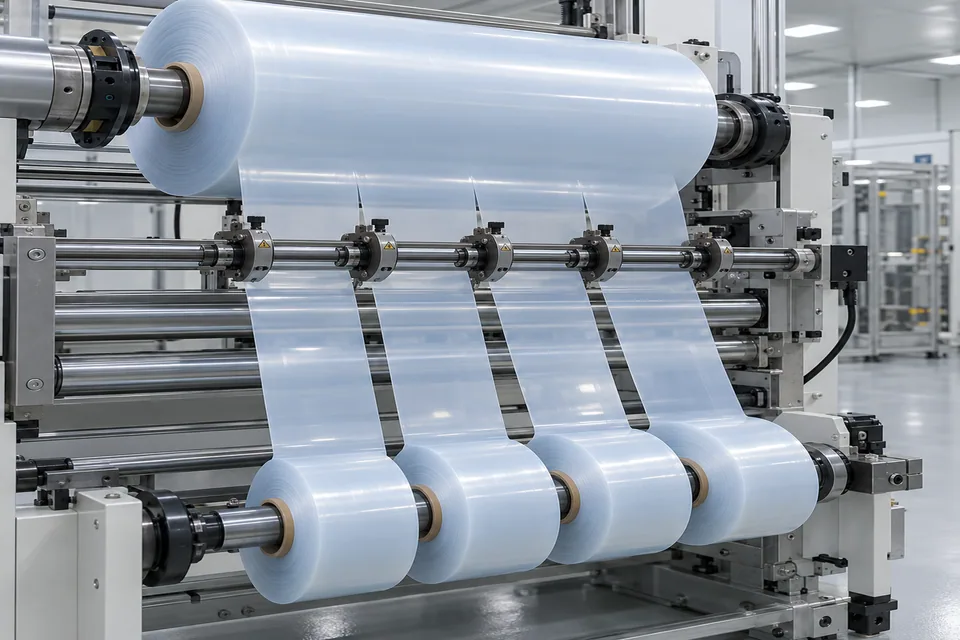
Single-use bioreactor bags are made from engineered multilayer films, not from generic packaging film. Thermo Fisher documents several film structures for bioprocess containers, and Sartorius identifies Flexsafe film in bioreactor bags. Roll slitting here converts a manufacturer-approved, unassembled parent film roll into narrower rolls for subsequent panel cutting and bag welding. The film may have a defined fluid-contact face, barrier layer and handling history. A longitudinal slit must preserve the widths needed for weld and port layouts and avoid exposing the functional web to debris or face reversal. This page does not imply any particular MEIRENTE blade is qualified for sterile bag manufacture. The bag maker must validate weld integrity, extractables, sterility and fitness of the completed assembly.
Updated
Where This Cutting Application Appears
Schedule widths from bag panels
Translate the buyer’s panel, weld allowance and nesting drawing into finished roll widths and outside trim. Identify the product-contact face and material lot before mounting. Do not assume that a roll for a 2-D bag has the same margin plan as one for a 3-D vessel liner.
Control unwind and knife contact
Document roll orientation, tension, guide surfaces, knife positions and whether the film is cut by one or several stations. Trial the actual multilayer grade. Look for wrinkles or excessive contact pressure that could stress a barrier layer before any cutting occurs.
Inspect both longitudinal edges
Measure each roll and check for nicked inner layer, whitening, stretched lip, trapped particles and delamination at the cut face. Retain samples from both sides of each slit; a clean surface view may hide a disturbed layer at the laminate cross-section.
Rewind for later clean conversion
Check roll-edge flatness, telescoping and contact-side protection after winding. Supply traceable samples to the bag assembler for panel cutting and weld trials. Keep final bag leak and biological compatibility testing separate from this material conversion check.
Define the Required Cut Result
- Meet panel widths while retaining defined weld margins.
- Protect the fluid-contact and barrier faces during slitting.
- Avoid edge nicks, particles and layer peel.
- Keep film orientation and lot traceability into bag fabrication.
Problems to Diagnose Before Changing the Knife
A slit edge turns white or curls
- Inspect knife edge and backing contact.
- Review web tension and roll winding.
- Compare the same location before conversion.
Layers separate near the edge
- Check actual laminate stack and knife engagement.
- Inspect guide or separator friction.
- Compare immediately after cutting and after rewinding.
A finished roll is too narrow for the weld
- Reconcile slit map with panel and seal drawing.
- Check web guide drift.
- Measure all lanes under the buyer condition.
Knife Forms That May Be Considered
| Possible knife form | When it may be considered | What must be confirmed |
|---|---|---|
| Longitudinal rotary slitter arrangement | When the manufacturer has approved a continuous-web method for its film grade. | Confirm machine dimensions, layer edge and cleanliness on supplied film. |
| Supported straight edge-trim station | When a sacrificial outside margin is removed from the parent roll. | Confirm waste routing and adequate remaining panel/weld width. |
Information to Send for Technical Review
You do not need to know the exact blade name. Send the available workpiece, machine, current-knife and cut-result information so the application can be reviewed against a drawing or sample.
- Film manufacturer, grade and full layer/face designation
- Parent roll width, diameter and lot history
- Panel nesting and weld allowance drawing
- Cleanroom and particle-control requirements from bag maker
- Unwind, knives, guides and rewinder drawings
- Accepted edge, delamination and curl samples
- Roll packaging and product-contact face protection
- Buyer weld, bag integrity and biological qualification plan
Questions About This Cutting Application
Is the web already a sterile bioreactor bag?
No. This guide covers unassembled film stock before panel welding and final bag release.
Why identify the product-contact face?
Face reversal may affect later weld and bag qualification even if the slit looks sound.
Does slitting demonstrate leak integrity?
No. Only the assembled bag and its validated tests establish that.
Can any polyethylene film be substituted?
No. Use the bag maker’s approved film grade and conversion procedure.
What is the first RFQ document?
Provide the film specification together with panel and weld drawings.
Public references and scope
These public sources provide material, cutting-method or safety context for this guide. Supplier pages describe their own materials or equipment; they do not establish a MEIRENTE blade specification or performance claim. Confirm the actual grade, machine setup and required cut with a drawing or sample.
Related product and service information
- Single-Use Bioreactor Bag Film Rotary Die-Cutting Blades - single-use bioreactor bag film · rotary die cutting
- Virus-Filtration Membrane Roll Slitting Blades - virus-filtration membrane · roll slitting
- Chromatography Membrane-Adsorber Media Roll Slitting Blades - chromatography membrane-adsorber media · roll slitting
Request a Custom Cutting-Knife Review
Send the workpiece details, machine or holder information, current knife photos or sample, required quantity and examples of the present cut problem. Final dimensions, material, edge geometry and tolerances are confirmed from the approved requirements.