
Blade Application Guides / Application Guide / Printing and labels
Shrink Sleeve Label Web Cross-Cutting Blades
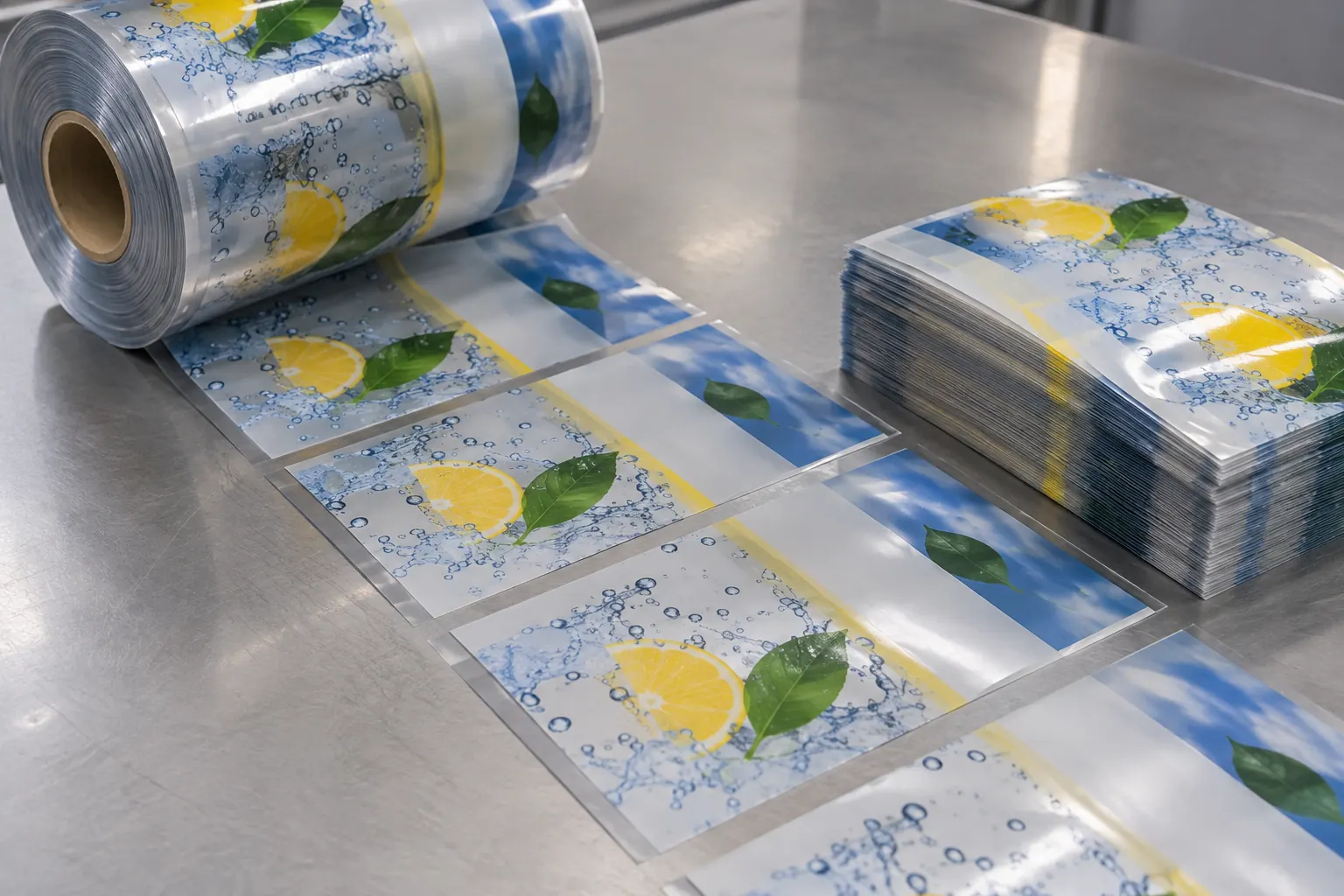
Transverse cross cutting separates shrink sleeve film into sheets, samples or individual sleeve lengths. Thin oriented material can move with static, airflow and tension release, so print-to-cut registration and post-cut handling are as important as the visible edge.
Updated
Where This Cutting Application Appears
Printed sleeve length separation
Cuts repeated graphics into declared lengths for downstream forming or inspection.
Shrink-film sample sheets
Prepares controlled pieces for ink, seam and shrink-response testing.
Preformed sleeve cutoff
Separates compatible flattened sleeve material into individual units before application.
Transverse Cross Cutting process boundary
Transverse cross cutting separates material across the web into sheets or repeated lengths; it is distinct from longitudinal roll slitting.
Transverse Cross Cutting setup checkpoint
Confirm repeat length, registration reference, web speed, cut timing, support across the width and sheet transfer immediately after separation.
Transverse Cross Cutting acceptance checkpoint
Measure repeat length and squareness, then inspect leading and trailing edges, registration error, sheet curl and stacking consistency.
Define the Required Cut Result
- Cut position registered to the printed repeat
- Straight transverse edge without nicks or long tails
- Film remains open, flat and manageable after separation
- Limited static attraction and no ink transfer
Problems to Diagnose Before Changing the Knife
Cut position drifts through the roll
- Check print-repeat variation and mark detection
- Measure web stretch and slip
- Compare registration at different speeds and roll diameters
Film tail remains at one edge
- Inspect support and transverse alignment
- Compare thickness and edge curl
- Map incomplete separation by web side
Cut pieces cling together
- Measure or observe static conditions
- Review surface coatings and humidity
- Inspect stacking and separation path
Ink flakes at the cutoff
- Identify ink and cure condition
- Compare print coverage at the cut
- Review film support and conditioning
Knife Forms That May Be Considered
| Possible knife form | When it may be considered | What must be confirmed |
|---|---|---|
| straight cross-cut arrangement | May suit indexed sleeve webs or flattened tubes where transverse support and registration are controlled. | Confirm width, motion, holder, support, clearance and web presentation from equipment data. |
| rotary cross-cut arrangement | May suit continuous printed film where cutoff timing tracks web speed and print marks. | Confirm cylinder interface, rotation, repeat range, timing and mating surface before defining geometry. |
Information to Send for Technical Review
You do not need to know the exact blade name. Send the available workpiece, machine, current-knife and cut-result information so the application can be reviewed against a drawing or sample.
- Film polymer, thickness and orientation
- Flat web or seamed sleeve presentation
- Print, ink, varnish and cure details
- Repeat length, cut datum and tolerance
- Speed, tension, registration and static control
- Current cutoff motion, support and mounting
- Stacking, transfer and downstream application method
- Samples showing tails, drift, cling or ink flake
Questions About This Cutting Application
Why can printed repeat vary within a roll?
Printing, web tension, temperature and oriented-film stretch can change the measured repeat.
Can static cause an apparent cutting problem?
Yes. Correctly separated pieces may cling, shift or fail to transfer because of electrostatic attraction.
Why does one side retain a film tail?
Web curl, support, alignment or unequal completion across the width can leave one edge connected.
Should cross-cut pieces undergo a shrink test?
Yes when edge nicks or dimensional behavior could affect final sleeve appearance.
Can cutoff form be chosen from film thickness?
No. Web presentation, motion, speed, registration and equipment interface must be confirmed.
Related product and service information
- Clay-Coated Label Paper Cross Cutting: Clean Printed Sheets - clay-coated label paper · transverse cross cutting
- Self-Adhesive Labelstock Cross-Cutting Blades - self-adhesive labelstock · transverse cross cutting
- Security Paper Label Stock Cross-Cutting Blades - security paper label stock · transverse cross cutting
Request a Custom Cutting-Knife Review
Send the workpiece details, machine or holder information, current knife photos or sample, required quantity and examples of the present cut problem. Final dimensions, material, edge geometry and tolerances are confirmed from the approved requirements.