
Blade Application Guides / Application Guide / Printing and labels
Self-Adhesive Labelstock Cross-Cutting Blades
Cross cutting self-adhesive labelstock converts a continuous laminate into sheets or discrete lengths. The transverse cut must sever facestock, adhesive and liner at a registered position while avoiding adhesive strings, liner fracture and sheet curl that can disrupt stacking or printing.
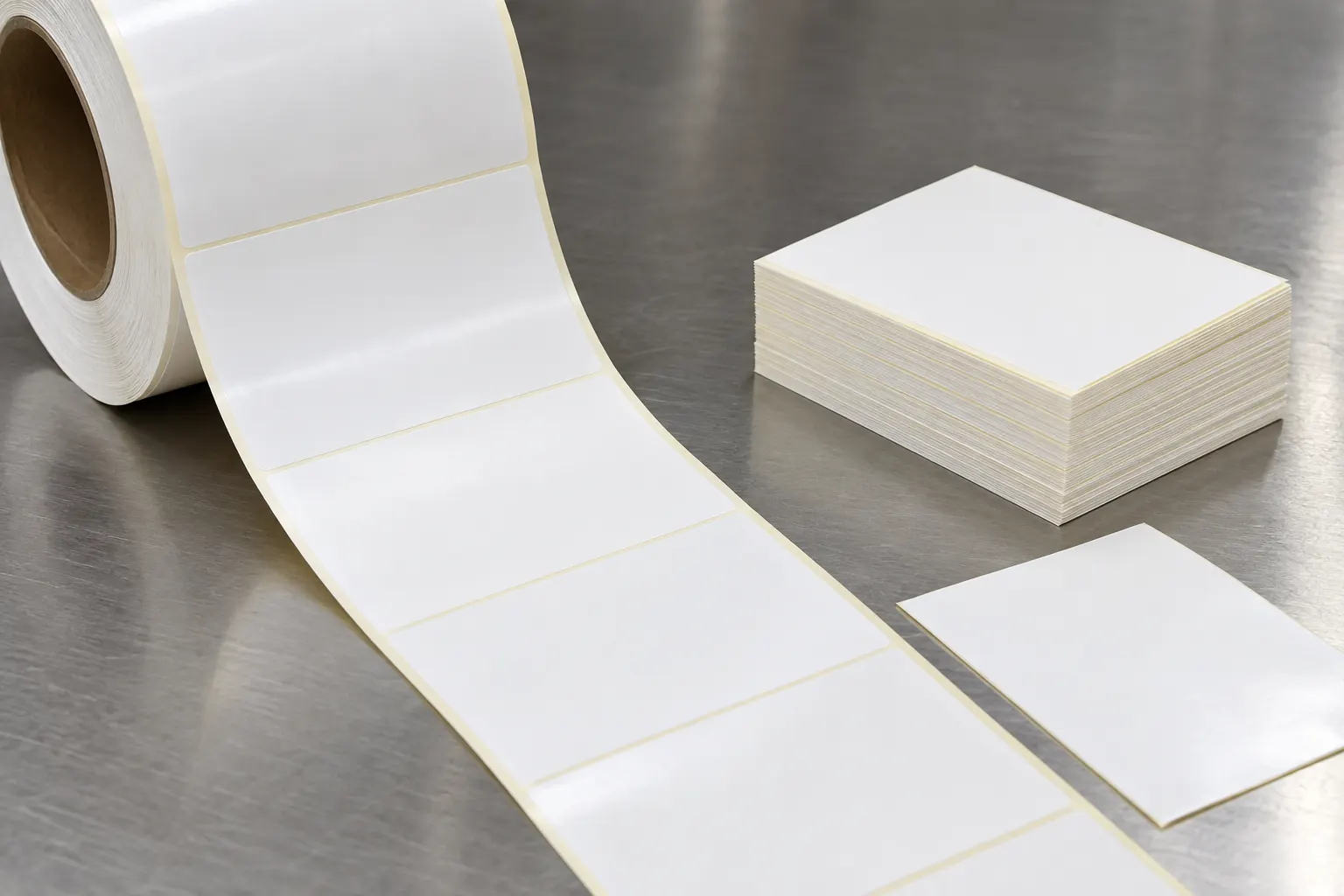
Where This Cutting Application Appears
Sheeted labelstock production
Converts blank or printed web into stackable sheets for later printing or die-cutting.
Registered printed-label cutoff
Separates repeated printed sections at a defined mark or artwork datum.
Adhesive laminate sample lengths
Prepares controlled specimens for converting, release and application testing.
Common Ways to Describe This Cutting Problem
- self-adhesive labelstock cross-cutting blades
- pressure sensitive label sheet cutoff knife
- adhesive label web transverse cutter
- release liner cross cut edge quality
- labelstock sheet length cutting
- sticky laminate cutoff buildup
- printed label web register cross cutting
- custom labelstock sheeter blade
Define the Required Cut Result
- Accurate repeat length and square transverse edge
- Complete separation through facestock, adhesive and liner
- No adhesive strings or transferred residue
- Flat sheets that stack and feed without blocking
Problems to Diagnose Before Changing the Knife
Adhesive strings bridge the cutoff
- Identify adhesive type and temperature
- Review separation speed and support
- Record residue growth over running length
Liner splits beyond the cut line
- Inspect liner brittleness and grain
- Compare support and cutting completion
- Review web tension at cutoff
Cut position drifts from print registration
- Check mark detection and feed synchronization
- Measure web stretch and slip
- Compare drift at different speeds
Finished sheets curl or block
- Review facestock-liner balance
- Record adhesive exposure at edges
- Compare stacking pressure and conditioning
Knife Forms That May Be Considered
| Possible knife form | When it may be considered | What must be confirmed |
|---|---|---|
| straight cutoff arrangement | May suit indexed labelstock webs where a supported transverse action and registration control are provided. | Confirm cutting width, motion, holder, support, clearance and laminate build from actual line data. |
| rotary cross-cut arrangement | May suit continuous labelstock sheeting where cutoff timing follows web speed or print marks. | Confirm cylinder interface, rotation, timing, web path, mating surface and repeat range before defining geometry. |
Information to Send for Technical Review
You do not need to know the exact blade name. Send the available workpiece, machine, current-knife and cut-result information so the application can be reviewed against a drawing or sample.
- Facestock, adhesive and liner construction
- Material widths, calipers and roll dimensions
- Required sheet length, squareness and tolerance
- Printed or unprinted web and registration datum
- Speed, tension, acceleration and stacking method
- Current cutoff motion, support and mounting
- Operating temperature and cleaning interval
- Samples showing strings, liner cracks, curl or blocking
Questions About This Cutting Application
Why are adhesive strings worse after longer runs?
Transferred adhesive can accumulate and alter separation unless temperature, contact and cleaning are controlled.
Can registration drift come from the cutter alone?
No. Mark sensing, web stretch, roll slip and feed synchronization should be measured together.
Why do sheet edges block in a stack?
Exposed or displaced adhesive can contact adjacent sheets under pressure and temperature.
Should liner grain direction be recorded?
It can be useful for paper liners because transverse fracture and curl may depend on orientation.
What dimensions are required for replacement review?
Use the equipment interface, existing approved component or drawing; never derive dimensions from labelstock width alone.
Request a Custom Cutting-Knife Review
Send the workpiece details, machine or holder information, current knife photos or sample, required quantity and examples of the present cut problem. Final dimensions, material, edge geometry and tolerances are confirmed from the approved requirements.