
Blade Application Guides / Application Guide / Printing and labels
Security Paper Label Stock Cross-Cutting Blades
Security label paper requires controlled conversion because its value may depend on feature placement, serialization and accountable waste. A replacement review must use authorized drawings and actual equipment records while avoiding unsupported claims about confidential constructions or knife dimensions.
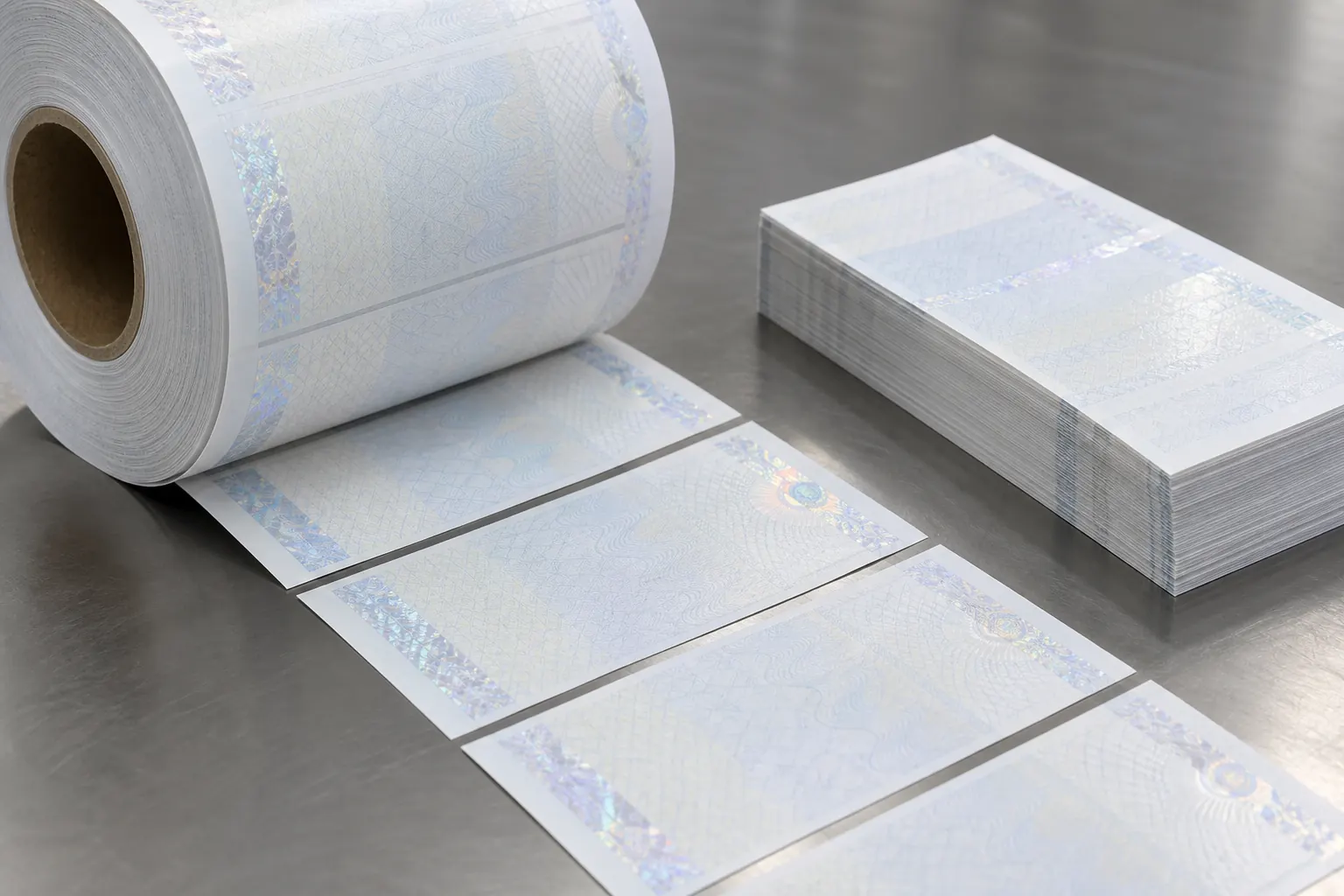
Where This Cutting Application Appears
Serialized label sheet separation
Cuts printed repeats into controlled sheets while preserving sequence and cut-to-print position.
Protected-media sample preparation
Produces authorized test pieces for print, inspection and downstream converting qualification.
Accountable security-stock conversion
Sizes controlled paper media under defined reconciliation and scrap-handling procedures.
Common Ways to Describe This Cutting Problem
- security label paper stock cross cutting knife
- serialized security label web cutoff
- anti-counterfeit paper label sheeting
- security thread label stock cutter
- registered protected media cross cut
- traceable security paper sheet cutting
- confidential label stock cutoff tooling
- bespoke security media sheeter blade
Define the Required Cut Result
- Repeat length traceable to the authorized production datum
- Embedded and printed security zones remain functional
- Square, clean edges suitable for inspection
- Scrap and rejected pieces remain identifiable and controlled
Problems to Diagnose Before Changing the Knife
Cut-to-print error changes after a splice
- Identify splice position and repeat restart
- Check sensor response and feed acceleration
- Compare web tension before and after the splice
Embedded thread pulls from the cut edge
- Confirm authorized thread location and orientation
- Inspect support and separation sequence
- Compare accepted feature termination samples
Rejected sheets cannot be reconciled
- Review counting and batch identification
- Define cutoff and inspection handoff
- Confirm secure waste segregation without exposing sensitive data
Edge quality varies near coated zones
- Map permitted coating transitions
- Compare moisture and layer stiffness
- Inspect both cut faces under the agreed method
Knife Forms That May Be Considered
| Possible knife form | When it may be considered | What must be confirmed |
|---|---|---|
| straight registered sheeter arrangement | May suit controlled batch sheeting where the web is indexed to an authorized datum. | Confirm holder, cutting width, stroke, support, registration and approved dimensions from restricted equipment documentation. |
| rotary registered cutoff arrangement | May suit continuous protected-media lines with synchronized repeat control. | Confirm cylinder interface, timing, repeat, mating surface and access-controlled drawings before manufacture. |
Information to Send for Technical Review
You do not need to know the exact blade name. Send the available workpiece, machine, current-knife and cut-result information so the application can be reviewed against a drawing or sample.
- Authorized substrate and layer summary
- Permitted embedded-feature orientation and cut zones
- Web width, caliper, roll and splice details
- Serialized or printed repeat and tolerance
- Registration sensor, speed and tension data
- Current cutting motion, interface and support
- Approved edge and feature-termination samples
- Inspection, reconciliation, secure packing and scrap requirements
Questions About This Cutting Application
Why is this entry separate from ordinary paper sheeting?
Feature registration, controlled documentation and accountable scrap can be as important as the physical cut.
Can confidential construction details be omitted?
Share only what is authorized, but enough technical information must remain to assess material behavior and the equipment interface safely.
What happens when a cut crosses a security thread?
Termination quality and feature function must follow the approved design and acceptance sample; no generic assumption is reliable.
How should splices be evaluated?
Record repeat recovery, tension, sensor response and the disposition of sheets around each splice.
Can final knife geometry be stated in an application article?
No. It must be confirmed from controlled equipment data, an approved component or drawing and representative trials.
Request a Custom Cutting-Knife Review
Send the workpiece details, machine or holder information, current knife photos or sample, required quantity and examples of the present cut problem. Final dimensions, material, edge geometry and tolerances are confirmed from the approved requirements.