
Blade Application Guides / Application Guide / Printing and labels
Self-Adhesive Labelstock Rotary Die-Cutting Blades
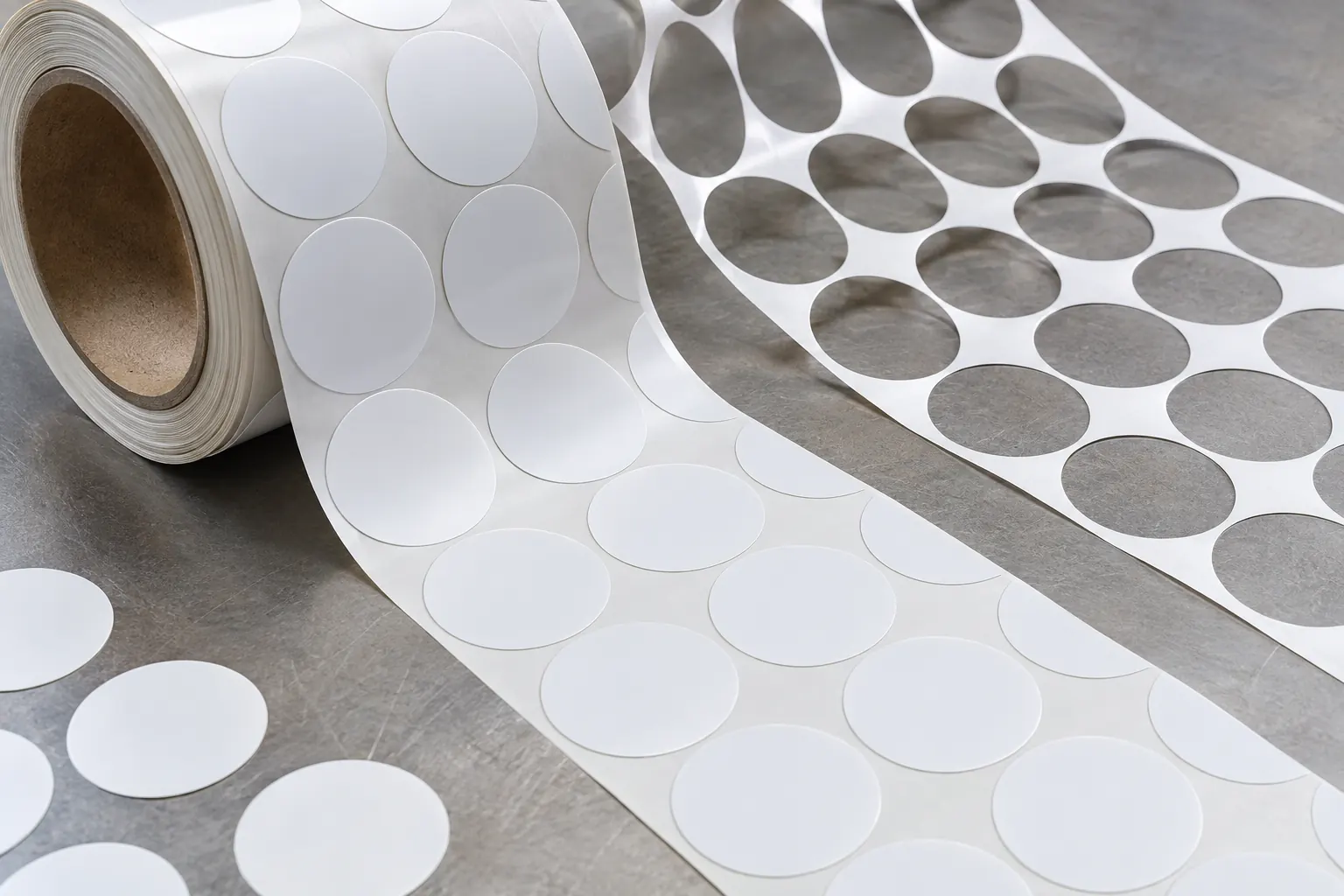
Rotary die cutting self-adhesive labelstock normally separates the facestock and adhesive to a controlled depth while preserving the release liner. Material construction, liner variation, web tension and print registration all influence whether labels weed cleanly and dispense reliably.
Updated
Where This Cutting Application Appears
Pressure-sensitive label profiles
Creates repeated label shapes while retaining the release liner for rewinding and dispensing.
Printed label registration
Aligns the cut contour with graphics, varnish and functional zones.
Matrix stripping preparation
Separates waste around labels so the matrix can be removed without lifting finished pieces.
Rotary Die Cutting process boundary
Rotary die cutting repeats registered profiles with a rotating tool across a moving web; it differs from straight slitting, cross cutting and simple edge trimming.
Rotary Die Cutting setup checkpoint
Confirm repeat pitch, registration marks, anvil condition, web tension, cutting depth and the waste path for every profile and internal feature.
Rotary Die Cutting acceptance checkpoint
Inspect registration, profile dimensions, corner quality, complete separation or controlled depth, liner condition and continuous waste removal.
Define the Required Cut Result
- Facestock and adhesive fully separated along the profile
- Release liner remains functionally intact
- Cut registered to printed graphics
- Matrix strips continuously without label lift or adhesive stringing
Problems to Diagnose Before Changing the Knife
Cut marks or fractures penetrate the liner
- Measure liner caliper and variation
- Review support, pressure and runout
- Map strike-through across and around the cylinder repeat
Labels lift with the matrix
- Inspect corners, bridges and adhesive release
- Review matrix angle, tension and speed
- Compare shape orientation and facestock stiffness
Profile shifts from artwork
- Check sensor and print repeat
- Measure web stretch and lateral register
- Compare drift by speed and roll diameter
Adhesive strings between label and matrix
- Identify adhesive chemistry and temperature
- Inspect profile completion
- Record stripping speed and residue buildup
Knife Forms That May Be Considered
| Possible knife form | When it may be considered | What must be confirmed |
|---|---|---|
| solid rotary die arrangement | May suit repeated high-volume label profiles where the press and anvil system match the required repeat. | Confirm cylinder interface, repeat, bearer and anvil relationship, web build and approved drawing before manufacture. |
| flexible rotary die arrangement | May suit compatible magnetic-cylinder systems and label constructions with controlled support. | Confirm cylinder specification, plate dimensions, profile, liner, magnetic mounting and operating conditions from the actual press. |
Information to Send for Technical Review
You do not need to know the exact blade name. Send the available workpiece, machine, current-knife and cut-result information so the application can be reviewed against a drawing or sample.
- Facestock type, caliper and stiffness
- Adhesive chemistry and coat weight
- Liner material, caliper, release level and variation
- Finished label drawing and corner radii
- Print repeat, registration tolerance and web direction
- Press, cylinder, anvil and mounting information
- Matrix path, speed, tension and rewind configuration
- Strike-through, label-lift and stringing samples
Questions About This Cutting Application
What is the difference between full cut and kiss cut?
A kiss cut separates the intended upper laminate while retaining a functional liner; acceptance must be defined by performance, not appearance alone.
Why does liner damage vary across the web?
Liner caliper, support, pressure distribution, runout and contamination can vary by position.
Why do small labels lift during matrix stripping?
Low bending stiffness, tight corners, adhesive behavior and stripping geometry can overcome label-to-liner retention.
Can a label drawing define the rotary tooling completely?
No. Press interface, repeat, anvil system, web direction and full laminate construction are also required.
How should strike-through be tested?
Combine visual or measurable liner inspection with rewinding, dispensing and end-use release tests.
Related product and service information
- Shrink Sleeve Label Web Rotary Die-Cutting Blades - shrink sleeve label web · rotary die cutting
- Security Paper Label Stock Rotary Die Cutting Blades: Feature and Liner Protection - security paper label stock · rotary die cutting
- RFID Paper Label Inlay Rotary Die Cutting Blades: Circuit and Register Control - RFID paper label inlay · rotary die cutting
Request a Custom Cutting-Knife Review
Send the workpiece details, machine or holder information, current knife photos or sample, required quantity and examples of the present cut problem. Final dimensions, material, edge geometry and tolerances are confirmed from the approved requirements.