
Blade Application Guides / Application Guide / fruit processing
Processed Fruit Slicing and Dicing
Fruit resists cutting through a combination of skin, soft flesh, fibers, seeds and juice-filled cells. The relevant knife and support depend on whether the line handles firm fresh fruit, softened cooked pieces or slippery peeled product, and on how much juice loss and deformation the specification permits.
Updated
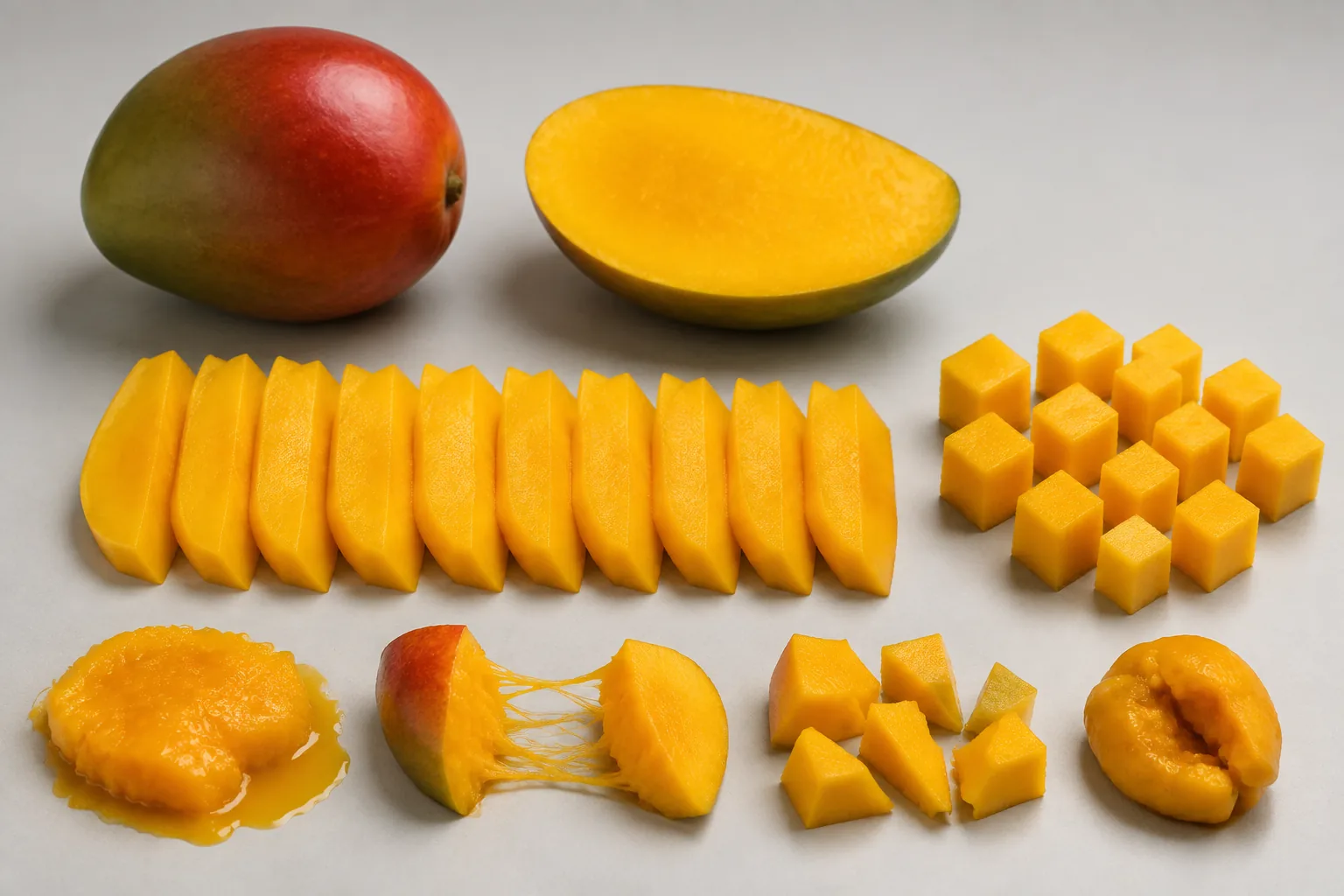
Where This Cutting Application Appears
Slicing peeled fruit for packing
Produce visible slices from supported fruit while preserving shape and limiting bruised or wet edges.
Dicing firm fruit pieces
Cut strips through a grid or staged cutting arrangement to create cubes for filling, freezing or mixing.
Trimming fibrous or skin-on fruit
Separate peel, cores or fibrous ends where local resistance differs from the surrounding flesh.
Slicing And Dicing process boundary
slicing and dicing for processed fruit pieces is a linked sequence: the output condition and datum from each operation become the controlled input for the next. It should not be evaluated as one generic cut or accepted only by the final dimension.
Slicing And Dicing setup checkpoint
For processed fruit pieces, define the operation order, intermediate dimensions, registration transfer, material support, web or part handling and waste route for every stage of slicing and dicing.
Slicing And Dicing acceptance checkpoint
Verify both intermediate and final results from slicing and dicing, including dimensions, registration, edge or feature quality, material damage, waste separation and stable transfer between stages.
Define the Required Cut Result
- Smooth faces with limited cell crushing and juice release
- Complete separation of skin and fibrous strands
- Consistent slice or dice geometry despite size variation
- Low product lodging between grid or parallel knife elements
Problems to Diagnose Before Changing the Knife
Fruit crushes before the edge enters
Review ripeness, temperature, edge thickness, product restraint and the unsupported distance around the cut.
Skin or fibers remain connected
Check edge continuity, cutting depth, orientation, backing condition and whether tough features align with the knife path.
Pieces lodge in a dicing grid
Inspect grid clearance, product size, taper, discharge path, sticky juice and deformation during the preceding cut.
Cut faces become excessively wet
Compare sharpness, cell compression, feed speed and product condition; measure juice loss using the customer's agreed method.
Knife Forms That May Be Considered
| Possible knife form | When it may be considered | What must be confirmed |
|---|---|---|
| straight slicing knife | A fine straight edge may suit supported slices or staged dicing where a slicing component limits crushing. | Confirm bevel, edge angle, knife spacing, holder and food-cleaning conditions with representative fruit states. |
| grid dicing knife | A matched grid can produce multiple cuts at once when piece size, clearance and discharge are controlled. | Confirm grid opening, strip thickness entering the grid, support, ejector or discharge arrangement and accepted cube samples. |
| circular slicing knife | A rotating edge may suit continuously presented fruit on equipment designed to control product location. | Confirm diameter, bore, rotation, guide geometry, cut spacing and the permitted range of fruit size and firmness. |
Information to Send for Technical Review
You do not need to know the exact blade name. Send the available workpiece, machine, current-knife and cut-result information so the application can be reviewed against a drawing or sample.
- Fruit species, variety and fresh, cooked, frozen or thawed state
- Ripeness or firmness range at cutting
- Skin-on, peeled, cored, seeded or fibrous construction
- Incoming dimensions and orientation method
- Target slice, strip or dice geometry and tolerance
- Machine motion, product restraint and discharge path
- Cleaning chemistry and current knife or grid details
- Samples showing crushing, connected fibers, lodging or excess juice
Questions About This Cutting Application
Why does ripe fruit need different cutting conditions?
Ripening reduces structural firmness and often increases juice release. Define the acceptable ripeness range instead of specifying only fruit size.
Can one grid dice several fruit sizes?
Only within the machine's loading and discharge limits. Oversized or tapered pieces may deform or lodge before reaching the grid.
What causes peel to remain attached?
The edge may not reach the backing surface, or tough peel can deflect away. Show peel orientation and the point of incomplete separation.
Is a thinner edge always better for soft fruit?
A thinner edge can reduce wedging but may not suit impact, support or sanitation needs. Balance geometry with the actual machine and product.
How should juice loss be documented?
Use a consistent observation or weighing method agreed by the processor, and record fruit temperature, ripeness and time after cutting.
Related product and service information
- French Fry Potato Strip-Cutting Knives for Uniform Size - Peeled whole potatoes for french fry production · High-capacity strip cutting and cross-cutting
- Frozen Meat Block Portioning - frozen meat blocks · block portioning
- Cheese Block and Log Slicing - cheese blocks and logs · slicing and portioning
Request a Custom Cutting-Knife Review
Send the workpiece details, machine or holder information, current knife photos or sample, required quantity and examples of the present cut problem. Final dimensions, material, edge geometry and tolerances are confirmed from the approved requirements.