
Blade Application Guides / Application Guide / plastics recycling
Cutting Post-Consumer Plastic Film for Recycling
Post-consumer film is not one uniform feed: loose sheet, compacted bales, labels, dirt, moisture and rigid-plastic carryover can change how it bridges, wraps and exits each reduction stage. Define whether the current machine is opening film or making screened granulate, then evaluate the knife against that stage rather than using “film recycling” as a single specification.
Updated
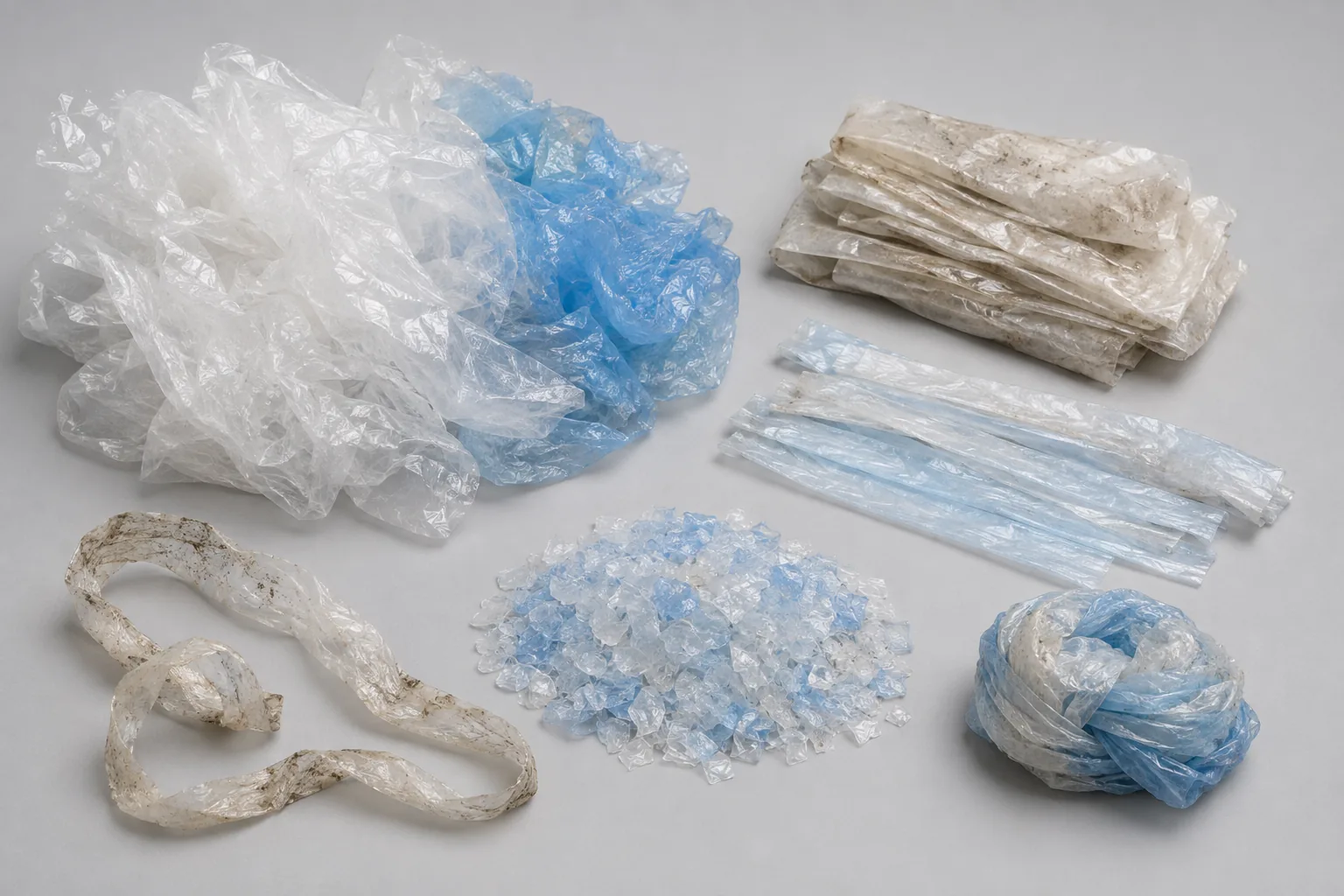
Where This Cutting Application Appears
Pre-cutting baled packaging film
Open and reduce loose bags or wraps before washing, sorting or controlled feeding.
Granulating washed film flake or strips
Reduce cleaned flexible feed into a size suitable for the customer's downstream drying or reprocessing.
Processing mixed flexible packaging
Cut declared multilayer films and labels while accounting for incompatible or abrasive contaminants.
Film Shredding And Granulation process boundary
film shredding and granulation for post-consumer plastic film is a linked sequence: the output condition and datum from each operation become the controlled input for the next. It should not be evaluated as one generic cut or accepted only by the final dimension.
Film Shredding And Granulation setup checkpoint
For post-consumer plastic film, define the operation order, intermediate dimensions, registration transfer, material support, web or part handling and waste route for every stage of film shredding and granulation.
Film Shredding And Granulation acceptance checkpoint
Verify both intermediate and final results from film shredding and granulation, including dimensions, registration, edge or feature quality, material damage, waste separation and stable transfer between stages.
Define the Required Cut Result
- Reliable draw-in without persistent shaft wrapping
- Controlled piece size for washing or reprocessing
- Stable cutting load through variable film bulk density
- Wear behavior appropriate to declared dirt and contaminants
Problems to Diagnose Before Changing the Knife
Film wraps around the rotor
Check rotor speed, hook or edge engagement, stator clearance, screen condition and how loose film enters the chamber.
Material passes through as long ribbons
Review edge overlap, knife sharpness, feed density, screen opening and whether folds shield layers from cutting.
Knife wear accelerates after dirty batches
Identify sand, glass, metal and mineral residue; map wear or chips to contamination events.
Wet film compacts instead of cutting
Inspect moisture, drainage, feed rate, chamber buildup and whether the rotor can open folded material.
Post-consumer film: diagnose bridging, wrapping and screened output separately
Confirm the feed condition and process stage before assigning a defect to the cutting edge.
Baled or folded film bridges before consistent cutter engagement
Record bale opening, sheet length, moisture, dirt and feed-metering behavior. Compare loose and compacted feed without increasing speed to force an unstable condition.
Long strips wind around shafts or rotor ends
Identify the wrapping film type and location, then inspect hook or rotor engagement, counterknife condition, anti-wrap clearance and discharge backup.
Granulated film shows heat, fused pieces or excessive fines
Separate the granulation stage from upstream opening. Check rotor-to-bed-knife clearance, screen, recirculation, feed density and temperature trend.
Acceptance Criteria for a Controlled Trial
Agree how the trial will be judged before changing the knife or machine setting.
- Define the trial feed by film type, loose or baled condition, moisture and visible contamination.
- Count bridging, reversal and wrapping events over a fixed feed mass or operating interval.
- Measure long strips, target fraction and fines using the agreed downstream sampling method.
- Record temperature, fused pieces, discharge stability and labeled knife-edge observations.
Knife Forms That May Be Considered
| Possible knife form | When it may be considered | What must be confirmed |
|---|---|---|
| rotor knife | A rotating knife can grab and shear flexible feed when rotor geometry and containment prevent wrapping. Use hooked shredder cutters for a compatible opening stage or a rotor/bed-knife pair for a compatible granulator; confirm which machine and stage the RFQ actually covers. | Confirm rotor drawing, knife seat, rotation, fasteners, cutting circle and feed composition from equipment data. |
| stator knife | A fixed counter-edge provides the mating shear and strongly affects ribboning and load. | Confirm datum, length, section, clearance setting, adjustment method and matched rotor relationship. |
| pelletizer knife | This format is relevant only if the stated duty is downstream melt-strand or die-face pellet cutting, not primary dirty-film shredding. | Confirm the exact pelletizing equipment and polymer condition before using pelletizer terminology or geometry. |
Information to Send for Technical Review
You do not need to know the exact blade name. Send the available workpiece, machine, current-knife and cut-result information so the application can be reviewed against a drawing or sample.
- Film stream description, known resin families, multilayer or metallized content and lot variation
- Loose, folded, rolled or baled presentation with maximum sheet, bundle and bale dimensions
- Moisture, soil, label, rigid-plastic, metal and other contamination condition
- Required output for washing, densifying, agglomeration, extrusion or another named next step
- Machine sequence showing opener, shredder, granulator, screens and recirculation path
- Knife, counterknife, spacer, holder, screen and anti-wrap component drawings or used samples
- Feed rate, rotor speed, reversals, temperature and present wrap locations
- Accepted and rejected samples with limits for long strips, fines and fused pieces
Related Recycling Knife and Service Pages
Questions About This Cutting Application
Why does flexible film wrap instead of cut?
Low stiffness lets it follow rotating parts when engagement and counter-edge shear are insufficient. Review the whole chamber, not only sharpness.
Can a smaller screen guarantee smaller film pieces?
No. It may increase recirculation and heat while long ribbons still pass or wrap. Evaluate knife interaction and feed state.
How does sand affect recycling knives?
Abrasive dirt can round edges and wear clearances rapidly. State washing and contamination levels during the review.
Are pelletizer knives suitable for the first shredding stage?
Usually these are different duties. Identify whether material is loose film, washed flake or molten polymer at the cutting point.
What should a film-recycling RFQ contain?
Provide feed photos and composition, contamination, moisture, target output, rotor/stator drawings, screen and worn-tool evidence.
Public references and scope
These public sources provide material, cutting-method or safety context for this guide. Supplier pages describe their own materials or equipment; they do not establish a MEIRENTE blade specification or performance claim. Confirm the actual grade, machine setup and required cut with a drawing or sample.
Related product and service information
- Scrap Copper Cable Chopping - scrap copper cable · cable chopping
- Granulating Plastic Scrap and Regrind - plastic scrap and regrind feed · granulation and size reduction
- Washed PET Bottle Flake Cutting - washed PET bottle flakes · flake size reduction
Request a Custom Cutting-Knife Review
Send the workpiece details, machine or holder information, current knife photos or sample, required quantity and examples of the present cut problem. Final dimensions, material, edge geometry and tolerances are confirmed from the approved requirements.