
Blade Application Guides / Application Guide / foam converting
Slitting Cross-Linked PE Foam Sheets
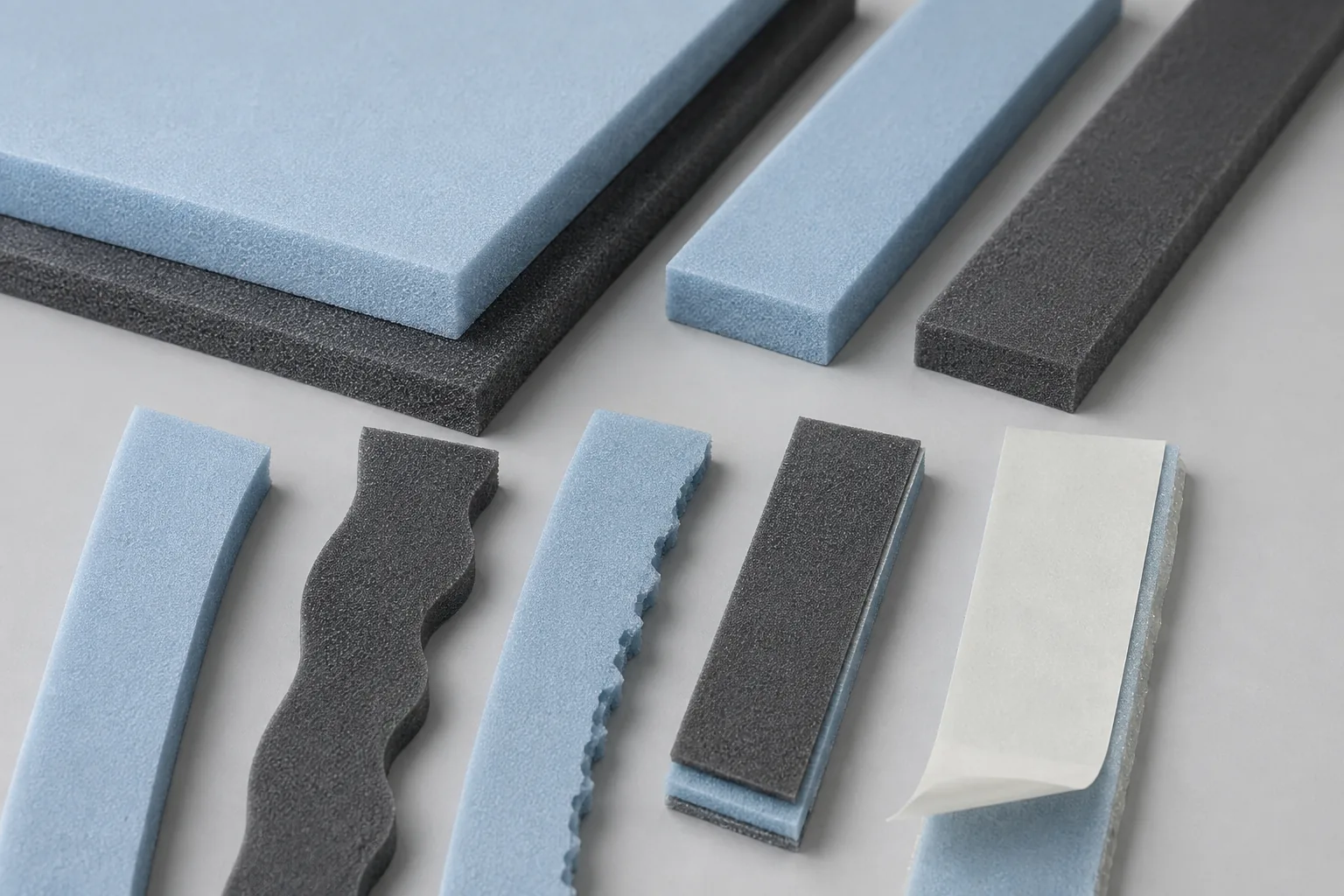
Cross-linked PE foam is resilient, low-friction and often laminated with adhesive or skin film. Its apparent width changes under nip pressure, so strip tolerances must be tied to recovery while the cut remains supported.
Updated
Where This Cutting Application Appears
Foam tape conversion
Slits adhesive-backed foam into narrow rolls before die cutting or assembly.
Sealing-strip production
Cuts plain sheet into resilient strips with controlled recovered width.
Laminated foam changeover
Rechecks layer tracking when liner, skin or adhesive changes.
Slitting And Strip Cutting process boundary
slitting and strip cutting for cross-linked PE foam sheets is a linked sequence: the output condition and datum from each operation become the controlled input for the next. It should not be evaluated as one generic cut or accepted only by the final dimension.
Slitting And Strip Cutting setup checkpoint
For cross-linked PE foam sheets, define the operation order, intermediate dimensions, registration transfer, material support, web or part handling and waste route for every stage of slitting and strip cutting.
Slitting And Strip Cutting acceptance checkpoint
Verify both intermediate and final results from slitting and strip cutting, including dimensions, registration, edge or feature quality, material damage, waste separation and stable transfer between stages.
Define the Required Cut Result
- Straight recovered strip width
- Low cell tear and edge compression
- Aligned liner and foam layers
- Controlled adhesive deposits
Problems to Diagnose Before Changing the Knife
Compressed edge
- Measure recovery time
- Check nip pressure
- Inspect edge angle
Wavy strip
- Verify web guiding
- Reduce unsupported span
- Check holder runout
Cell tearing
- Identify density and cell structure
- Inspect sharpness
- Compare speed with rebound
Adhesive buildup
- Identify adhesive
- Record temperature
- Set cleaning interval
Knife Forms That May Be Considered
| Possible knife form | When it may be considered | What must be confirmed |
|---|---|---|
| circular slitter | May suit supported roll conversion with controlled penetration and runout. | Confirm the final geometry and mounting from the PE foam slitter equipment, an unworn sample or an approved drawing before manufacture. |
| serrated straight knife | May reduce force through thick sheet if tooth marks are acceptable. | Confirm the final geometry and mounting from the foam sheet cutter equipment, an unworn sample or an approved drawing before manufacture. |
| oscillating knife | May suit programmed shapes on a supported table. | Confirm the final geometry and mounting from the foam cutting table equipment, an unworn sample or an approved drawing before manufacture. |
Information to Send for Technical Review
You do not need to know the exact blade name. Send the available workpiece, machine, current-knife and cut-result information so the application can be reviewed against a drawing or sample.
- Slitter model
- PE foam density and cross-link type
- Thickness and skin layers
- Adhesive and liner
- Roll and strip widths
- Tension, nip and speed
- Recovered-width method
- Knife quantity and destination
Questions About This Cutting Application
Why does foam width increase after cutting?
Compression is released; define measurement after a fixed recovery period.
Does adhesive require a coated knife?
Not automatically; first review adhesive chemistry, deposits and cleaning.
What causes a wavy strip?
Soft unsupported foam, web drift or blade runout can steer the cut.
Can thin and thick foam share a setting?
Penetration and support may need adjustment.
What trial sample helps?
Keep accepted and rejected strips marked with liner side and recovery time.
Related product and service information
- Trimming PET Sheet Edges - PET sheet and thin gauge strip · edge trimming
- Cutting Extruded Plastic Pipe to Length - rigid plastic pipe · in-line cut-to-length
- Trimming Composite Honeycomb Panels - sandwich composite honeycomb panels · panel edge trimming
Request a Custom Cutting-Knife Review
Send the workpiece details, machine or holder information, current knife photos or sample, required quantity and examples of the present cut problem. Final dimensions, material, edge geometry and tolerances are confirmed from the approved requirements.