
Blade Application Guides / Application Guide / Paper tube manufacturing
Paper Tube Length Cutting With Clean Square Ends
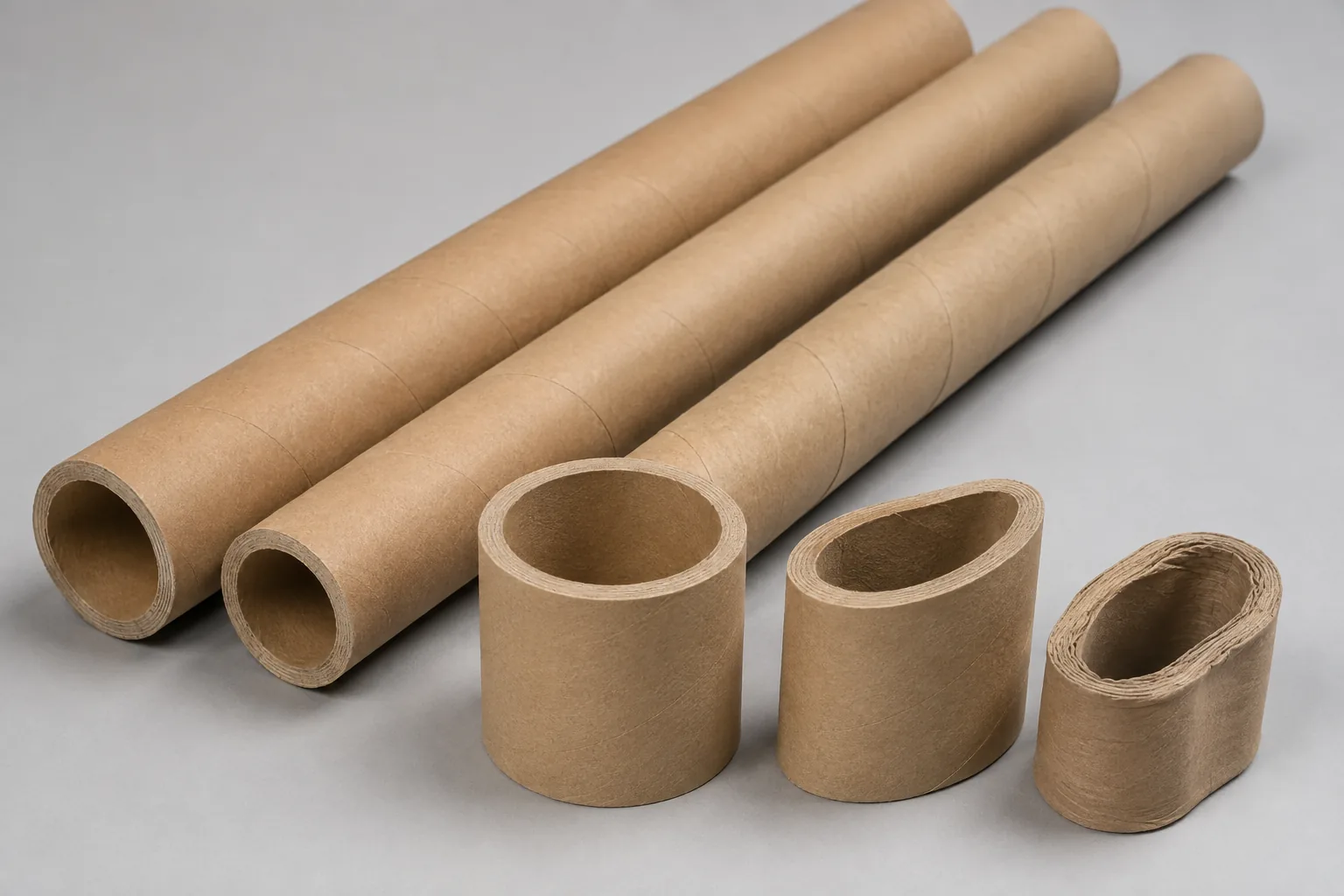
Spiral-wound tubes are cut while paper plies and adhesive are still acting as a bonded structure. Tube wall build, seam angle, cure state and internal support determine whether the end stays round and square.
Updated
Where This Cutting Application Appears
In-line cutoff after spiral winding
A continuous tube is indexed and cut into handling lengths while adhesive cure and tube speed may still vary.
Mailing and packaging tube finishing
Finished tubes are cut to shipment length with clean visible ends and reliable cap fit.
Small-diameter paper straw tube sizing
Thin multi-ply tubes are portioned at high cycle rates while limiting delamination, ovality and internal fiber tags.
Length Cutting process boundary
Length cutting repeatedly separates continuous, bundled or elongated stock to a specified linear dimension; it differs from end cleanup, outline profiling and cuts that form notches or other local features.
Length Cutting setup checkpoint
Confirm the finished length, indexing or feed reference, stock straightness, support on both sides of separation and compensation for material recovery after release.
Length Cutting acceptance checkpoint
Check length distribution, end-face angle, deformation, incomplete separation and repeatability from the first piece through a representative production interval.
Define the Required Cut Result
- Control crushed or oval tube ends
- Maintain the required geometry for in-line cutoff after spiral winding
- Protect material integrity during length cutting
- Deliver a cut condition accepted by the next production step
Problems to Diagnose Before Changing the Knife
Crushed or oval tube ends
Check wall thickness, tube diameter, internal mandrel or support, clamp pressure and whether deformation recovers after release.
Ply delamination at the spiral seam
Review paper grades, adhesive type, seam angle, cure time, moisture and the cut direction relative to the lap.
Angled or wandering cut faces
Measure tube straightness, feed indexing, rotation, support alignment and squareness at several points around the end.
Fiber tags inside the bore
Inspect inner-liner direction, bore support, exit-side breakout, adhesive buildup and whether tags interfere with caps or downstream loading.
Knife Forms That May Be Considered
| Possible knife form | When it may be considered | What must be confirmed |
|---|---|---|
| Rotary tube-cutoff form | Consider for continuous spiral-winding lines with synchronized tube rotation or indexing. | Confirm this form only from the spiral-wound paper tubes sample, equipment interface, operating motion and approved drawing. |
| Straight or profiled cutoff form | Consider where the tube is stationary and fully supported during each cut. | Confirm this form only from the spiral-wound paper tubes sample, equipment interface, operating motion and approved drawing. |
Information to Send for Technical Review
You do not need to know the exact blade name. Send the available workpiece, machine, current-knife and cut-result information so the application can be reviewed against a drawing or sample.
- Tube outside and inside diameter ranges
- Wall thickness, number of plies and paper grades
- Spiral angle, seam construction and inner-liner orientation
- Adhesive type and cure time at the cutting station
- Tube speed, rotation, indexing and cutoff cycle rate
- Internal and external support near the cut
- Finished length, squareness, ovality and cap-fit requirements
- Existing cutoff sample or drawing, mounting details and defect photos
Questions About This Cutting Application
Why does the spiral seam open at only one point on the tube end?
The cut crosses the lap at a changing angle, and local adhesive cure or ply support may differ there. Mark the seam position on rejected ends and compare cure time and cut direction.
How should squareness be checked on a paper tube?
Measure length around multiple clock positions and inspect the end against the agreed datum. A single centerline measurement will not show an angled face.
When is internal bore support important?
Support becomes especially relevant for thin walls, small diameters or high clamp pressure. Its size and clearance must match the actual tube range without marking the inner liner.
Can one cutoff arrangement cover mailing tubes and paper straws?
It should not be assumed. Diameter, wall build, adhesive, speed and acceptable end condition differ substantially, so each range requires sample and interface review.
What should be sent when no controlled tube-cutoff drawing exists?
Provide a used cutting part, dimensioned photos, holder and motion details, tube samples and accepted end criteria. A controlled drawing must be agreed before production.
Related product and service information
- Honeycomb Paper Panel Edge-Trimming Blades - honeycomb paper panel · edge trimming
- Paper Core End Trimming for Accurate Finished Length - paper cores · end trimming
- Honeycomb Paper Core Slicing Without Cell Collapse - honeycomb paper cores · slicing
Request a Custom Cutting-Knife Review
Send the workpiece details, machine or holder information, current knife photos or sample, required quantity and examples of the present cut problem. Final dimensions, material, edge geometry and tolerances are confirmed from the approved requirements.