
Blade Application Guides / Application Guide / Paperboard converting
Honeycomb Paper Panel Edge-Trimming Blades
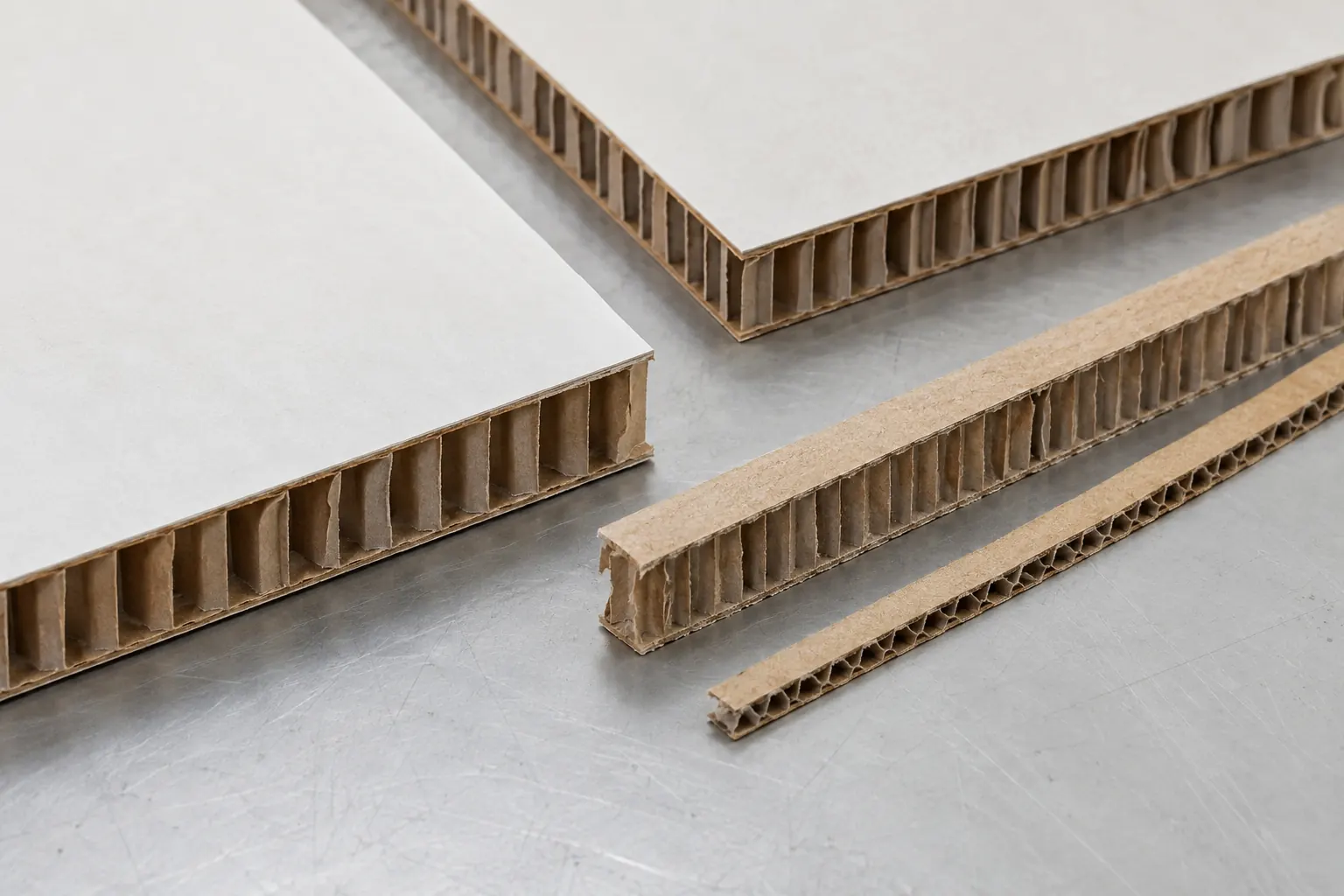
Edge trimming removes uneven expanded-core and facing margins from honeycomb paper panels. The operation must finish two thin skins and a hollow core at one datum while preventing narrow cellular waste from snagging, fragmenting or pulling facing paper from the usable panel.
Updated
Where This Cutting Application Appears
Expanded-panel margin finishing
Removes uneven core and facing edges after panel bonding and curing.
Lamination-width preparation
Creates straight panel datums before decorative skins or edge rails are applied.
Packaging-panel final trimming
Brings protective panels to finished width while controlling loose cellular debris.
Edge Trimming process boundary
Edge trimming removes a narrow irregular, damaged or excess margin to finish an existing edge; it does not divide the full workpiece into several production widths.
Edge Trimming setup checkpoint
Define the trim allowance, reference edge, support close to the cut and a waste path that prevents the narrow offcut from re-entering the product.
Edge Trimming acceptance checkpoint
Inspect the finished edge for straightness, local tearing or crushing, surface scuffing and continuity from the start to the end of the trim.
Define the Required Cut Result
- Straight finished edge through both facings and core
- Facings flush without peelback
- Limited cell-wall crushing and loose fragments
- Stable removal of narrow cellular waste
Problems to Diagnose Before Changing the Knife
Facing overhang remains after core separation
- Identify facing strength and adhesive line
- Inspect full-depth engagement
- Compare support at top and bottom faces
Trim waste catches and tears the finished panel
- Review strip width and collection route
- Inspect attached cell bridges
- Record panel speed and waste orientation
Edge cells are pushed inward
- Compare cell orientation and density
- Review lateral restraint
- Determine whether damage occurs during cutting or waste handling
Finished width follows panel bow
- Measure incoming straightness
- Check guide datum and support
- Review compression against the reference edge
Knife Forms That May Be Considered
| Possible knife form | When it may be considered | What must be confirmed |
|---|---|---|
| guided straight edge-trimming arrangement | May suit indexed panels where the full thickness and narrow waste can be supported. | Confirm cutting depth, panel support, stroke, hold-down, waste route and mounting from actual equipment. |
| rotary edge-trimming arrangement | May suit continuously fed compatible panels when rotary guidance and thickness support are provided. | Confirm diameter, interface, rotation, panel build, support and waste handling before selection. |
| serrated trimming arrangement | May be trialed where progressive engagement benefits thick cellular edges. | Confirm any serration only through representative trials and approved edge criteria. |
Information to Send for Technical Review
You do not need to know the exact blade name. Send the available workpiece, machine, current-knife and cut-result information so the application can be reviewed against a drawing or sample.
- Facing and core paper grades
- Cell geometry, orientation, density and adhesive
- Panel thickness, width, bow and margin condition
- Finished width and straightness tolerance
- Feed, reference guide, support and hold-down
- Cutting motion, interface and waste route
- Samples of overhang, crush and waste snagging
- Downstream lamination, assembly and cleanliness needs
Questions About This Cutting Application
Why can facing overhang remain on one side?
Uneven support, panel bow or different facing behavior at entry and exit can leave one skin incompletely separated.
How should cellular trim waste be collected?
The route should avoid bending attached waste across the finished edge; actual layout and strip stability must be reviewed.
Does a crushed outer cell row reduce function?
It may reduce bond area or edge strength, so acceptance should reflect downstream assembly and load needs.
Can a bowed panel be trimmed straight?
Only if the reference, support and measurement method control bow without creating harmful compression.
What confirms the appropriate knife form?
Actual equipment motion, interface, panel construction, support and representative trials are required.
Related product and service information
- Honeycomb Paper Panel Profile-Cutting Blades - honeycomb paper panel · profile cutting
- Liquid Packaging Board Edge-Trimming Blades - liquid packaging board · edge trimming
- Recycled Grey Chipboard Edge-Trimming Blades - recycled grey chipboard · edge trimming
Request a Custom Cutting-Knife Review
Send the workpiece details, machine or holder information, current knife photos or sample, required quantity and examples of the present cut problem. Final dimensions, material, edge geometry and tolerances are confirmed from the approved requirements.