
Blade Application Guides / Application Guide / electrical insulation
Mica Insulation Sheet Cutting
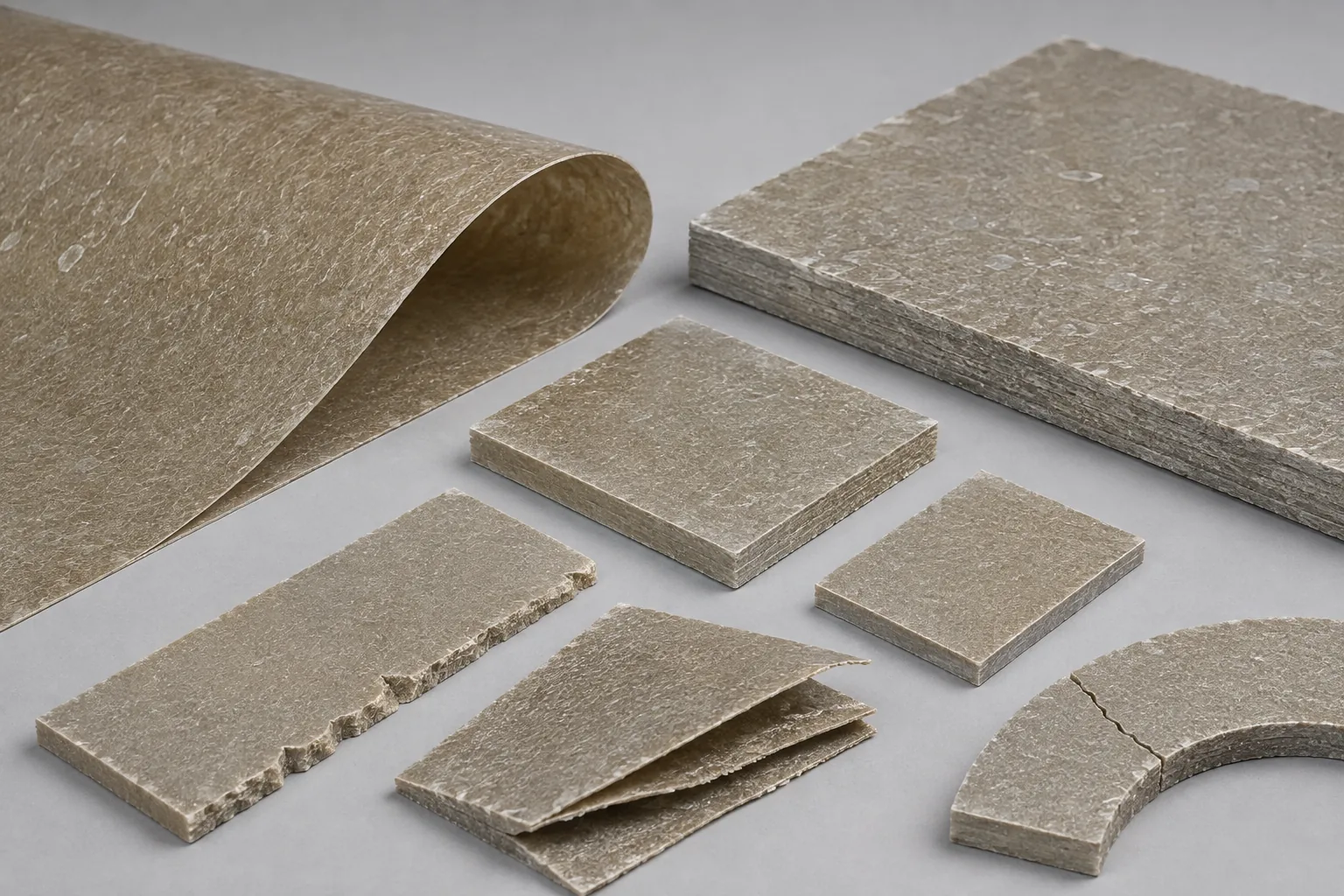
Mica insulation sheet is a plate-like mineral composite that resists heat but can chip, flake or delaminate at unsupported edges. Flexible mica paper, bonded rigid plate and reinforced laminate therefore require different support and penetration strategies even when the outline is identical.
Updated
Where This Cutting Application Appears
Sizing flexible mica paper sheets
Cross-cut or trim roll-derived sheet before winding, wrapping or lamination.
Profiling bonded mica plate
Create rectangular or contoured insulation pieces from rigid binder-rich sheet.
Cutting reinforced mica laminates
Separate constructions containing glass cloth or carrier layers without opening the bonded edge.
Sheet Sizing And Profiling process boundary
sheet sizing and profiling for mica insulation sheets is a linked sequence: the output condition and datum from each operation become the controlled input for the next. It should not be evaluated as one generic cut or accepted only by the final dimension.
Sheet Sizing And Profiling setup checkpoint
For mica insulation sheets, define the operation order, intermediate dimensions, registration transfer, material support, web or part handling and waste route for every stage of sheet sizing and profiling.
Sheet Sizing And Profiling acceptance checkpoint
Verify both intermediate and final results from sheet sizing and profiling, including dimensions, registration, edge or feature quality, material damage, waste separation and stable transfer between stages.
Define the Required Cut Result
- Controlled outline with limited mineral flaking
- Low edge delamination across binder and reinforcement layers
- Repeatable dimensions without cracking from corners
- Clean handling with limited loose chips and dust
Problems to Diagnose Before Changing the Knife
Edges chip on the exit face
Review support, penetration direction, edge wedge, sheet rigidity and distance from the cut to existing holes or corners.
Thin mica layers peel apart
Check binder condition, reinforcement orientation, compression and whether the tool drags across the platelets.
Cracks start at an inside radius
Inspect specified radius, profile transition, material grain or reinforcement direction and local clamping.
Loose mineral dust increases
Compare material grade, edge wear, cutting mode, extraction and damage caused during part stripping.
Knife Forms That May Be Considered
| Possible knife form | When it may be considered | What must be confirmed |
|---|---|---|
| straight shear knife | A supported shear may suit straight sizing where clearance and hold-down prevent the sheet from bending away. | Confirm sheet construction, bevel, rake, working clearance, support and maximum width from the machine drawing. |
| profiled knife | A custom profile may suit repeated insulation shapes when corner radii and part release are engineered for brittle stock. | Confirm CAD outline, internal radii, knife section, backing, penetration, stripping method and material samples. |
Information to Send for Technical Review
You do not need to know the exact blade name. Send the available workpiece, machine, current-knife and cut-result information so the application can be reviewed against a drawing or sample.
- Mica family and flexible or rigid grade
- Binder, reinforcement and carrier-layer construction
- Thickness and permitted variation
- Sheet orientation and visible layer direction
- Part drawing with holes, radii and edge tolerances
- Cutting machine, hold-down and backing arrangement
- Dust collection and part-stripping method
- Samples showing exit chips, delamination, cracks and worn-edge pattern
Questions About This Cutting Application
Why does mica chip mainly on the underside?
The exit face may be unsupported as the edge breaks through. Review backing contact, penetration direction and blade wedge.
Can a sharper corner be cut by using a thinner knife?
Not necessarily. Brittle sheet may crack at a tight radius regardless of knife thickness; confirm a producible radius with samples.
Does flexible mica paper use the same tooling as rigid mica plate?
No assumption should be made. Binder level, reinforcement and bending response change the preferred support and cutting mode.
What causes layers to lift around a profiled edge?
The cut may pull across platelets or reinforcement, or the bond may be weak. Mark layer orientation and inspect both faces.
Can a finished mica part define the profile?
It helps, but chipped edges can hide intended dimensions. Provide a CAD drawing with datums, radii and acceptance points.
Related product and service information
- Battery-Pack Flame Barrier Laminate Contour-Cutting Blades - battery-pack flame barrier laminate · contour cutting
- Electronics Foam Gasket Cutting - electronics foam gasket stock · kiss cutting and profiling
- Confectionery Slab and Bar Cutting - confectionery slabs and bars · guillotine cutting and scoring
Request a Custom Cutting-Knife Review
Send the workpiece details, machine or holder information, current knife photos or sample, required quantity and examples of the present cut problem. Final dimensions, material, edge geometry and tolerances are confirmed from the approved requirements.