
Blade Application Guides / Application Guide / advanced composites
Slitting Carbon Fiber Prepreg Tape
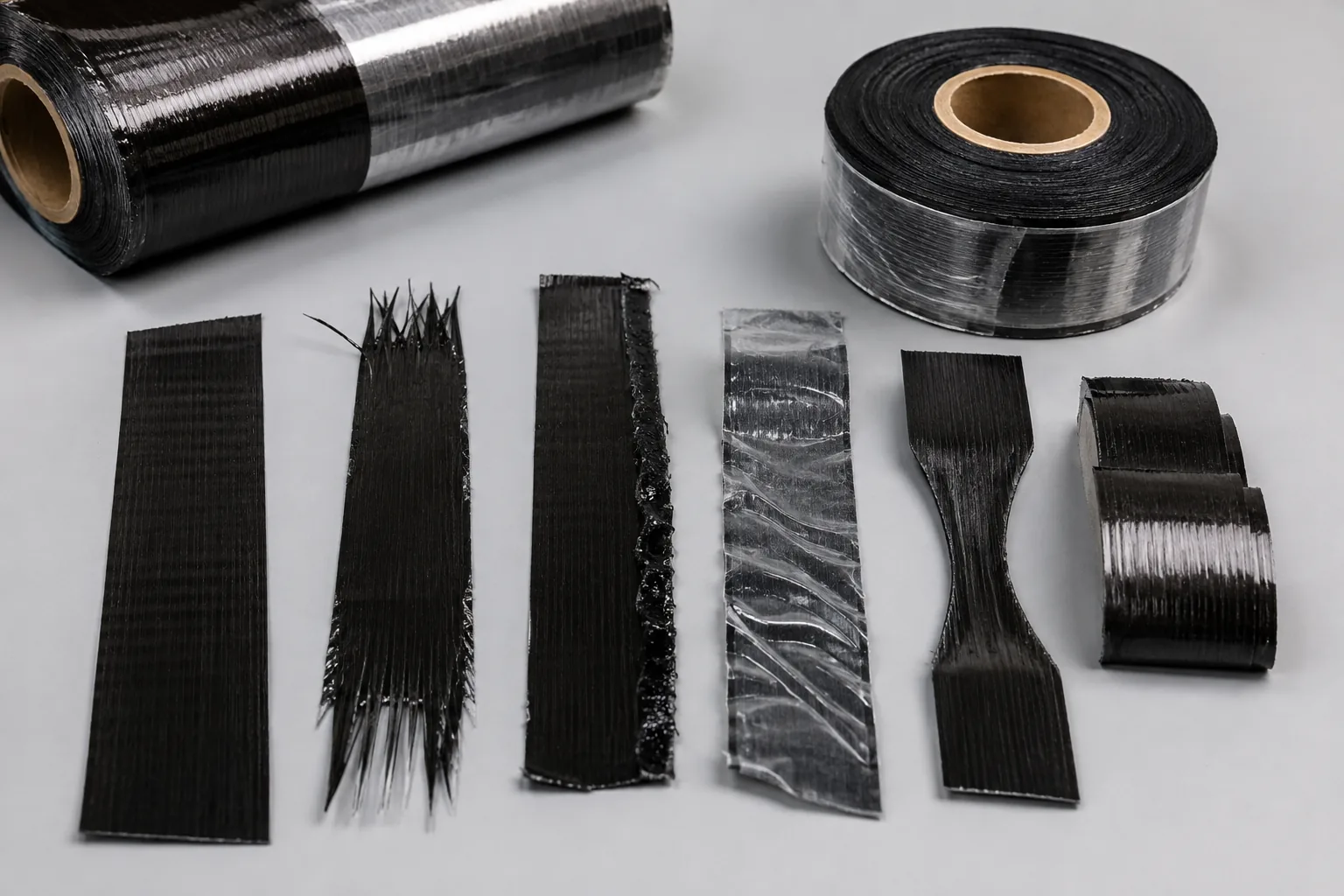
Prepreg combines aligned carbon fibers, partially cured resin and a removable backing film. Temperature and tack govern handling, while the cut must sever reinforcement without displacing fibers or contaminating the tape edge.
Updated
Where This Cutting Application Appears
Prepreg tape conversion
Slits master material into layup widths.
Automated-placement feedstock
Prepares narrow tape requiring stable edges and backing registration.
Temperature-window changeover
Rechecks tack and deposits after storage or line temperature changes.
Roll Slitting process boundary
Roll slitting divides a master roll longitudinally into narrower rolls; it does not separate the web transversely into sheets or fixed lengths.
Roll Slitting setup checkpoint
Confirm unwind and rewind tension, slit widths, knife positions, core alignment, trim removal and the winding behavior of every daughter roll.
Roll Slitting acceptance checkpoint
Inspect roll width, edge condition, telescoping, interleaving, debris and whether each rewound roll remains stable at the required diameter.
Define the Required Cut Result
- Aligned fibers at the slit edge
- Stable tape width
- Undistorted backing film
- Low resin transfer
Problems to Diagnose Before Changing the Knife
Fiber pullout
- Check fiber direction
- Inspect edge sharpness
- Support both sides
Resin buildup
- Record temperature
- Inspect finish
- Track run time
Backing distortion
- Balance layer tension
- Check nip
- Compare film stretch
Width variation
- Verify guiding
- Measure holder runout
- Check tape neck-in
Knife Forms That May Be Considered
| Possible knife form | When it may be considered | What must be confirmed |
|---|---|---|
| circular shear slitter | Provides supported separation of fibers and backing with controlled overlap. | Confirm the final geometry and mounting from the prepreg slitter equipment, an unworn sample or an approved drawing before manufacture. |
| razor slitter | May suit thin prepreg where support, exposure and resin deposits are controlled. | Confirm the final geometry and mounting from the prepreg razor station equipment, an unworn sample or an approved drawing before manufacture. |
| coated rotary blade | May help manage resin adhesion where coating compatibility is verified. | Confirm the final geometry and mounting from the prepreg rotary station equipment, an unworn sample or an approved drawing before manufacture. |
Information to Send for Technical Review
You do not need to know the exact blade name. Send the available workpiece, machine, current-knife and cut-result information so the application can be reviewed against a drawing or sample.
- Slitter model
- Fiber type and areal weight
- Resin system and tack temperature
- Backing film
- Tape width and tolerance
- Speed and tension
- Deposit and pullout samples
- Tool quantity and project schedule
Questions About This Cutting Application
Why does prepreg tack matter?
It changes friction, deposits and layer movement.
Can backing film be cut separately?
Only if the machine controls registration and separation.
Does coating prevent resin buildup?
No coating is universal; test compatibility.
How should width be measured?
Define temperature, tension and backing condition.
What trial samples are useful?
Keep accepted and rejected tape with fiber direction and temperature recorded.
Related product and service information
- Slitting Flexible Plastic Film Rolls - flexible plastic film rolls · high-speed longitudinal slitting
- Medical Adhesive Tape Roll Slitting - medical adhesive tape rolls · roll slitting
- Packaging Tape Roll Slitting and Adhesive Buildup - packaging tape rolls · roll slitting
Request a Custom Cutting-Knife Review
Send the workpiece details, machine or holder information, current knife photos or sample, required quantity and examples of the present cut problem. Final dimensions, material, edge geometry and tolerances are confirmed from the approved requirements.