
Blade Application Guides / Application Guide / Laminated board converting
Laminated Paperboard Slitting Across Multiple Layers
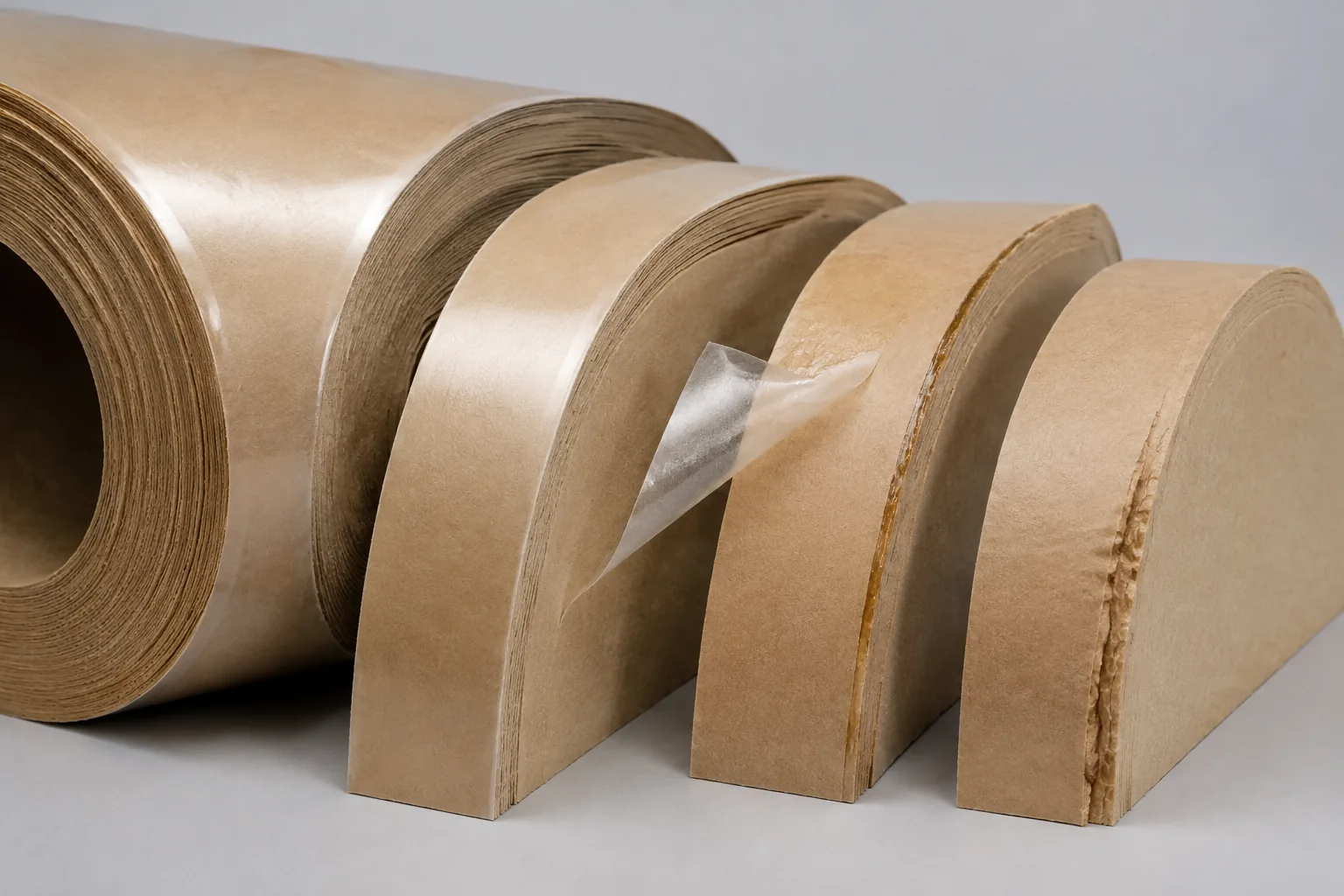
Laminated paperboard may combine paper fibers, polymer film, foil, coating, and adhesive in one web. Slitting must separate these layers together without lifting the laminate, smearing adhesive, or distorting the board edge.
Updated
Where This Cutting Application Appears
Barrier carton-stock width conversion
Paperboard laminated with film or foil is slit into reels for liquid, food, or protective carton processes where barrier layers must remain bonded at the edge.
Printed laminate reel preparation
Decorated board is converted to the width required by forming or die-cutting lines while the trim stays outside artwork and registration zones.
Laminated insert and lid-stock conversion
Multilayer reels are prepared for later sheeting or profiling, so a lifted film or adhesive-rich edge must not disrupt feeding.
Roll Slitting process boundary
Roll slitting divides a master roll longitudinally into narrower rolls; it does not separate the web transversely into sheets or fixed lengths.
Roll Slitting setup checkpoint
Confirm unwind and rewind tension, slit widths, knife positions, core alignment, trim removal and the winding behavior of every daughter roll.
Roll Slitting acceptance checkpoint
Inspect roll width, edge condition, telescoping, interleaving, debris and whether each rewound roll remains stable at the required diameter.
Define the Required Cut Result
- Sever paper, film, foil, and adhesive as one aligned edge
- Prevent laminate lift from propagating beyond the slit
- Hold reel width and edge straightness for forming equipment
- Reduce adhesive pickup that changes cutting conditions during a run
Problems to Diagnose Before Changing the Knife
Film or foil lifting from the paperboard edge
Review laminate structure, bond strength, cure age, slit direction, edge support, and whether separation starts on entry or exit.
Adhesive buildup and edge smear
Identify adhesive chemistry, exposed coat weight, web temperature, pressure, cleaning interval, and where deposits accumulate.
Cracked or crushed paperboard at the slit
Compare caliper, fiber direction, moisture, overlap or penetration, side load, and local compression beneath the laminate.
Curl or reel-edge instability after separation
Check layer tension balance, moisture, slit width, winding direction, rewind tension, and whether curl develops immediately or in storage.
Knife Forms That May Be Considered
| Possible knife form | When it may be considered | What must be confirmed |
|---|---|---|
| Circular shear slitting | Consider where bonded layers need a supported continuous shear cut. | Confirm overlap, side load, rotation, laminate construction, holder rigidity, and approved interface dimensions. |
| Score slitting | Consider only when the board thickness, anvil system, and laminate response tolerate compressive penetration. | Confirm anvil hardness and condition, penetration, coating orientation, reel samples, and finished-edge criteria. |
Information to Send for Technical Review
You do not need to know the exact blade name. Send the available workpiece, machine, current-knife and cut-result information so the application can be reviewed against a drawing or sample.
- Full laminate stack from print side to reverse side
- Paperboard grade, caliper, fiber direction, and moisture
- Film or foil type and thickness
- Adhesive or extrusion-bond system, coat weight, and cure age
- Master-roll dimensions, slit widths, and winding orientation
- Line speed, web tension, side load, overlap, or penetration data
- Photos showing lift, smear, cracking, curl, and deposit location
- Downstream forming process, edge acceptance, current sample, and drawing status
Questions About This Cutting Application
Why can only the film layer stretch past the paperboard edge?
The film may elongate while the board fractures, especially with weak support or an imbalanced laminate. Layer thickness, bond strength, orientation, and cut direction should be reviewed.
How do we distinguish weak lamination from cutting-induced lift?
Compare peel behavior away from the cut, bond-age data, and lift location on entry and exit sides. Retain accepted and rejected slit samples from the same roll.
What information helps reduce adhesive buildup?
Provide adhesive type, exposed layer position, web temperature, line speed, cleaning interval, and photographs showing exactly where the deposit forms.
Should printed and unprinted laminated board be trialed separately?
They may behave differently because ink, varnish, heat history, and register margin affect friction and acceptance. Use material matching the production construction.
Can a slitting form be confirmed from total caliper alone?
No. Layer sequence, bond, stiffness, winding, machine action, and defect limits also govern the choice. Confirm with actual laminate and an approved drawing.
Related product and service information
- Lightweight Paper Web Slitting With Stable Edges - lightweight cigarette paper webs · web slitting
- Kraft Paper Roll Slitting: Edge Quality and Dust - kraft paper rolls · roll slitting
- Thermal Paper Roll Slitting Without Coating Damage - thermal paper rolls · roll slitting
Request a Custom Cutting-Knife Review
Send the workpiece details, machine or holder information, current knife photos or sample, required quantity and examples of the present cut problem. Final dimensions, material, edge geometry and tolerances are confirmed from the approved requirements.