
Blade Application Guides / Application Guide / Paperboard converting
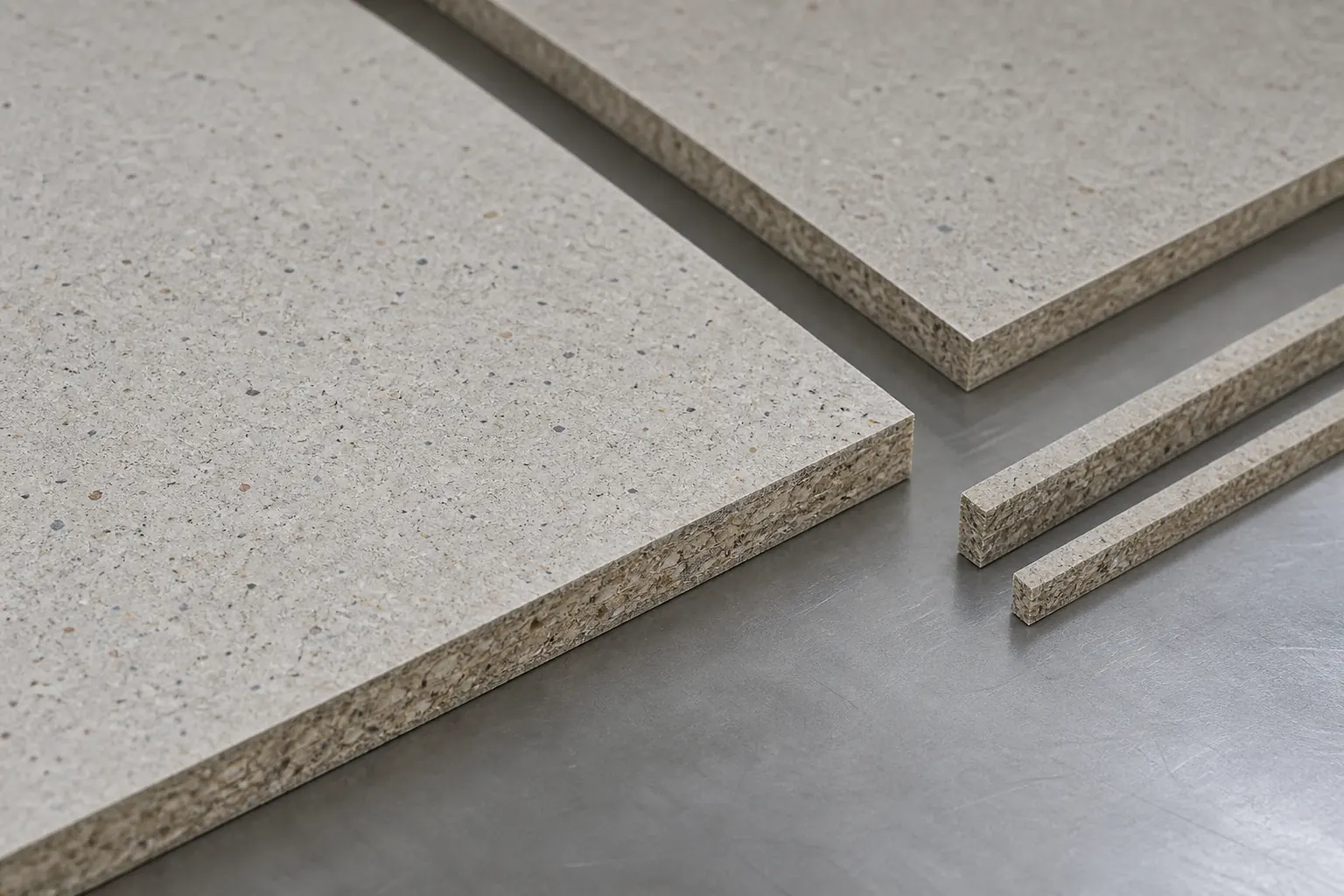
Recycled Grey Chipboard Edge-Trimming Blades
Edge trimming establishes clean reference margins on recycled grey chipboard sheets, laminated panels or continuous stock. The trim can expose density variation and embedded particles, while narrow waste may fracture into debris unless separation and collection are coordinated.
Updated
Where This Cutting Application Appears
Laminated greyboard finishing
Trims board and surface paper to a common edge before component sizing or wrapping.
Sheet-edge datum preparation
Removes irregular mill edges to establish a straight reference for subsequent cuts.
Continuous strip width control
Maintains declared board width while removing narrow side waste.
Edge Trimming process boundary
Edge trimming removes a narrow irregular, damaged or excess margin to finish an existing edge; it does not divide the full workpiece into several production widths.
Edge Trimming setup checkpoint
Define the trim allowance, reference edge, support close to the cut and a waste path that prevents the narrow offcut from re-entering the product.
Edge Trimming acceptance checkpoint
Inspect the finished edge for straightness, local tearing or crushing, surface scuffing and continuity from the start to the end of the trim.
Define the Required Cut Result
- Straight, parallel finished margins
- Low fiber dust and no loose dense fragments
- Flush layers on laminated board
- Predictable waste-strip separation and collection
Problems to Diagnose Before Changing the Knife
Trim edge alternates between fuzzy and polished
- Map density and filler variation
- Compare support and engagement along the edge
- Inspect board moisture and laminated layers
Waste strip fragments into short pieces
- Record trim width and board brittleness
- Review collection direction and tension
- Inspect interruptions caused by dense inclusions
Surface paper separates from the core
- Identify adhesive coverage and cure
- Compare overhang and layer orientation
- Review support at the laminated edge
Finished margin is not parallel
- Check incoming sheet datum
- Measure guide movement and feed skew
- Compare both edges through the production run
Knife Forms That May Be Considered
| Possible knife form | When it may be considered | What must be confirmed |
|---|---|---|
| circular edge-trimming arrangement | May suit continuously fed board where rotary support and waste guidance are present. | Confirm mounting, diameters, rotation, lateral load, support and board path from the installed equipment. |
| straight trimming arrangement | May suit indexed sheets or panels requiring a supported linear margin cut. | Confirm cutting length, clamp, stroke, clearance, backing and interface with an approved drawing and actual samples. |
Information to Send for Technical Review
You do not need to know the exact blade name. Send the available workpiece, machine, current-knife and cut-result information so the application can be reviewed against a drawing or sample.
- Board grade, density, caliper and recycled furnish
- Bare or laminated construction and adhesive
- Incoming edge condition and target finished width
- Trim width, tolerance and waste-strip length
- Feed mode, speed, guidance and support
- Current cutting action and mounting interface
- Dust, delamination and waste-break samples
- Inspection, collection, quantity and destination
Questions About This Cutting Application
Why does edge appearance change within one sheet?
Local density, fillers, moisture and laminated construction can vary through recycled board.
Is a wider waste strip always easier to remove?
It is often more stable, but collection geometry, stiffness and available material allowance still govern performance.
Can trimming repair a weak laminate bond?
No. Cutting conditions may reveal delamination, but adhesive coverage and cure must be addressed separately.
What should be measured besides finished width?
Check parallelism, edge compression, dust, layer flushness and downstream reference accuracy.
How are unknown knife dimensions handled?
They must come from the actual holder, equipment data, an unworn sample or an approved drawing, not from the board description.
Related product and service information
- Solid Bleached Sulfate Board Edge-Trimming Blades - solid bleached sulfate board · edge trimming
- Liquid Packaging Board Edge-Trimming Blades - liquid packaging board · edge trimming
- Folding Boxboard Edge Trimming: Clean Coated Margins and True Width - folding boxboard · edge trimming
Request a Custom Cutting-Knife Review
Send the workpiece details, machine or holder information, current knife photos or sample, required quantity and examples of the present cut problem. Final dimensions, material, edge geometry and tolerances are confirmed from the approved requirements.