
Blade Application Guides / Application Guide / printed circuit materials
Electronics Glass-Fiber Prepreg Cutting
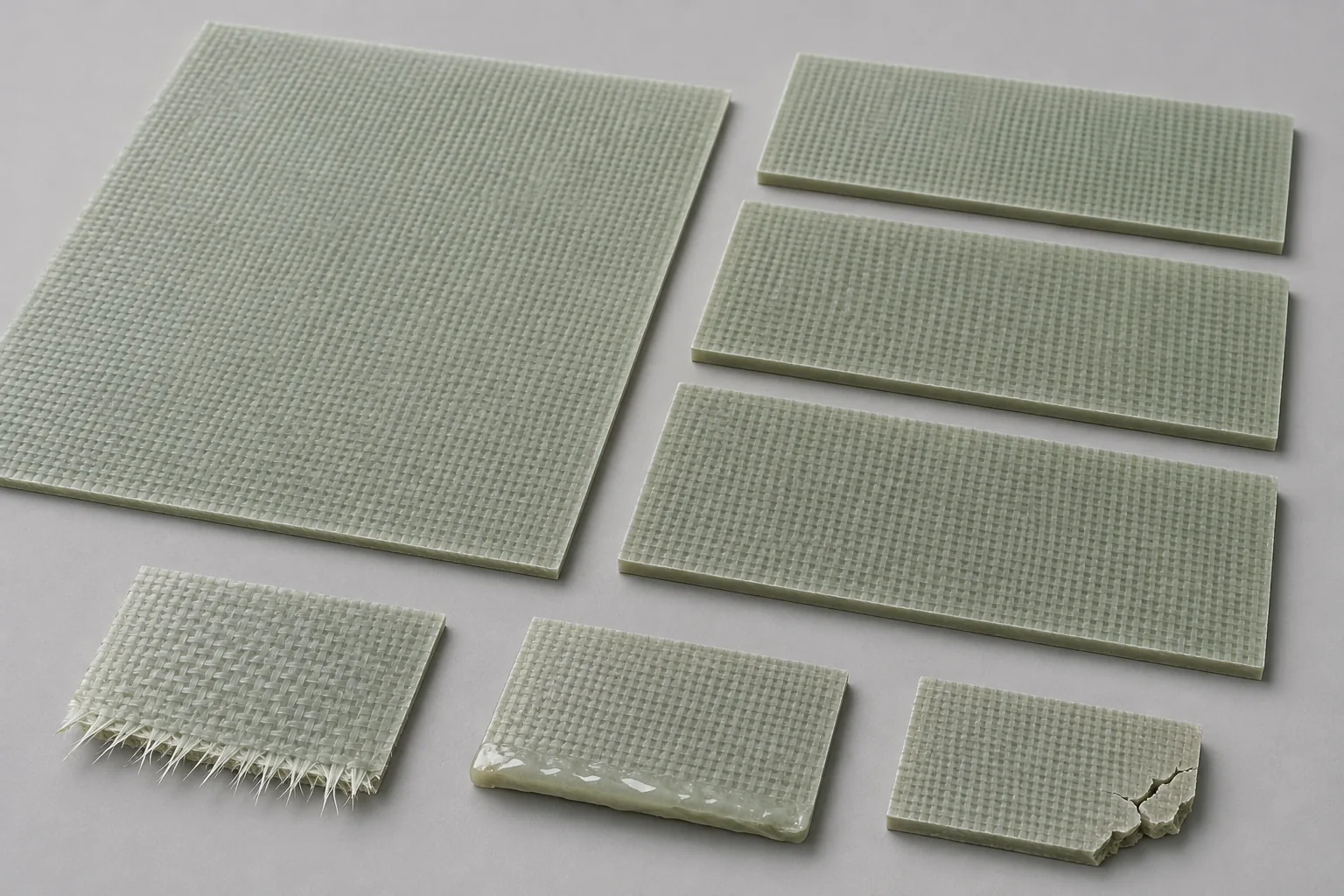
Electronics-grade prepreg combines abrasive glass reinforcement with partially cured resin that may be tacky, brittle or temperature-sensitive. Cutting behavior changes with weave, resin content and conditioning, so panel edges must be reviewed for both glass-fiber breakout and resin smear.
Updated
Where This Cutting Application Appears
Sizing prepreg sheets for lay-up
Cut panels to dimensions used when stacking copper foil, cores and reinforcement before lamination.
Trimming woven-glass prepreg edges
Remove distorted or resin-rich margins while maintaining the required fiber coverage.
Cutting conditioned prepreg rolls into panels
Sheet material after controlled storage or warming without allowing tack to disrupt registration.
Prepreg Panel Cutting process boundary
prepreg panel cutting for electronics-grade glass-fiber prepreg is planned around establishment of final straight-sided dimensions or manageable sheet and panel formats from larger stock; it is not complex contour production, repeated roll slitting or narrow cosmetic trimming alone.
Prepreg Panel Cutting setup checkpoint
For electronics-grade glass-fiber prepreg, confirm finished dimensions, datum edges, cut sequence, squareness method, hold-down and support for both the part and offcut.
Prepreg Panel Cutting acceptance checkpoint
For electronics-grade glass-fiber prepreg, evaluate length, width, diagonal or squareness, corner integrity, edge compression, surface marking and dimensional recovery.
Define the Required Cut Result
- Straight panel edges with limited glass-fiber pullout
- Controlled resin smear and tool buildup
- Accurate dimensions without shifting the weave
- Low loose-fiber and resin debris at the cut
Problems to Diagnose Before Changing the Knife
Glass bundles protrude from the edge
Review weave direction, support, edge wear, cutting angle and whether resin adequately restrains the fibers.
Resin coats the knife face
Check prepreg temperature, resin state, dwell, surface finish and cleaning interval.
The sheet distorts before separation
Inspect carrier or release film, tack to the support, hold-down and force direction relative to the weave.
Corners crack or delaminate
Review internal stress, cut sequence, support near corners and handling after the cut.
Knife Forms That May Be Considered
| Possible knife form | When it may be considered | What must be confirmed |
|---|---|---|
| straight shear knife | A supported shear can suit panel sizing when clearance and hold-down control the woven laminate. | Confirm bevel, rake, working clearance, cutting width, support and prepreg conditioning from machine data and trials. |
| serrated knife | Progressive tooth engagement may be considered for thicker stacks, but it can pull glass bundles or trap resin. | Confirm tooth pitch, depth and direction, stack height, backing and accepted edge samples before approval. |
Information to Send for Technical Review
You do not need to know the exact blade name. Send the available workpiece, machine, current-knife and cut-result information so the application can be reviewed against a drawing or sample.
- Glass style, weave and fabric orientation
- Resin system category, content and degree of cure
- Storage and conditioning temperature at cutting
- Total thickness, ply count and release-film layers
- Panel dimensions, tolerance and fiber-edge criteria
- Machine stroke, hold-down, backing and cut direction
- Current knife condition and resin-cleaning method
- Samples showing fiber breakout, resin smear, distortion or corner cracks
Questions About This Cutting Application
Why does prepreg condition affect cutting?
Resin stiffness and tack change with temperature and time outside storage, altering fiber restraint and tool release.
Can bare glass cloth settings be reused for prepreg?
Not automatically. Resin changes support, buildup and fiber movement; assess the actual treated material.
What causes long glass fibers at the edge?
Incomplete separation, worn geometry or poor support can pull bundles from the weave. Mark warp, weft and cut direction.
Will a coating prevent all resin buildup?
No. Resin state, temperature, pressure and cleaning remain important, and any coating must suit the customer's process.
What samples are most useful?
Provide conditioned prepreg, accepted and rejected edges, the release-layer arrangement and a used knife where available.
Related product and service information
- Wetlaid Glass Fiber Mat Rotary Die Cutting Blades - wetlaid glass fiber mat · rotary die cutting
- Fiberglass Insulation Batt Cutting - fiberglass insulation batts · batt trimming and sizing
- Cutting Fiberglass Chopped-Strand Mat - fiberglass chopped-strand mat · sheet cutting and trimming
Request a Custom Cutting-Knife Review
Send the workpiece details, machine or holder information, current knife photos or sample, required quantity and examples of the present cut problem. Final dimensions, material, edge geometry and tolerances are confirmed from the approved requirements.