
Blade Application Guides / Application Guide / Electric vehicle battery manufacturing
Cell-to-cell Aerogel Pad Edge-trimming Blades
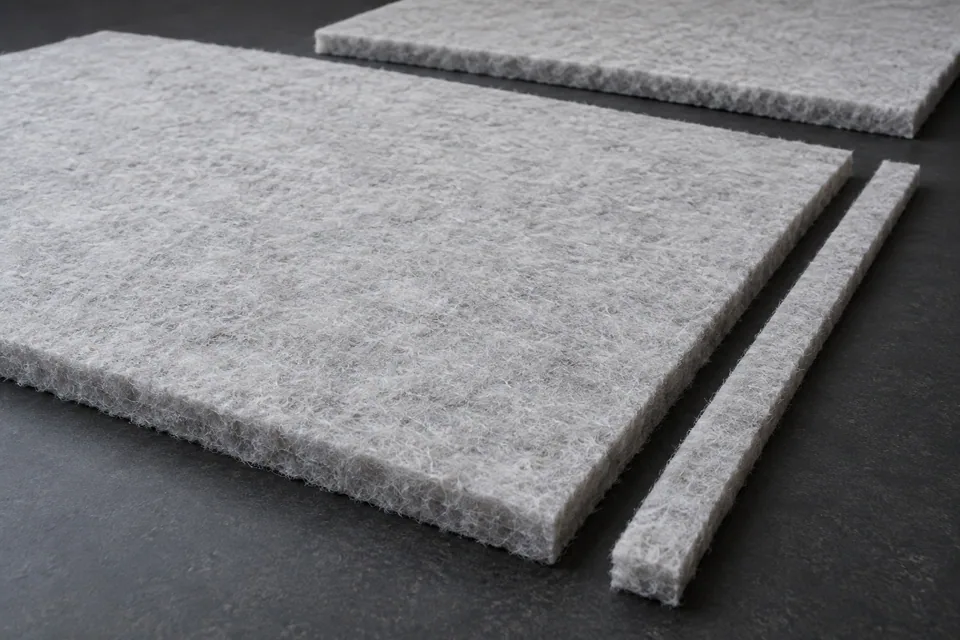
Edge trimming removes a narrow, sacrificial perimeter from an aerogel cell-barrier sheet or pre-cut pad to establish a finished boundary. It is not the operation that makes multiple lanes or a new complex pad silhouette. Aspen describes the cell-to-cell barrier as a designed assembly that can combine insulation and compression functions, so trimming cannot be judged only by a neat-looking outside line. Confirm whether the incoming piece is a continuous sheet, a laminated rectangle or an already shaped pad, then define which edge is being brought to size and which adjacent face must remain intact.
Updated
Where This Cutting Application Appears
Identify the sacrificial margin
Show the original edge and final edge on the same drawing. Confirm how much material can be removed without changing the cell coverage or the seal/adhesive land. Edge trimming is inappropriate if the requested line crosses a required active barrier region.
Check encapsulation at the trim
If the pad is faced or sealed, determine whether trimming exposes aerogel core or opens a bonded envelope. The buyer may require a secondary edge treatment; do not assume a cut surface is finished simply because the dimensions pass.
Route scrap away from the part
A narrow fibrous trim strip can catch and pull along a facing. Plan collection so neither the scrap nor the tool touches the cell-contacting face. For discrete pads, check holding force and part release without crushing the pad.
Compare before and after
Photograph and measure the same marked region before trimming, immediately after, and after the normal handling sequence. Inspect thickness, loose material, adhesive edge and facing lift according to the buyer’s acceptance plan.
Define the Required Cut Result
- Bring the specified perimeter to the approved finished boundary.
- Keep facing or encapsulation intact beside the cut.
- Limit debris and protect cell-contacting faces.
- Preserve pad thickness and compression characteristics near the edge.
Problems to Diagnose Before Changing the Knife
Core becomes exposed
- Verify whether the incoming stock is encapsulated.
- Check the intended trim line against the edge-seal drawing.
- Ask the buyer whether a post-cut seal is required.
Scrap pulls the facing
- Inspect scrap direction and hold-down pressure.
- Compare blade condition and laminate bond at the same lot.
- Check the first point where the facing starts to lift.
Edge dimension passes but debris remains
- Inspect both sides and packaging contact.
- Review the dust collection and cleaning process.
- Recheck after the intended transport sequence.
Knife Forms That May Be Considered
| Possible knife form | When it may be considered | What must be confirmed |
|---|---|---|
| Straight edge-trim knife | For removing a narrow linear margin from a supported sheet or rectangular pad. | Confirm full-depth cut and scrap separation with the actual barrier construction. |
| Profile trim edge | When an already shaped pad requires a limited local perimeter correction. | Confirm registration, hold-down, waste clearance and that the trim does not open a required seal. |
Information to Send for Technical Review
You do not need to know the exact blade name. Send the available workpiece, machine, current-knife and cut-result information so the application can be reviewed against a drawing or sample.
- Incoming part state: sheet, laminate or pre-cut pad
- Original and final edge drawings with scrap margin
- Facing, adhesive and edge-seal construction
- Accepted limits for exposed core, particles and thickness change
- Part support and waste collection arrangement
- Actual machine and knife interface
- Before/after inspection samples from the same lot
Questions About This Cutting Application
Is edge trimming a substitute for contour cutting?
Only if the required change is a defined outside margin. A new shaped pad outline requires a contour-cutting plan.
May a sealed edge be trimmed without follow-up?
The buyer’s construction decides. Trimming can expose the core or open a seal, so review any required secondary treatment.
What makes a trim trial representative?
Use the real layered stock and the same holding, waste removal and handling steps planned for production.
Why inspect after transport?
A weak facing or loose particles may appear only after the cut piece is handled or packed.
Public references and scope
These public sources provide material, cutting-method or safety context for this guide. Supplier pages describe their own materials or equipment; they do not establish a MEIRENTE blade specification or performance claim. Confirm the actual grade, machine setup and required cut with a drawing or sample.
Related product and service information
- Ceramic Battery Insulation Pad Contour-Cutting Blades - ceramic battery insulation pad · contour cutting
- Busbar Insulation Laminate Edge-trimming Blades - busbar insulation laminate · edge trimming
- Cell-to-cell Aerogel Pad Contour-cutting Blades - cell-to-cell aerogel pad · contour cutting
Request a Custom Cutting-Knife Review
Send the workpiece details, machine or holder information, current knife photos or sample, required quantity and examples of the present cut problem. Final dimensions, material, edge geometry and tolerances are confirmed from the approved requirements.