
Blade Application Guides / Application Guide / Energy storage manufacturing
AGM Battery Separator Mat Edge-Trimming Blades
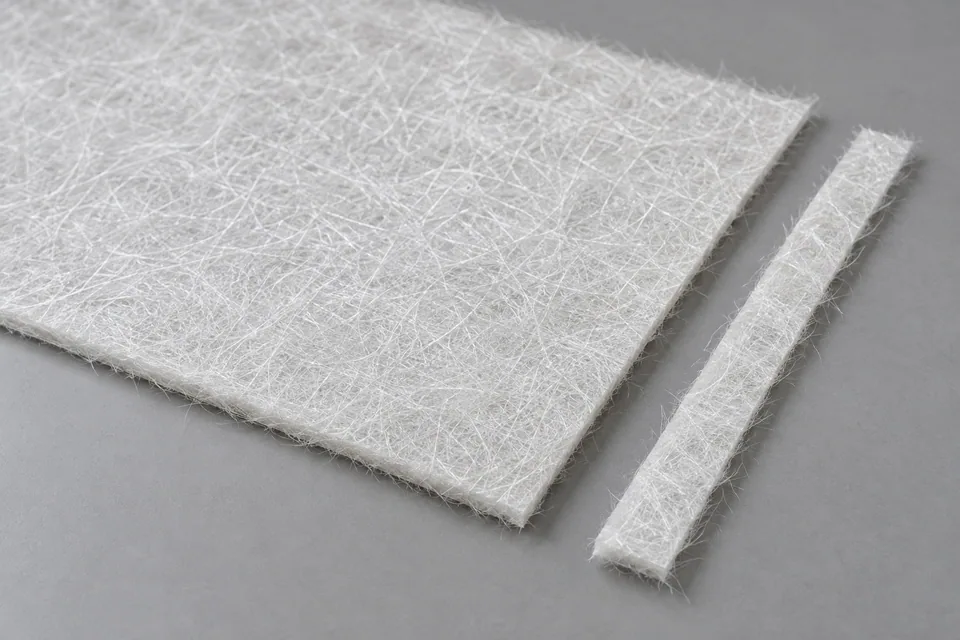
AGM edge trimming is a narrow-margin operation on a fibrous, compressible separator mat. The useful sheet needs a straight retained edge, while the offcut must leave the cut zone without dragging loose glass fibers back across the product. Microporous lists AGM grades with different fiber blends and thicknesses, so the buyer’s material and compression method control the trial. Specify the original width, the margin on each side, and where the waste ribbon will go. Inspect the retained face after takeoff and after normal handling, not just at the blade.
Updated
Where This Cutting Application Appears
Define both sides of the trim
Record the parent width, finished width and whether one or both edges are removed. Distinguish a narrow border trim from multi-lane slitting. Mark the side used for registration before the mat reaches the blade.
Support the fibrous edge
Observe mat contact at the knife and nearby guide. If the edge rolls, compresses or pulls fibers, compare support and engagement with an untrimmed control rather than increasing pressure blindly.
Keep waste away from useful stock
Track continuity of each offcut ribbon and the path to collection. A broken ribbon can wrap or drag across the retained face; note the break location and any transferred fibers.
Inspect after takeoff and packing
Measure retained width and straightness under the agreed condition. Sample edge-fiber loss after waste removal and after the production handling route; record compressed thickness separately.
Tie tooling to the line
Review circular trim-pair or supported straight-blade geometry against the actual holder, feed and waste extraction. Use a buyer sample to compare results before choosing the replacement form.
Define the Required Cut Result
- Establish the specified retained AGM width and straight edge.
- Prevent waste-ribbon fiber transfer to the separator face.
- Keep trim breaks, wraps and edge shedding within buyer limits.
- Preserve the accepted compressed-thickness condition after handling.
Problems to Diagnose Before Changing the Knife
The retained edge looks clean at the knife but sheds later
- Inspect after waste takeoff and after normal packing.
- Compare loose fibers with an untrimmed control from the same lot.
- Review contact surfaces along the product path.
A narrow offcut breaks repeatedly
- Record trim allowance and break locations.
- Check local support and blade engagement.
- Observe whether waste-takeoff tension is pulling the mat sideways.
Finished width drifts down the roll
- Compare incoming width, guide position and knife location.
- Check whether feed-roller pressure changes mat tracking.
- Measure under one defined contact condition.
The useful mat wrinkles near the edge
- Locate the first wrinkle before or after the cut.
- Compare guide contact and web tension on both sides.
- Inspect whether the offcut path is pulling the retained sheet.
Knife Forms That May Be Considered
| Possible knife form | When it may be considered | What must be confirmed |
|---|---|---|
| Circular edge-trim knife pair | For continuous AGM trimming where the slitter supports the retained sheet and diverts waste. | Match arbor, pair engagement and waste path to the installed line; check fiber loss on the retained edge. |
| Supported straight trim blade | For an intermittent flat-sheet trim with suitable hold-down and fiber control. | Confirm blade length, support, closure and collection against the machine drawing and trial samples. |
Information to Send for Technical Review
You do not need to know the exact blade name. Send the available workpiece, machine, current-knife and cut-result information so the application can be reviewed against a drawing or sample.
- AGM grade and fiber blend
- Parent width and finished width
- Trim allowance on each side
- Compressed-thickness measurement method
- Edge-fiber and particle acceptance criteria
- Guide, holder and support drawings
- Waste-ribbon collection route
- Retained-edge samples after packing
Questions About This Cutting Application
Why inspect the retained face after collecting waste?
Loose glass fibers may move from the narrow offcut onto accepted stock during takeoff.
Does edge trimming make multiple finished bands?
No. It removes a specified outside allowance. Multiple parallel lanes belong to a slitting layout.
Can the waste ribbon be pulled harder to prevent wrapping?
Excess takeoff force may drag the useful mat sideways or shed fibers; trial the full path under the site setup.
What distinguishes an edge defect from a handling defect?
Keep samples at the blade, after takeoff and after packing, then compare each with an untrimmed control.
Which dimension belongs in the RFQ?
Provide starting and retained widths, trim allowances and the buyer’s measurement condition for the compressible mat.
Public references and scope
These public sources provide material, cutting-method or safety context for this guide. Supplier pages describe their own materials or equipment; they do not establish a MEIRENTE blade specification or performance claim. Confirm the actual grade, machine setup and required cut with a drawing or sample.
Related product and service information
- AGM Battery Separator Mat Sheet Slitting Blades - AGM battery separator mat · sheet slitting
- Zinc-Air Battery Separator Paper Edge-Trimming Blades - zinc-air battery separator paper · edge trimming
- Vanadium Redox-Flow Membrane Sheet Slitting Blades - vanadium redox-flow membrane · sheet slitting
Request a Custom Cutting-Knife Review
Send the workpiece details, machine or holder information, current knife photos or sample, required quantity and examples of the present cut problem. Final dimensions, material, edge geometry and tolerances are confirmed from the approved requirements.