
Blade Application Guides / Application Guide / Hydrogen equipment manufacturing
AEM Electrolyzer Membrane Edge-Trimming Blades
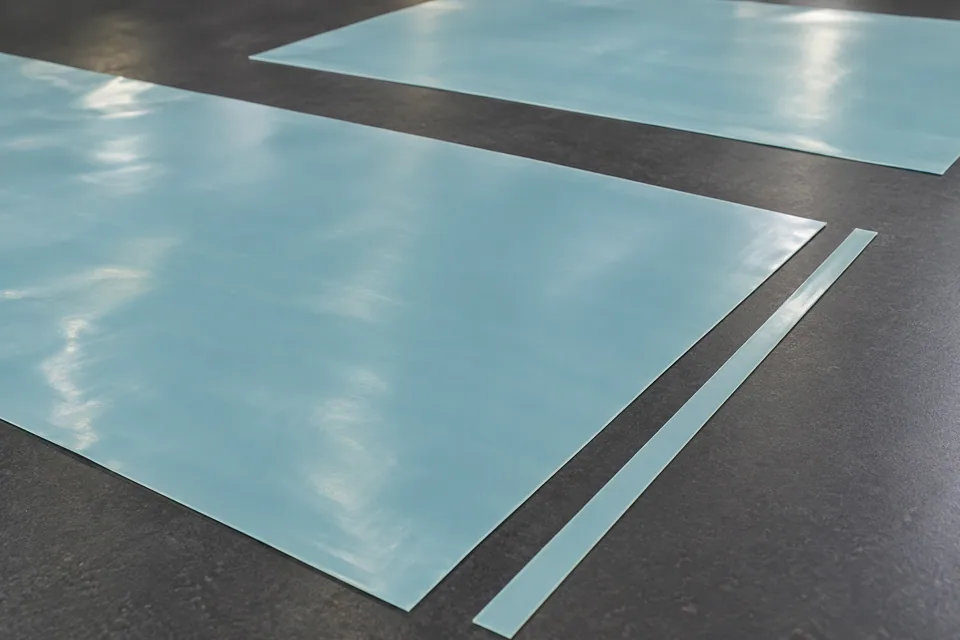
Edge trimming removes a narrow outside allowance while retaining the broad AEM membrane sheet. The trim ribbon is waste, but its tension can pull or nick the useful edge if takeoff is uncontrolled. Membrane suppliers emphasize clean surfaces, sharp cutting blades and careful handling; a grade may also change dimensions when conditioned. Set the trim side and width from the buyer’s drawing, trial the actual stock and inspect the retained edge after collection. Trimming does not establish ion transport or gas-barrier performance.
Updated
Where This Cutting Application Appears
Locate the sacrificial allowance
Measure incoming membrane width in the stated condition and mark which side may be reduced. Check that guide variation and the desired finished width leave a safe trim allowance without cutting into a customer keep-out area.
Control the waste ribbon
Observe the narrow trim at startup, steady feed and stopping. If it breaks or sticks to a guide, it can pull on the retained membrane. Record takeoff angle and tension and keep trim out of the accepted sheet path.
Grade the retained edge
Measure the useful sheet width under the buyer’s dry or conditioned method. Inspect the retained edge for small tears, curl, punctures and particles, and check the opposite face for guide marks after the waste has been removed.
Compare checkpoints
Retain material from knife exit and after winding or stacking. If damage only appears later, trace it to a separator, reel or handling surface before changing blade geometry; use smooth, clean contacts throughout.
Define the Required Cut Result
- Hold the specified retained width without consuming a keep-out margin.
- Produce a continuous, tear-free useful outside edge.
- Prevent waste takeoff from marking the sheet.
- Document the condition in which dimensions were accepted.
Problems to Diagnose Before Changing the Knife
Waste trim repeatedly tears
- Check whether the allowance is too narrow for stable takeoff.
- Inspect the blade and trim guide for snagging.
- Compare feed and takeoff tension.
A notch appears on the useful edge
- Locate the first checkpoint with the notch.
- Inspect cutter engagement and backing.
- Check whether the waste strip pulled the membrane laterally.
Width differs after storage
- Verify measurement and conditioning state.
- Compare with a stored uncut control.
- Review winding or stacking strain.
Knife Forms That May Be Considered
| Possible knife form | When it may be considered | What must be confirmed |
|---|---|---|
| Outside-edge straight-cut blade | For a supported membrane line that trims one sacrificial margin. | Confirm blade sharpness, backing, useful-edge quality and waste path. |
| Rotary trim pair | Only for a compatible continuous-web setup. | Confirm alignment, side clearance and sample edge without assuming a universal value. |
Information to Send for Technical Review
You do not need to know the exact blade name. Send the available workpiece, machine, current-knife and cut-result information so the application can be reviewed against a drawing or sample.
- Supplier membrane grade and handling instruction
- Incoming and retained widths in a stated condition
- Trim side, allowance and keep-out drawing
- Accepted retained-edge defect criteria
- Blade support, guide and takeoff drawings
- Collection or winding arrangement
- Dry versus conditioned inspection plan
- Representative parent and trimmed samples
Questions About This Cutting Application
What is inspected in edge trimming?
The retained outside edge and final sheet width; the discarded strip is examined to diagnose takeoff problems.
Why inspect the waste ribbon?
Breaks, sticking or excessive pull can tear the useful membrane even when the blade made a complete cut.
Can one width result be compared across wet and dry states?
No. Use a defined measurement state and compare with an uncut control in that same state.
Will a trim blade establish membrane function?
No. Ion-conducting and gas-separation requirements need the buyer’s specified functional tests.
What drawing is needed?
Provide the trim side, target retained width, minimum useful margin and handling path for the actual membrane grade.
Public references and scope
These public sources provide material, cutting-method or safety context for this guide. Supplier pages describe their own materials or equipment; they do not establish a MEIRENTE blade specification or performance claim. Confirm the actual grade, machine setup and required cut with a drawing or sample.
Related product and service information
- AEM Electrolyzer Membrane Sheet Slitting Blades - AEM electrolyzer membrane · sheet slitting
- Titanium Porous Transport Layer Edge Trimming Blades - titanium porous transport layer · edge trimming
- Electrolyzer Catalyst Decal Film Edge Trimming Blades - electrolyzer catalyst decal film · edge trimming
Request a Custom Cutting-Knife Review
Send the workpiece details, machine or holder information, current knife photos or sample, required quantity and examples of the present cut problem. Final dimensions, material, edge geometry and tolerances are confirmed from the approved requirements.