
Blade Application Guides / Application Guide / Wind-turbine blade manufacturing
Wind-Blade Lightning-Protection Foil Roll Slitting Blades
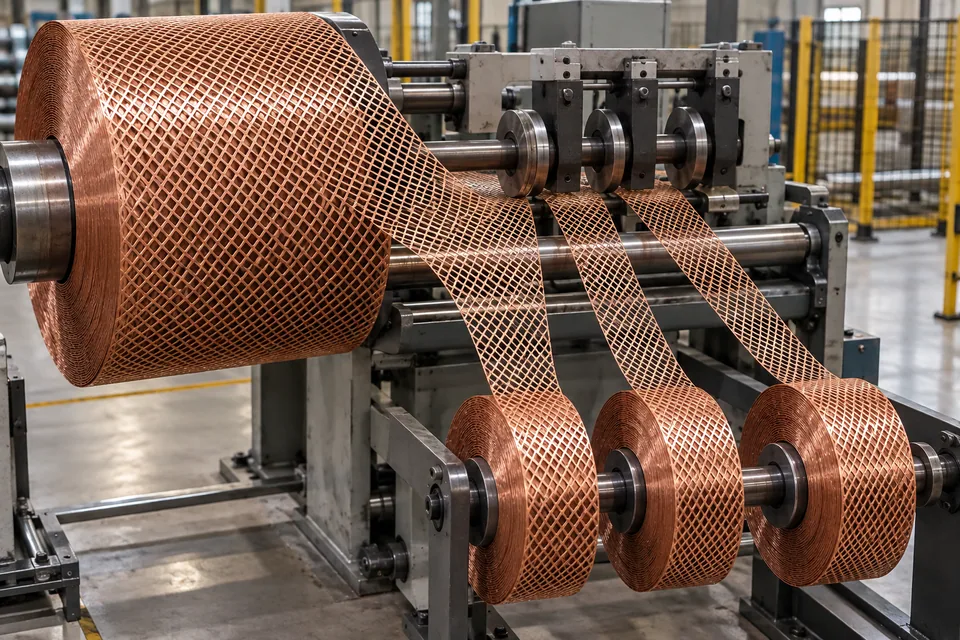
PPG Dexmet and CThru Metals identify expanded copper or aluminum metal foil as a wind-blade lightning-protection material. CThru describes finished expanded material wound in coils and custom coil slitting to narrower widths. The term “foil” here means an open, one-piece expanded-metal mesh, not a solid metallic sheet or an already installed lightning receptor. This guide covers roll-to-roll lane planning for a blade maker’s approved mesh specification. The actual pattern, strand geometry and conductivity design belong to the lightning-protection system; a converter cannot establish electrical suitability from width alone.
Updated
Where This Cutting Application Appears
Read the lightning mesh specification
Record whether the approved material is copper or aluminum, its expanded pattern, strand orientation, supplier lot and required placement zone. Take lane widths from the blade protection drawing, including any defined overlap or connection allowance. Do not use a generic narrow strip merely because it fits the winding core; local lightning-current paths are determined by the blade design.
Plan the coil conversion
Lay out retained lanes and edge waste against the incoming usable coil width. Support the open mesh as it unwinds, since a strand can snag or stretch around guide hardware. Choose a slitting mode only after testing the actual expanded foil; roll slitting describes the longitudinal conversion, not a universal knife type. Capture narrow metallic waste so it cannot become entangled in the retained web.
Inspect the cut pattern and rolls
Measure lane width and examine both cut edges for bent strands, hooks, loose metal fragments or deformation of adjacent diamonds. Inspect both faces and the waste; some strand breaks appear only when a wound lane is unwound. Check roll-face alignment, telescoping and edge crushing. Compare with an incoming control to distinguish pre-existing expansion irregularity from a cutting defect.
Maintain conductive continuity and cleanliness
Keep each lane identified by metal, pattern, lot and blade zone. Avoid oil or other contamination not permitted by the mesh supplier or laminate process. A clean conversion edge is useful, but the blade maker must validate overlap, bonding or infusion, electrical connections and lightning performance in the final assembly.
Trial downstream placement
Unwind a narrow roll at the laminate layup station and check whether the expanded mesh conforms without opening damaged diamonds. Confirm that the specified overlap and connection area remain possible after width variation. Record any strand snagging on release paper or reinforcement fabric. A lane that passes cutting inspection yet tears during layup needs a revised handling or tool route.
Define the Required Cut Result
- Create approved narrow rolls of expanded-metal lightning mesh.
- Retain strand integrity and designed pattern.
- Control metallic fragments and winding damage.
- Preserve zone, pattern and lot identity.
Problems to Diagnose Before Changing the Knife
Cut strands form hooks
- Inspect both sides and waste.
- Review knife choice and web support.
- Test downstream handling.
Mesh diamonds distort near the edge
- Check unwind/rewind tension and guides.
- Compare with incoming coil.
- Measure width after relaxation.
Knife Forms That May Be Considered
| Possible knife form | When it may be considered | What must be confirmed |
|---|---|---|
| Qualified longitudinal foil slitter | For a named expanded-metal coil after representative trials. | Inspect strand hooks, fragments and roll build. |
| Paired shear knives | A candidate where pattern and strand geometry permit shear. | Check both edges and expanded-cell distortion. |
Information to Send for Technical Review
You do not need to know the exact blade name. Send the available workpiece, machine, current-knife and cut-result information so the application can be reviewed against a drawing or sample.
- Approved copper or aluminum mesh grade and pattern
- Incoming and target coil widths
- Strand direction and connection allowance
- Winding core and layup route
- Hook, fragment and pattern-distortion criteria
Questions About This Cutting Application
Is this ordinary solid copper foil?
No. It is expanded metal foil with an open one-piece mesh pattern.
Does roll slitting define the knife mechanism?
No. The approved mesh must be tested with the selected tool.
Can a narrow roll alone meet lightning requirements?
No. Placement and system electrical performance need separate validation.
Why inspect after unwinding?
Hooks and broken strands can appear or catch only during handling.
Public references and scope
These public sources provide material, cutting-method or safety context for this guide. Supplier pages describe their own materials or equipment; they do not establish a MEIRENTE blade specification or performance claim. Confirm the actual grade, machine setup and required cut with a drawing or sample.
Related product and service information
- Wind-Blade Lightning-Protection Foil Shear Slitting Blades - wind-blade lightning-protection foil · shear slitting
- Blade-Root Reinforcement Fabric Roll Slitting Blades - blade-root reinforcement fabric · roll slitting
- Wind-Blade Structural Adhesive Film Roll Slitting Blades - wind-blade structural adhesive film · roll slitting
Request a Custom Cutting-Knife Review
Send the workpiece details, machine or holder information, current knife photos or sample, required quantity and examples of the present cut problem. Final dimensions, material, edge geometry and tolerances are confirmed from the approved requirements.