
Blade Application Guides / Application Guide / Paper converting
Water-Based Coated Poster Paper Edge Trimming: Clean Display Margins
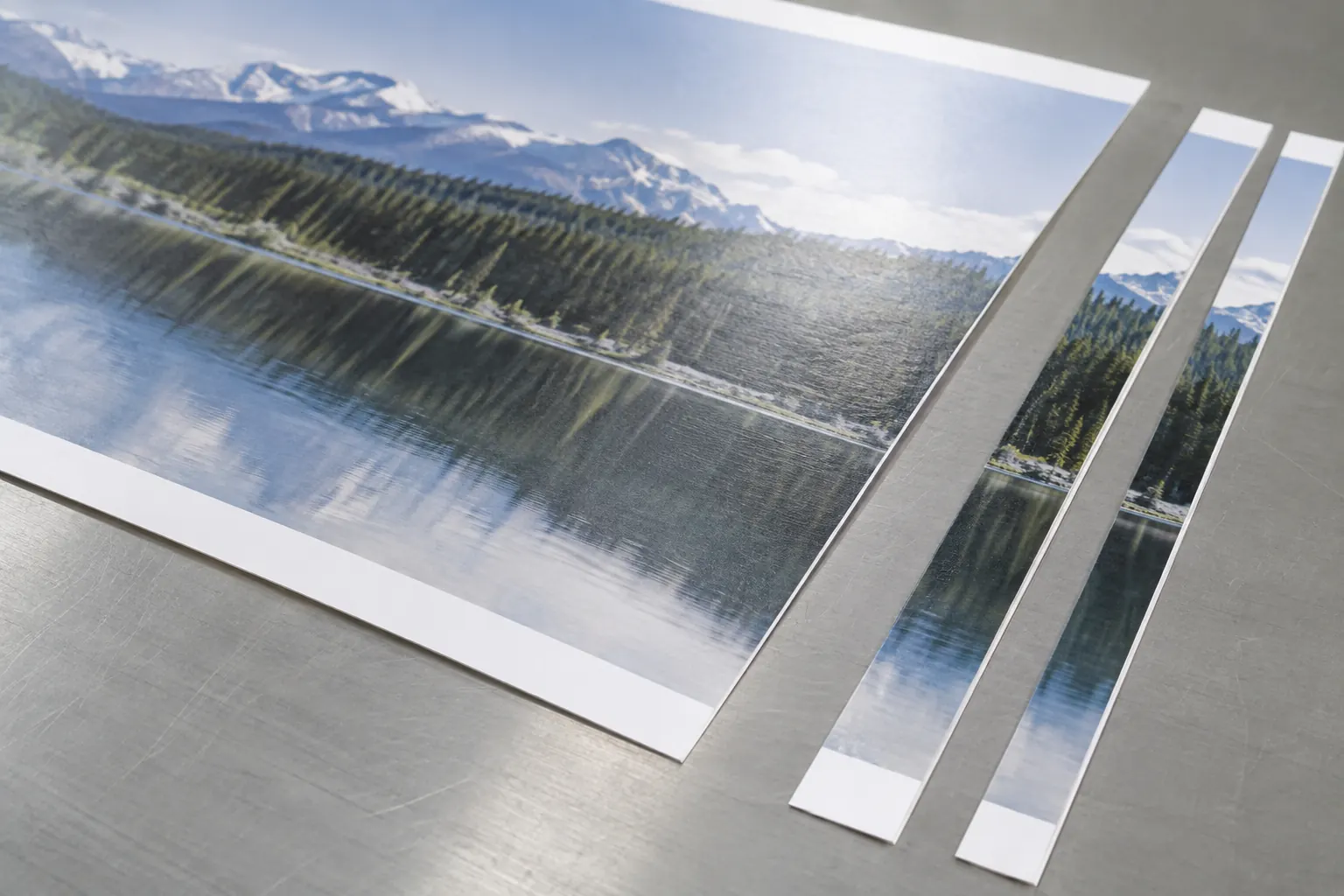
Poster-paper edge trimming removes damaged margins, coating beads or print-control zones from a highly visible product. The process must create a straight visual edge while carrying narrow coated waste away without flakes contacting the printable face or destabilizing the web.
Updated
Where This Cutting Application Appears
Wide-format media finishing
Coated media is trimmed to standard printer widths with parallel edges for reliable feeding.
Printed graphic roll finishing
Control strips, damaged margins and uneven laminate edges are removed before packing or display conversion.
Coating-line deckle removal
Heavy or irregular aqueous coating at both web margins is removed before final rewinding.
Width Edge Trimming process boundary
Width edge trimming removes controlled side margins to establish parallel finished edges and final web width; it is not a transverse length cut.
Width Edge Trimming setup checkpoint
Define both finished edge positions, centerline control, side guidance, trim width and reliable removal of the two continuous edge strips.
Width Edge Trimming acceptance checkpoint
Measure finished width across the run and inspect parallelism, camber, burr or fray, surface damage and trim-break frequency.
Define the Required Cut Result
- Create visually straight margins without coating chips
- Maintain finished width and parallelism
- Extract coated trim continuously without web contact
- Protect printable surfaces from loose debris and scuffing
Problems to Diagnose Before Changing the Knife
Trimmed margin shows a white chipped band
Compare coat thickness, dry state, base-paper moisture, support, cut direction, trim width and speed.
Trim ribbon curls back onto the web
Review coating balance, strip width, extraction angle, airflow, static, roll set and distance to pickup.
Finished width changes with roll diameter
Check unwind alignment, edge guide, roll wander, tension, holder position and thermal or mechanical movement during the run.
Loose coating marks the display surface
Inspect extraction efficiency, debris paths, guides, web cleaning, winding nip and handling after trimming.
Knife Forms That May Be Considered
| Possible knife form | When it may be considered | What must be confirmed |
|---|---|---|
| Circular shear edge trimming | Consider where coated poster web margins are finished by paired rotary edges. | Confirm dimensions, overlap, side load, edge form, rotation and surface finish from verified equipment information. |
| Supported stationary edge trimming | Consider only on a line designed for supported stationary cutting with suitable guarding. | Confirm holder, exposure, support, trim path and safety constraints before fixing any specification. |
Information to Send for Technical Review
You do not need to know the exact blade name. Send the available workpiece, machine, current-knife and cut-result information so the application can be reviewed against a drawing or sample.
- Base-paper grade, moisture, caliper and grain direction
- Water-based coating, print or laminate at the margins
- Incoming width, finished width and trim width per side
- Line speed, tension, unwind alignment and edge-guide method
- Trim extraction position, airflow, static control and routing
- Existing trimming form, holder interface and support geometry
- Samples showing chipped margins, curl, debris or width drift
- Printer feed, visual-edge and cleanliness acceptance criteria
Questions About This Cutting Application
Why does coated trim curl toward one side?
One-sided coating, moisture imbalance and roll set create asymmetric stress. Narrow strip geometry and extraction tension can make the curl more visible.
Can trim extraction damage the finished face?
Yes. A loose or curling strip may sweep across the coating, and trapped flakes can scratch it. Map the strip path with the web running.
How should visual edge straightness be judged?
Define viewing distance, lighting, maximum edge wave and dimensional reference, then inspect representative lengths from several roll positions.
Does laminate film change edge trimming?
It can change thickness, stiffness, fracture and trim curl. Provide the full construction and state whether trimming occurs before or after lamination.
What confirms a suitable edge-trim form?
The installed motion and holder, support geometry, material construction, trim width, speed and approved finished-edge trial must agree.
Related product and service information
- ABS Sheet Edge Trimming Blades - ABS sheet · edge trimming
- Silicone Release Paper Edge Trimming: Width Control Without Coating Damage - silicone release paper · width edge trimming
- Glassine Liner Paper Edge Trimming: Straight Edges and Unbroken Trim - glassine liner paper · width edge trimming
Request a Custom Cutting-Knife Review
Send the workpiece details, machine or holder information, current knife photos or sample, required quantity and examples of the present cut problem. Final dimensions, material, edge geometry and tolerances are confirmed from the approved requirements.