
Blade Application Guides / Application Guide / power transmission belt production
V-Belt and Timing Belt Cut-to-Length Processing
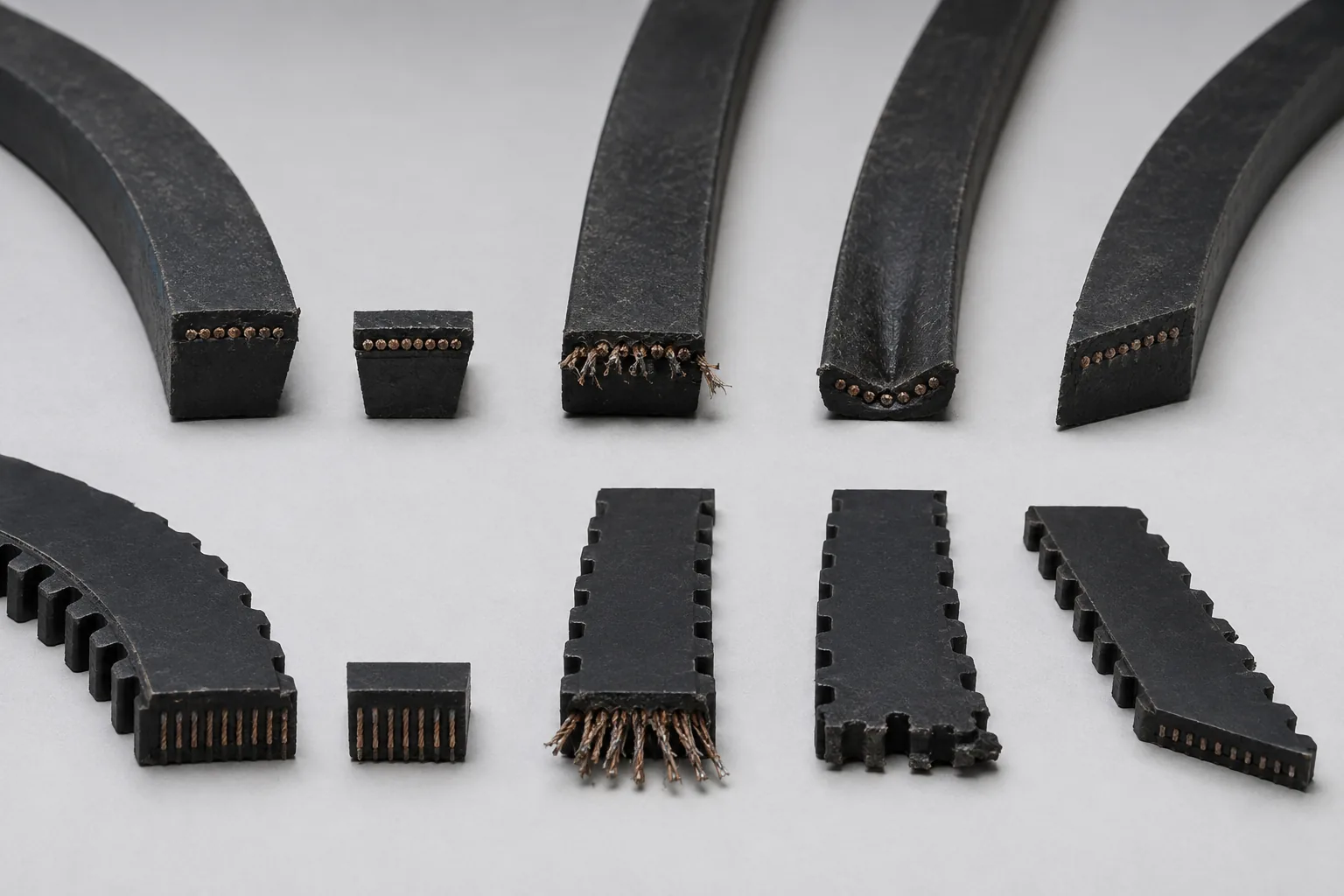
Power-transmission belts combine rubber or polyurethane with high-strength tensile cords and, for timing belts, a molded tooth profile. Cutoff must fully sever the cords without crushing the section or damaging tooth geometry needed for later joining or finishing.
Updated
Where This Cutting Application Appears
Open-length timing-belt preparation
Cuts continuously produced toothed belt stock before joining, fastening or customer-specific assembly.
V-belt production cutoff
Separates reinforced belt sections to a controlled length before vulcanizing or final end processing.
Service-length and kit preparation
Produces replacement or assembly lengths while protecting tensile cords and identifying tooth or groove orientation.
Cut-To-Length Separation And End Preparation process boundary
cut-to-length separation and end preparation for V-belts and timing belts is a linked sequence: the output condition and datum from each operation become the controlled input for the next. It should not be evaluated as one generic cut or accepted only by the final dimension.
Cut-To-Length Separation And End Preparation setup checkpoint
For V-belts and timing belts, define the operation order, intermediate dimensions, registration transfer, material support, web or part handling and waste route for every stage of cut-to-length separation and end preparation.
Cut-To-Length Separation And End Preparation acceptance checkpoint
Verify both intermediate and final results from cut-to-length separation and end preparation, including dimensions, registration, edge or feature quality, material damage, waste separation and stable transfer between stages.
Define the Required Cut Result
- Complete separation of every tensile cord
- Square ends with controlled joining allowance
- No crushed V-section or damaged timing teeth
- Low rubber or polyurethane tearing
Problems to Diagnose Before Changing the Knife
Tensile-cord fray
- Identify glass, aramid, polyester or steel cord
- Check cord angle and location in the section
- Inspect whether the edge pushes before severing
Crushed belt section
- Review clamp shape and pressure
- Support grooves or teeth near the cut
- Check knife thickness and penetration load
Damaged timing-belt teeth
- Locate the cut relative to tooth pitch
- Inspect support under the tooth profile
- Confirm allowed tooth modification at the end
Angled or variable end
- Align belt travel with knife stroke
- Check feed stop and tension
- Measure both cord line and external face
Knife Forms That May Be Considered
| Possible knife form | When it may be considered | What must be confirmed |
|---|---|---|
| straight cutoff knife | May suit clamped belt sections where a rigid stroke crosses the full width and shaped support prevents crushing. | Confirm the mounting dimensions, cutting motion and edge details from the power-transmission belt cutoff equipment, an unworn sample or an approved drawing before manufacture. |
| serrated straight knife | May reduce entry force in compliant rubber, provided it severs cords cleanly and leaves an acceptable joining face. | Confirm the mounting dimensions, cutting motion and edge details from the belt cutoff equipment, an unworn sample or an approved drawing before manufacture. |
| shear-cut knife pair | May provide positive cord separation where the machine captures the belt between matched supported edges. | Confirm the mounting dimensions, cutting motion and edge details from the belt end preparation equipment, an unworn sample or an approved drawing before manufacture. |
Information to Send for Technical Review
You do not need to know the exact blade name. Send the available workpiece, machine, current-knife and cut-result information so the application can be reviewed against a drawing or sample.
- Belt-cutting equipment and holder arrangement
- V-belt section or timing-belt pitch and width
- Rubber or polyurethane body material
- Tensile-cord material, count and location
- Cut length and joining or end-finishing allowance
- Clamp, tooth support and feed-tension details
- Photos of fray, crushed section and both end faces
- Knife drawing, quantity and delivery destination
Questions About This Cutting Application
Why do tensile cords remain connected after the rubber is cut?
The edge may displace or ride between cords, or its geometry may not suit the reinforcement. Identify cord material and section before changing the tool.
Should a timing belt be cut on a tooth or between teeth?
That depends on pitch, joining route and approved end design. Show the required cut reference on the drawing.
Can a V-belt be clamped flat?
Flattening can distort the section and cord position. Use support that reflects the machine and accepted product geometry.
Is a serrated edge suitable for aramid cord?
It may not sever every construction cleanly. Trial the exact cord and inspect pullout, fuzz and end integrity.
What defines acceptable cut length?
State the reference line, belt tension during measurement and any joining allowance so inspection matches downstream use.
Related product and service information
- Cutting Braided and Twisted Textile Cord - braided and twisted textile cord · cut-to-length separation
- Cutting Uncured Tire Tread Rubber Strips - uncured tire tread rubber strips · cross-cutting tread strips
- Cutting Extruded Rubber Profiles to Length - extruded rubber profiles · in-line cut-to-length
Request a Custom Cutting-Knife Review
Send the workpiece details, machine or holder information, current knife photos or sample, required quantity and examples of the present cut problem. Final dimensions, material, edge geometry and tolerances are confirmed from the approved requirements.