
Blade Application Guides / Application Guide / Spacecraft component manufacturing
Space-Grade Polyimide Adhesive Tape Razor Slitting Blades
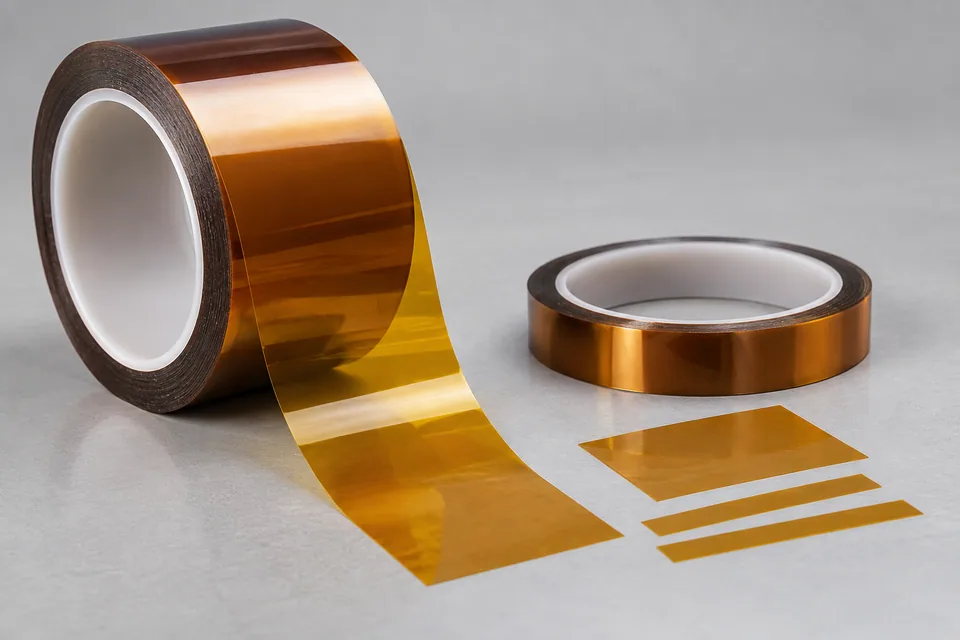
Saint-Gobain reports a custom polyimide adhesive-tape laminate used for a deep-space mission and separately describes master-log polyimide tape that can be slit into narrower rolls. This establishes the material class and a roll-converting route, while it does not qualify a generic catalog tape for spacecraft. Maxcess identifies razor slitting as a method for thin films. This guide evaluates whether a razor can divide a buyer-approved polyimide tape construction along the web; acceptance must be grade-specific.
Updated
Where This Cutting Application Appears
Start with the approved tape stack
Obtain backing, adhesive, optional liner and master-web drawing. Record whether the spacecraft specification controls adhesive chemistry, extractables or outgassing; a different liner or adhesive cannot be assumed equivalent. Set lane widths and winding orientation so the adhesive face will be usable at assembly. If the material arrives as narrow finished rolls, a new slit may have no purpose.
Trial razor engagement
Set the razor to traverse only the approved moving-web path, with support appropriate to the full backing/adhesive/liner construction. Compare fresh and worn blade coupons for edge curl, adhesive stringing and film necking. Avoid unsupported assumptions that razor is always better than shear; the thin backing may cut cleanly while a tacky adhesive draws a tail.
Inspect slit edges and rewound rolls
Check both sides of every lane under magnification for jagged backing, burr-like adhesive, liner damage and debris. Measure lane width before and after rewind and note telescoping or blocking. For a space-use component, loose particles and uncontrolled adhesive transfer should be recorded for the materials owner, not judged only by visual roll appearance.
Keep qualification separate
Preserve lot and material pedigree through new core labels and packaging. A blade trial can show width and edge quality, but the spacecraft program still has to accept the exact converted tape for its bonding, thermal-vacuum and contamination requirements. Never cite the Saint-Gobain mission example as certification for another tape grade.
Set a razor-change trigger
Collect edge samples at the beginning and end of a representative run. Compare backing nicks, adhesive tails and particles under the same microscope method, then set a documented blade replacement point before unacceptable deterioration. Preserve a control sample from the unslit mother roll so edge defects are not incorrectly blamed on the cutter. Review whether narrow wound lanes can be removed from the core without touching adhesive, because extraction damage may appear after the slitting station.
Define the Required Cut Result
- Convert a wide approved tape master into narrow rolls.
- Limit adhesive stringing and polyimide edge damage.
- Preserve liner and material traceability.
- Route flight-material acceptance to the program authority.
Problems to Diagnose Before Changing the Knife
Adhesive tails appear at the razor
- Compare blade condition and entry support.
- Check adhesive grade and web temperature under approved conditions.
- Inspect edge after rewind.
Narrow lane wanders on core
- Review web tension and core alignment.
- Measure width along the full lane.
- Check slit location at both ends.
Backing necks under razor tension
- Review web support and blade entry angle.
- Compare before and after winding.
- Check material owner tension limits.
Knife Forms That May Be Considered
| Possible knife form | When it may be considered | What must be confirmed |
|---|---|---|
| Supported razor blade | For thin approved tape stacks that pass coupon trials. | Verify clean backing and adhesive at both slit edges. |
| Alternative shear pair | If razor trials show unacceptable tails or edge lift. | Compare debris and width stability, not tool name alone. |
Information to Send for Technical Review
You do not need to know the exact blade name. Send the available workpiece, machine, current-knife and cut-result information so the application can be reviewed against a drawing or sample.
- Flight-approved tape specification and supplier grade
- Backing/adhesive/liner cross-section
- Master width, lane map and winding direction
- Particle, adhesive-edge and width criteria
- Program material and outgassing approval pathway
Questions About This Cutting Application
Does a low-outgassing claim certify a tape for flight?
No. The program must accept the exact grade and converted configuration.
Can razor slitting cut every polyimide tape?
No. Adhesive and liner behavior require a real web trial.
What is different from a cross cut?
Razor slitting divides the running web into long narrow lanes.
Why keep parent-lot identity?
Spacecraft material controls may require traceability after conversion.
Is this guide for a finished narrow retail tape roll?
No. It covers approved wide stock converted into narrower rolls.
Public references and scope
These public sources provide material, cutting-method or safety context for this guide. Supplier pages describe their own materials or equipment; they do not establish a MEIRENTE blade specification or performance claim. Confirm the actual grade, machine setup and required cut with a drawing or sample.
Related product and service information
- Space-Grade Polyimide Adhesive Tape Shear Slitting Blades - space-grade polyimide adhesive tape · shear slitting
- Multilayer-Insulation Blanket Film Razor Slitting Blades - multilayer-insulation blanket film · razor slitting
- Spacecraft Thermal-Control Film Razor Slitting Blades - spacecraft thermal-control film · razor slitting
Request a Custom Cutting-Knife Review
Send the workpiece details, machine or holder information, current knife photos or sample, required quantity and examples of the present cut problem. Final dimensions, material, edge geometry and tolerances are confirmed from the approved requirements.