
Blade Application Guides / Application Guide / Paperboard converting
Solid Bleached Sulfate Board Sheet-Slitting Blades
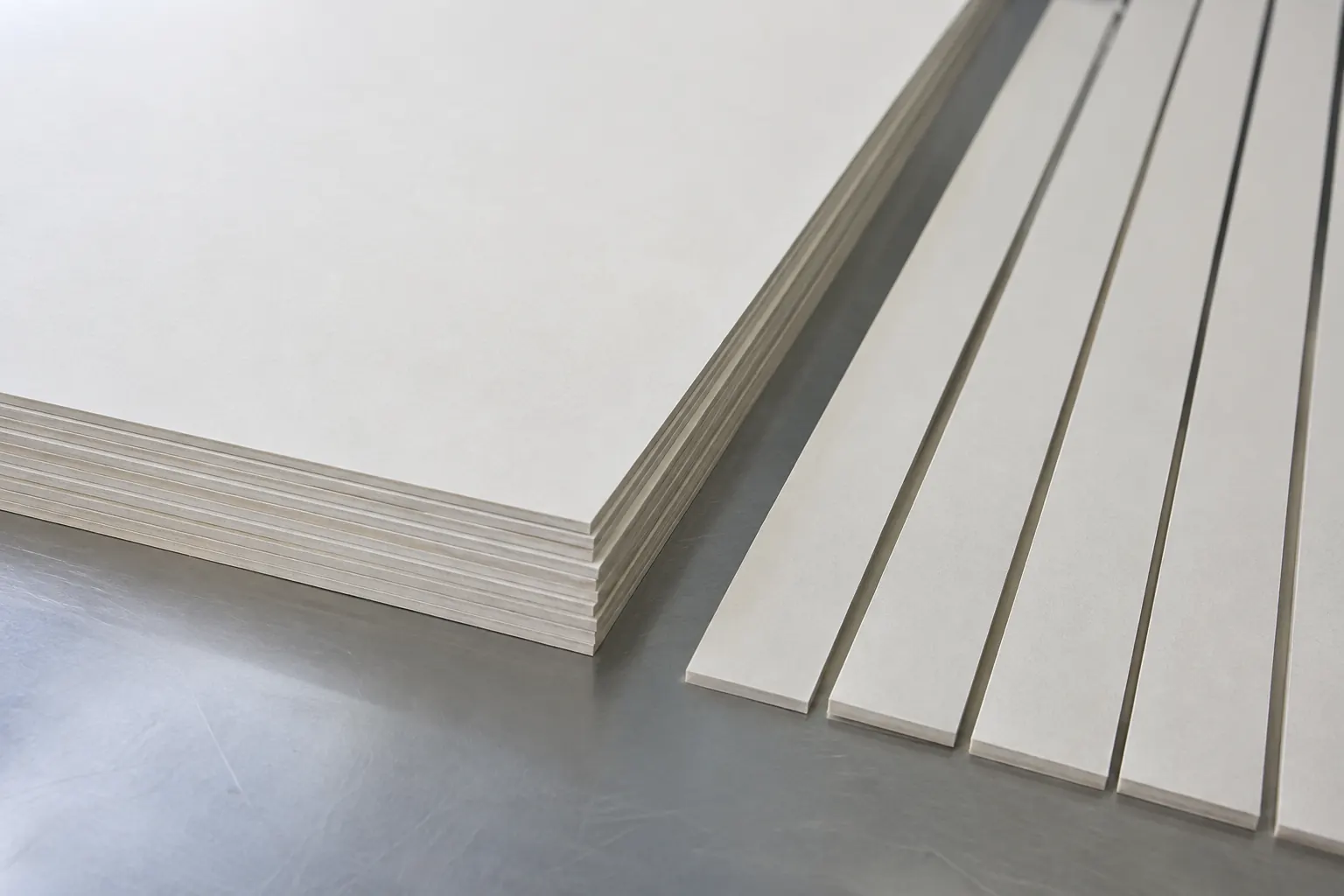
Solid bleached sulfate board offers a clean printing surface but its coating can chip or mark while the virgin-fiber core may feather at the edge. Sheet-slitting review should preserve surface appearance and dimensional accuracy without assuming that one setup fits every caliper or coating system.
Updated
Where This Cutting Application Appears
Folding-carton strip preparation
Converts printed or unprinted SBS sheets into controlled widths for later blanking.
Display and card component cutting
Produces narrow coated-board elements where visible faces and edges must remain presentable.
Packaging sample conversion
Prepares test strips used to evaluate print, crease, fold and adhesive behavior.
Sheet Slitting process boundary
Sheet slitting divides sheet stock along parallel longitudinal lines to create strips; it is not final rectangular sizing or a shaped profile cut.
Sheet Slitting setup checkpoint
Confirm sheet support, parallel guide references, blade-line spacing and how narrow strips leave the cutting zone without rotating or overlapping.
Sheet Slitting acceptance checkpoint
Inspect strip width at several positions, edge straightness, surface marking and whether the strips remain flat enough for the next operation.
Define the Required Cut Result
- Uniform strip width and parallel edges
- Coated faces free from chips, scratches and pressure marks
- Clean white fiber edge with low debris
- Flat strips that feed consistently downstream
Problems to Diagnose Before Changing the Knife
Coating chips along the top edge
- Identify coating build and cutting direction
- Inspect support and surface condition
- Compare humidity and board brittleness
White fibers feather from the lower edge
- Review engagement and bottom support
- Compare caliper and fiber direction
- Inspect top and bottom faces separately
Visible surface develops pressure lines
- Map contact points during feeding
- Inspect debris and roller cleanliness
- Review stack restraint and handling
Narrow strips bow after cutting
- Record coating balance and moisture
- Compare grain direction
- Measure after consistent conditioning
Knife Forms That May Be Considered
| Possible knife form | When it may be considered | What must be confirmed |
|---|---|---|
| rotary shear-slitting arrangement | May suit guided sheet or web conversion where paired circular cutting components are supported. | Confirm material path, mounting, rotation, overlap, side load and mating geometry from line data and approved drawings. |
| straight sheet-slitting arrangement | May suit indexed coated sheets where hold-down and a guided linear cut protect registration. | Confirm cutting length, clamp, support, clearance, stroke and surface-contact limits before defining the arrangement. |
Information to Send for Technical Review
You do not need to know the exact blade name. Send the available workpiece, machine, current-knife and cut-result information so the application can be reviewed against a drawing or sample.
- SBS grade, caliper, basis weight and grain direction
- Coating type, printed status and surface sensitivity
- Sheet dimensions and single or stacked feed
- Required strip widths and tolerances
- Feed speed, alignment, hold-down and support
- Current cutting motion and mounting details
- Accepted and rejected coating-chip or feather samples
- Downstream printing, blanking or forming requirement
Questions About This Cutting Application
Why can a clean white board still make edge debris?
Virgin fibers, mineral coating and local support respond differently, especially when moisture or caliper changes.
Should printed and unprinted SBS be tested separately?
Yes when ink, varnish or surface protection changes friction, brittleness or acceptable marking.
What causes coating chips?
Brittle coating, unsupported fracture, cutting direction and conditioning can all contribute.
Why do narrow strips bow?
Coating imbalance, moisture gradient, grain direction and released sheet stress may become more visible after slitting.
Can edge quality be judged from one face?
No. Inspect both faces, the edge thickness and any debris because defects can differ by entry and exit side.
Related product and service information
- Aluminum Blister Lidding Foil Roll Slitting Blades - aluminum blister lidding foil · roll slitting
- Folding Boxboard Sheet Slitting: Square Edges and Coating Protection - folding boxboard · sheet slitting
- Solid Bleached Sulfate Board Edge-Trimming Blades - solid bleached sulfate board · edge trimming
Request a Custom Cutting-Knife Review
Send the workpiece details, machine or holder information, current knife photos or sample, required quantity and examples of the present cut problem. Final dimensions, material, edge geometry and tolerances are confirmed from the approved requirements.