
Blade Application Guides / Application Guide / Precious metal converting
Silver Metal Foil Precision Blanking Blades
Precision blanking cuts discrete enclosed shapes from silver metal foil. The finished part, rather than a rewound strip, is the unit of inspection. A profile can meet its outline yet be unacceptable if the face is marked, a corner folds or the part sticks during ejection. Start with the buyer’s profile drawing, foil grade and temper, approved finish sample and recovery procedure. Then trial the punch, die, support and part discharge as one system.
Updated
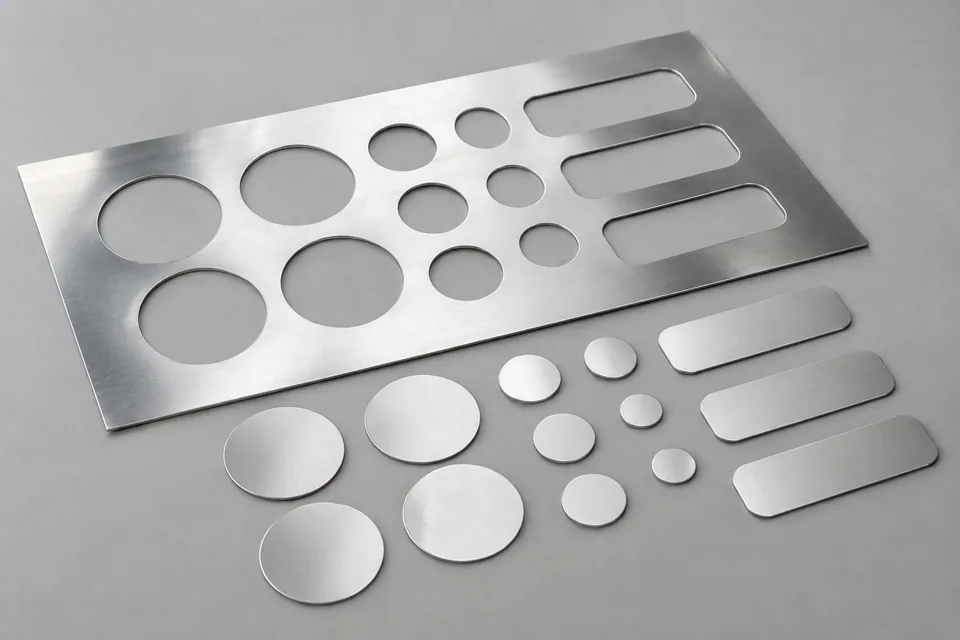
Where This Cutting Application Appears
Profile and registration
Inspect the complete enclosed outline against the drawing datums. Where the blank is positioned relative to a feature or previous operation, record feed pitch and pilot method, then sample first and later strokes.
Face protection and hold-down
Compare both sides of each part with an untouched foil control. Identify whether a mark comes from hold-down, stripper, die land, ejection or collection before changing cutting-edge geometry.
Edge, flatness and small features
Check burr and rollover around the entire perimeter, especially corners and narrow bridges. Inspect flatness after ejection as well as at the die; support and clearance can affect distortion.
Part and skeleton accounting
Design a route that separates accepted blanks, rejects and residual skeleton. Recover small pieces from the die and collection tray under the buyer’s material-control procedure.
Define the Required Cut Result
- Match the outline and registered features on the approved drawing.
- Preserve the buyer’s cosmetic finish on both foil faces.
- Meet burr, corner and flatness criteria after ejection.
- Account for blanks and skeleton without mixing lots.
Problems to Diagnose Before Changing the Knife
Corner burr exceeds the accepted sample
- Inspect punch and die alignment around the corner.
- Check local tool wear and actual foil thickness.
- Compare clearance and edge sample before modifying geometry.
Blank is flat at the die but curled in the tray
- Observe stripping and ejection contact.
- Review how the part lands and stacks.
- Check whether hold-down settings changed across the trial.
Small pieces remain in the skeleton
- Inspect part-release timing and die opening.
- Check for static, adhesion or nesting in the collection route.
- Reconcile missing blanks with retained skeleton and rejects.
Knife Forms That May Be Considered
| Possible knife form | When it may be considered | What must be confirmed |
|---|---|---|
| Contour punch and die set | For repeated separate shapes from supported silver foil. | Confirm full profile, press mounting, clearance, support and ejection with a trial. |
| Registered progressive blanking station | When blanks follow earlier features or require indexed feed. | Confirm datum/pilot scheme, foil web strength and part/skeleton discharge. |
Information to Send for Technical Review
You do not need to know the exact blade name. Send the available workpiece, machine, current-knife and cut-result information so the application can be reviewed against a drawing or sample.
- Silver grade, temper and thickness range
- Part drawing with datums, radii and feature positions
- Accepted profile, burr, flatness and cosmetic samples
- Press and die-set dimensions
- Feed registration, hold-down and stripper details
- Punch/die clearance and alignment records
- Part ejection, collection and skeleton recovery method
- Lot traceability and trial inspection plan
Questions About This Cutting Application
Is a good edge enough to approve silver foil blanks?
No. The outline, surface finish, flatness and discharge condition must also meet the buyer’s acceptance standard.
What is the purpose of the skeleton inspection?
It helps show feed misregistration, incomplete part release and material loss that may not appear on a single sampled blank.
Should blanking clearance be copied from a different metal foil?
No. Test with the actual silver grade, temper and thickness against the required cut face.
How is this different from coil slitting?
Blanking releases individual enclosed parts. Slitting makes continuous lengthwise strips for rewinding.
Public references and scope
These public sources provide material, cutting-method or safety context for this guide. Supplier pages describe their own materials or equipment; they do not establish a MEIRENTE blade specification or performance claim. Confirm the actual grade, machine setup and required cut with a drawing or sample.
Related product and service information
- Expanded Copper Mesh Cut-To-Length Blades - expanded copper mesh · cut to length
- Magnesium Alloy Foil Precision Blanking Blades - magnesium alloy foil · precision blanking
- Zinc Metal Foil Precision Blanking Blades - zinc metal foil · precision blanking
Request a Custom Cutting-Knife Review
Send the workpiece details, machine or holder information, current knife photos or sample, required quantity and examples of the present cut problem. Final dimensions, material, edge geometry and tolerances are confirmed from the approved requirements.