
Blade Application Guides / Application Guide / Zinc foil converting
Zinc Metal Foil Precision Blanking Blades
Zinc metal foil precision blanking releases separate profiles from a supported web or sheet. Compared with coil slitting, the key questions are where each blank is registered, how the thin stock is held during the stroke and how the part is ejected without distortion. Confirm the zinc grade, temper, coating or surface condition and accepted burr and flatness limits. Validate the punch/die setup with actual stock, because the nominal foil thickness alone does not define a usable edge.
Updated
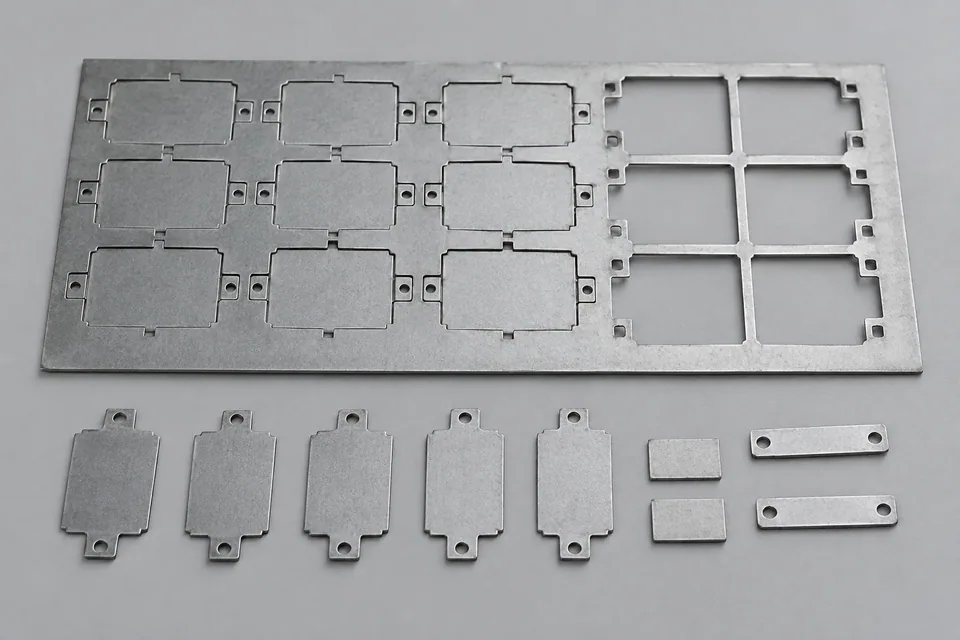
Where This Cutting Application Appears
Enclosed profile inspection
Use the drawing datums to measure the whole blank, not only a nominal diameter or width. Check corner radii, narrow bridges and registered features on samples from different points in the trial.
Support and hold-down
Inspect the web path, press support and stripper face. If the foil shifts or lifts with the punch, first review restraint and alignment before assigning the defect to cutting-edge wear.
Cut edge after release
Compare burr, rollover, flatness and any surface coating damage on the ejected part with the accepted sample. Record where each rejected feature appears on the punch/die perimeter.
Part and skeleton discharge
Make sure blanks clear the die and the surrounding skeleton advances without catching. Inspect the collection method because stacking or chute contact can bend a part after a good cut.
Define the Required Cut Result
- Hold the full enclosed profile and registered features to the drawing.
- Meet the buyer’s burr, corner and flatness requirements.
- Keep specified surface condition intact through ejection.
- Discharge blanks and skeleton without jams or secondary bends.
Problems to Diagnose Before Changing the Knife
One corner carries a persistent burr
- Check local punch/die clearance and alignment.
- Inspect the corner for wear or damage.
- Compare the foil thickness and surface condition with an accepted sample.
Blank shows a dome or crease
- Check hold-down and support near the profile.
- Observe stripper and ejection timing.
- Inspect an uncut stock sample for existing shape.
Part passes profile check but jams in discharge
- Review die opening, part release and collection route.
- Inspect for stacked blanks and skeleton interference.
- Compare slow trial strokes with production-speed observations.
Knife Forms That May Be Considered
| Possible knife form | When it may be considered | What must be confirmed |
|---|---|---|
| Profile punch and matched die | For repeated separate zinc foil outlines on a suitable press. | Confirm edge, clearance, mounting and discharge with the actual foil. |
| Progressive profile station | When earlier features or an indexed strip determine blank position. | Confirm feed pitch, datum/pilot method, web support and skeleton integrity. |
Information to Send for Technical Review
You do not need to know the exact blade name. Send the available workpiece, machine, current-knife and cut-result information so the application can be reviewed against a drawing or sample.
- Zinc grade, temper, thickness range and coating or surface state
- Profile drawing, datums and corner details
- Accepted burr, flatness and cosmetic samples
- Press and feed drawings
- Strip support, hold-down and stripper layout
- Punch/die clearance and alignment records
- Part ejection and skeleton collection plan
- Trial sampling and inspection method
Questions About This Cutting Application
Does a thinner zinc foil always need a smaller clearance?
No universal rule applies. Determine the setup from the actual foil condition, profile and accepted cut face.
Why measure the ejected blank?
The part can bend or mark during stripping and collection even if the cut perimeter appears correct at the die.
What does the buyer need to send?
Send the current part drawing, actual foil sample, surface and burr limits, plus press and discharge details.
How is this different from zinc foil slitting?
Blanking cuts enclosed, separate pieces; coil slitting makes continuous lengthwise strips.
Public references and scope
These public sources provide material, cutting-method or safety context for this guide. Supplier pages describe their own materials or equipment; they do not establish a MEIRENTE blade specification or performance claim. Confirm the actual grade, machine setup and required cut with a drawing or sample.
Related product and service information
- AGM Battery Separator Mat Contour-Cutting Blades - AGM battery separator mat · contour cutting
- Magnesium Alloy Foil Precision Blanking Blades - magnesium alloy foil · precision blanking
- Inconel Alloy Foil Precision Blanking Blades - Inconel alloy foil · precision blanking
Request a Custom Cutting-Knife Review
Send the workpiece details, machine or holder information, current knife photos or sample, required quantity and examples of the present cut problem. Final dimensions, material, edge geometry and tolerances are confirmed from the approved requirements.