
Blade Application Guides / Application Guide / Paper converting
Silicone Release Paper Rotary Die Cutting: Depth and Release-Surface Control
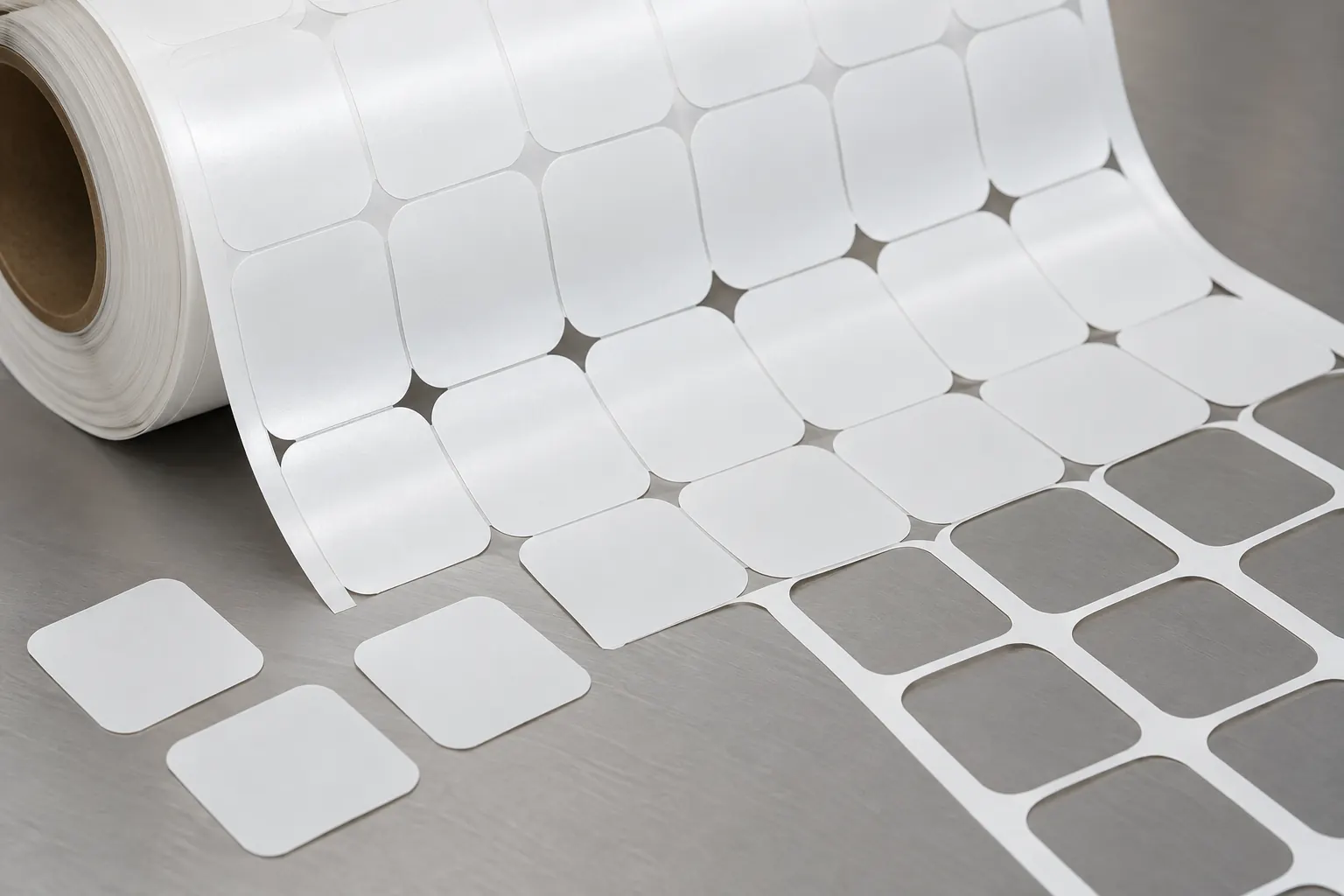
Rotary die cutting of silicone release paper may produce through-cut blanks, perforations or controlled cuts within a laminated construction. The required result depends on whether the liner is the finished part or a support layer, so penetration, matrix behavior, coating integrity and registration must be defined before the cutting form is discussed.
Updated
Where This Cutting Application Appears
Adhesive patch release carriers
Release-paper shapes are produced as carriers or removable covers for adhesive pads, seals and converted components.
Composite and rubber separators
Profiles and perforated release layers are cut for layup, molding or handling processes where contamination must be controlled.
Label and tape conversion
The liner may be selectively cut, perforated or through-cut as part of a registered web construction.
Rotary Die Cutting process boundary
Rotary die cutting repeats registered profiles with a rotating tool across a moving web; it differs from straight slitting, cross cutting and simple edge trimming.
Rotary Die Cutting setup checkpoint
Confirm repeat pitch, registration marks, anvil condition, web tension, cutting depth and the waste path for every profile and internal feature.
Rotary Die Cutting acceptance checkpoint
Inspect registration, profile dimensions, corner quality, complete separation or controlled depth, liner condition and continuous waste removal.
Define the Required Cut Result
- Control cut depth for the specified layer outcome
- Keep profile dimensions and repeat registration stable
- Protect the release coating outside the intended cut
- Remove waste matrix without tearing usable parts
Problems to Diagnose Before Changing the Knife
Incomplete separation around the profile
Check caliper variation, base-paper density, support condition, pressure distribution, web tension and whether the uncut area repeats at the same cylinder position.
Excessive penetration or backing damage
Review target layer structure, total caliper, pressure setting, support wear, runout and the inspection method used to define acceptable penetration.
Matrix tears during removal
Compare waste geometry, corner radii, bridge areas, paper strength, coating friction, stripping angle, speed and tension.
Profile registration shifts
Check print or web marks, feed accuracy, tension zones, cylinder synchronization, material stretch and repeat measurement over a full roll.
Knife Forms That May Be Considered
| Possible knife form | When it may be considered | What must be confirmed |
|---|---|---|
| Rotary die-cutting form | Consider when repeated profiles are produced by a rotary tool against a matched support surface. | Confirm profile drawing, repeat, cylinder interface, target cut depth, support and tolerances through the equipment owner and approved trial. |
| Rotary perforating form | Consider when the required result is a controlled tear line rather than full profile separation. | Confirm tooth-and-gap pattern, material direction, tear strength and repeat only from tested samples and an approved specification. |
Information to Send for Technical Review
You do not need to know the exact blade name. Send the available workpiece, machine, current-knife and cut-result information so the application can be reviewed against a drawing or sample.
- Base-paper grade, coating construction and total caliper range
- Required profile drawing, tolerances, corner radii and repeat
- Through cut, partial cut or perforation requirement
- Web width, running direction, speed and tension range
- Registration method and allowable print-to-cut deviation
- Existing rotary interface, support surface and pressure method
- Accepted parts plus examples of incomplete or excessive cuts
- Matrix-removal path, downstream use and inspection frequency
Questions About This Cutting Application
Is this always a through-cut application?
No. Silicone release paper can be through-cut, perforated or selectively cut within a laminate. The target layer and allowed witness mark must be stated clearly.
Why does matrix waste tear at corners?
Small radii, narrow waste bridges, paper weakness, coating friction, stripping angle and tension can concentrate load at corners. Supply the profile and torn matrix for review.
How is rotary cut depth checked?
Use a documented part test appropriate to the construction, such as separation, layer inspection or controlled functional testing, rather than relying only on visible marks.
Can a profile drawing define the complete tool?
The profile is essential but not sufficient. Repeat, cylinder interface, support, pressure method, web direction, material variation and registration data are also needed.
What makes a useful die-cut trial report?
Record material lot, speed, tension, pressure, repeat position, registration, cut completion, coating condition, matrix behavior and downstream performance.
Related product and service information
- Silicone Release Paper Edge Trimming: Width Control Without Coating Damage - silicone release paper · width edge trimming
- Glassine Liner Paper Rotary Die Cutting: Profiles Without Brittle Fracture - glassine liner paper · rotary die cutting
- Clay-Coated Label Paper Rotary Die Cutting: Profiles With Intact Print - clay-coated label paper · rotary die cutting
Request a Custom Cutting-Knife Review
Send the workpiece details, machine or holder information, current knife photos or sample, required quantity and examples of the present cut problem. Final dimensions, material, edge geometry and tolerances are confirmed from the approved requirements.