
Blade Application Guides / Application Guide / Paper converting
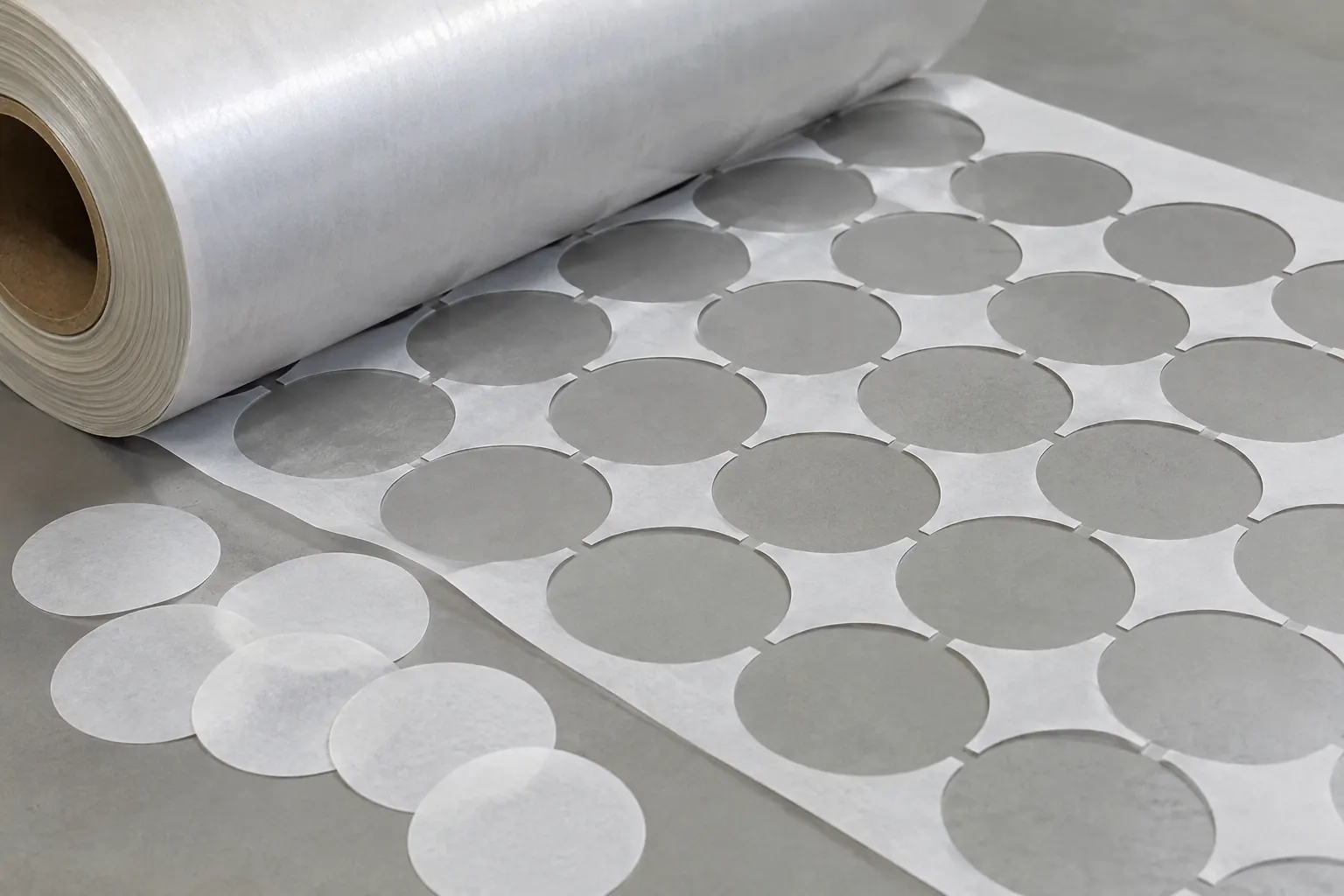
Glassine Liner Paper Rotary Die Cutting: Profiles Without Brittle Fracture
Rotary profile cutting combines the dimensional demands of repeat production with the brittle behavior of dense glassine. Whether the liner is through-cut, perforated or retained beneath another layer changes every acceptance decision, so construction, cut depth, radii and matrix path must be described before quoting.
Where This Cutting Application Appears
Label and decal liner constructions
Glassine supports registered adhesive products and may receive partial cuts, perforations or liner-side features.
Release tabs and protective shapes
Discrete glassine pieces are cut for adhesive assemblies requiring peel tabs, covers or process separators.
Medical converting webs
Release-liner profiles are produced for dressings and adhesive components under controlled cleanliness and traceability requirements.
Common Ways to Describe This Cutting Problem
- glassine liner paper rotary die-cutting blades
- glassine release liner rotary profile cutting
- die cut glassine without brittle cracks
- glassine liner kiss cut depth review
- rotary glassine perforation application
- glassine waste matrix stripping solution
- registered shapes cut from glassine paper
- custom rotary die RFQ for glassine liner
Define the Required Cut Result
- Complete the intended profile without radial cracking
- Control penetration through the specified layers
- Maintain repeat position and profile dimensions
- Strip matrix waste without lifting finished liner parts
Problems to Diagnose Before Changing the Knife
Cracks extend beyond sharp profile corners
Review corner radius, glassine grain, density, moisture, support, pressure distribution and whether cracking follows a repeat location.
Some profile areas remain connected
Check caliper and density variation, pressure uniformity, support wear, runout and repeating cylinder-position patterns.
Matrix pulls finished pieces away
Evaluate waste bridges, part spacing, release coating, stripping angle, web tension, speed and static control.
Registration drifts along the roll
Review feed traction, tension isolation, print-mark sensing, roll eccentricity, synchronization and material dimensional stability.
Knife Forms That May Be Considered
| Possible knife form | When it may be considered | What must be confirmed |
|---|---|---|
| Rotary profile-cutting form | Consider for repeated glassine shapes or registered liner features on rotary converting equipment. | Confirm profile, repeat, cylinder interface, target layers, support and tolerances from approved drawings and trials. |
| Rotary perforating form | Consider when glassine requires a predictable fold or tear path instead of complete separation. | Confirm tooth pattern, residual strength, grain direction and functional tear tests before manufacture. |
Information to Send for Technical Review
You do not need to know the exact blade name. Send the available workpiece, machine, current-knife and cut-result information so the application can be reviewed against a drawing or sample.
- Glassine grade, density, caliper, coating and moisture range
- Layer construction and exact target of the cut
- Profile CAD or drawing, radii, tolerances and repeat length
- Web width, direction, speed and tension conditions
- Registration system and allowable print-to-cut variation
- Cylinder or tooling interface, support surface and pressure control
- Accepted parts, failed profiles and retained matrix samples
- Downstream peeling, assembly and inspection requirements
Questions About This Cutting Application
Why does glassine crack outside a die-cut corner?
A small radius can concentrate stress in dense paper, especially across grain or at low moisture. Support, pressure and material conditioning must also be checked.
Can glassine be partially cut without damage?
It can in suitable constructions, but the target layer, allowed witness mark, caliper variation, support and functional release test must be defined.
What helps prevent matrix-lifted parts?
Review part spacing, waste geometry, stripping angle, coating friction, web tension and static. A retained matrix sample often reveals the initiating bridge.
How is repeat registration evaluated?
Measure profile position against the defined reference over multiple repeats, speed states and roll locations rather than checking only one sheet.
Is a CAD profile sufficient for quotation?
No. Include material construction, target depth, repeat, equipment interface, support, tolerance, speed and approved outcome samples.
Request a Custom Cutting-Knife Review
Send the workpiece details, machine or holder information, current knife photos or sample, required quantity and examples of the present cut problem. Final dimensions, material, edge geometry and tolerances are confirmed from the approved requirements.