
Blade Application Guides / Application Guide / Paperboard converting
Folding Boxboard Edge Trimming: Clean Coated Margins and True Width
Folding boxboard edge trimming removes mill-edge variation, transport damage or coating defects before printing and carton conversion. Because the board is thicker and layered, narrow trim can fracture into chips rather than form a flexible ribbon, making waste handling and edge inspection central to the process review.
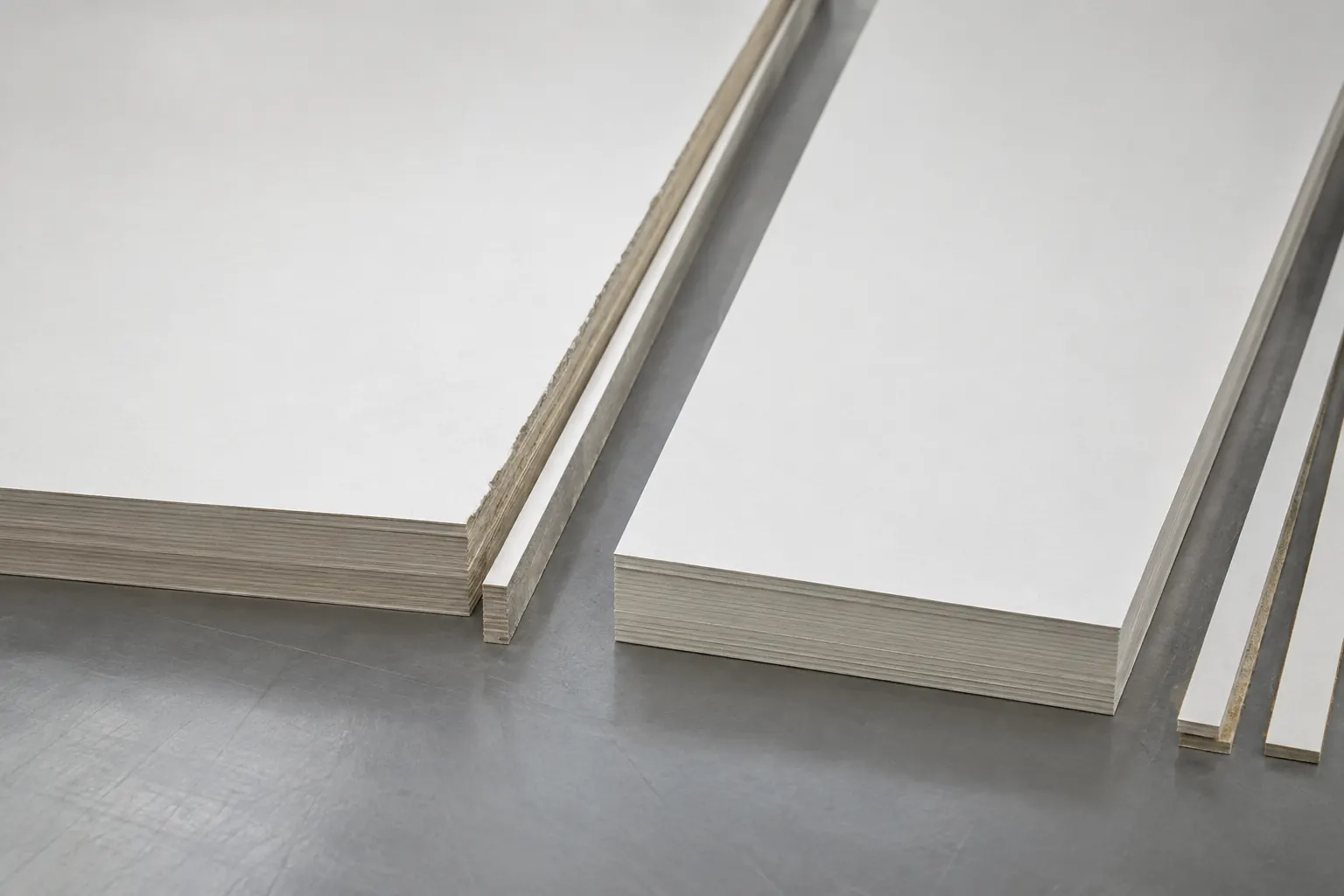
Where This Cutting Application Appears
Mill-edge finishing
Irregular, uncoated or damaged outer edges are removed before folding boxboard enters print and converting operations.
Laminated-board width matching
Board and attached film or paper layers are trimmed to a common edge for subsequent creasing and folding.
Salvage of transport-damaged sheets
Crushed margins are removed from valuable coated board where the remaining usable width still meets production needs.
Common Ways to Describe This Cutting Problem
- folding boxboard edge-trimming blades
- FBB coated board margin trimming
- folding carton board edge finishing
- paperboard damaged edge removal
- coated boxboard trim chip control
- folding boxboard usable width correction
- layered board edge trim delamination
- custom edge trimming RFQ for carton board
Define the Required Cut Result
- Create straight coated margins without ply separation
- Remove all damaged board while retaining usable width
- Control coating chips and fibrous trim debris
- Protect sheet faces and corners during waste removal
Problems to Diagnose Before Changing the Knife
Trim edge opens between board plies
Review incoming bond, moisture, damaged-zone depth, support, cutting direction, contact geometry and whether separation grows after flexing.
Narrow board trim breaks into chips
Assess trim width, stiffness, grain direction, coating, extraction or collection method and impact points after separation.
Finished margin remains crushed
Map damage inward from the original edge, check trim position, sheet alignment and whether clamp or guides introduce new compression.
Coating flakes scratch adjacent sheets
Trace loose debris, stack sliding, hold-down surfaces, waste removal and cleaning between batches.
Knife Forms That May Be Considered
| Possible knife form | When it may be considered | What must be confirmed |
|---|---|---|
| Paired circular edge trimming | Consider where individual board sheets or continuous board stock pass through supported rotary edge cutters. | Confirm dimensions, overlap, side load, sheet support and feed orientation from the actual equipment. |
| Straight shear edge trimming | Consider where a straight shearing action removes one board margin with controlled support. | Confirm knife and fixed-edge interfaces, clearance, rake, hold-down and board range through verified drawings and samples. |
Information to Send for Technical Review
You do not need to know the exact blade name. Send the available workpiece, machine, current-knife and cut-result information so the application can be reviewed against a drawing or sample.
- Folding boxboard grade, caliper, plies, coating and grain
- Incoming damage depth, mill-edge condition and moisture
- Original width, target width, tolerance and trim allowance
- Single-sheet or continuous feed, speed and alignment method
- Board support, hold-down, waste collection and sheet handling
- Current trimming action, holder interface and dimensions
- Delaminated edges, trim chips and scratched-sheet samples
- Downstream print, crease and usable-width requirements
Questions About This Cutting Application
Can edge trimming stop existing ply separation?
It can remove a damaged zone, but remaining interply bond must be inspected because separation may extend farther inward than it appears.
Why does board trim break instead of forming a ribbon?
Folding boxboard is thick and layered with limited flexibility across narrow widths. Grain, coating and trim geometry influence how waste fractures.
How much damaged margin should be removed?
Determine the minimum cutback that removes crushing, moisture or contamination while preserving required width, then verify the new edge by flexing and inspection.
Can coating chips be controlled only at the cut?
No. Waste collection, sheet handling, cleaning and stack movement determine whether separated chips later scratch usable surfaces.
What confirms final edge-trim dimensions?
Use the actual holder and machine interfaces, verified current parts or approved drawings, along with board range and trial results.
Request a Custom Cutting-Knife Review
Send the workpiece details, machine or holder information, current knife photos or sample, required quantity and examples of the present cut problem. Final dimensions, material, edge geometry and tolerances are confirmed from the approved requirements.