
Blade Application Guides / Application Guide / Surface-protection film converting
Protective Film Slitting With Adhesive and Liner Control
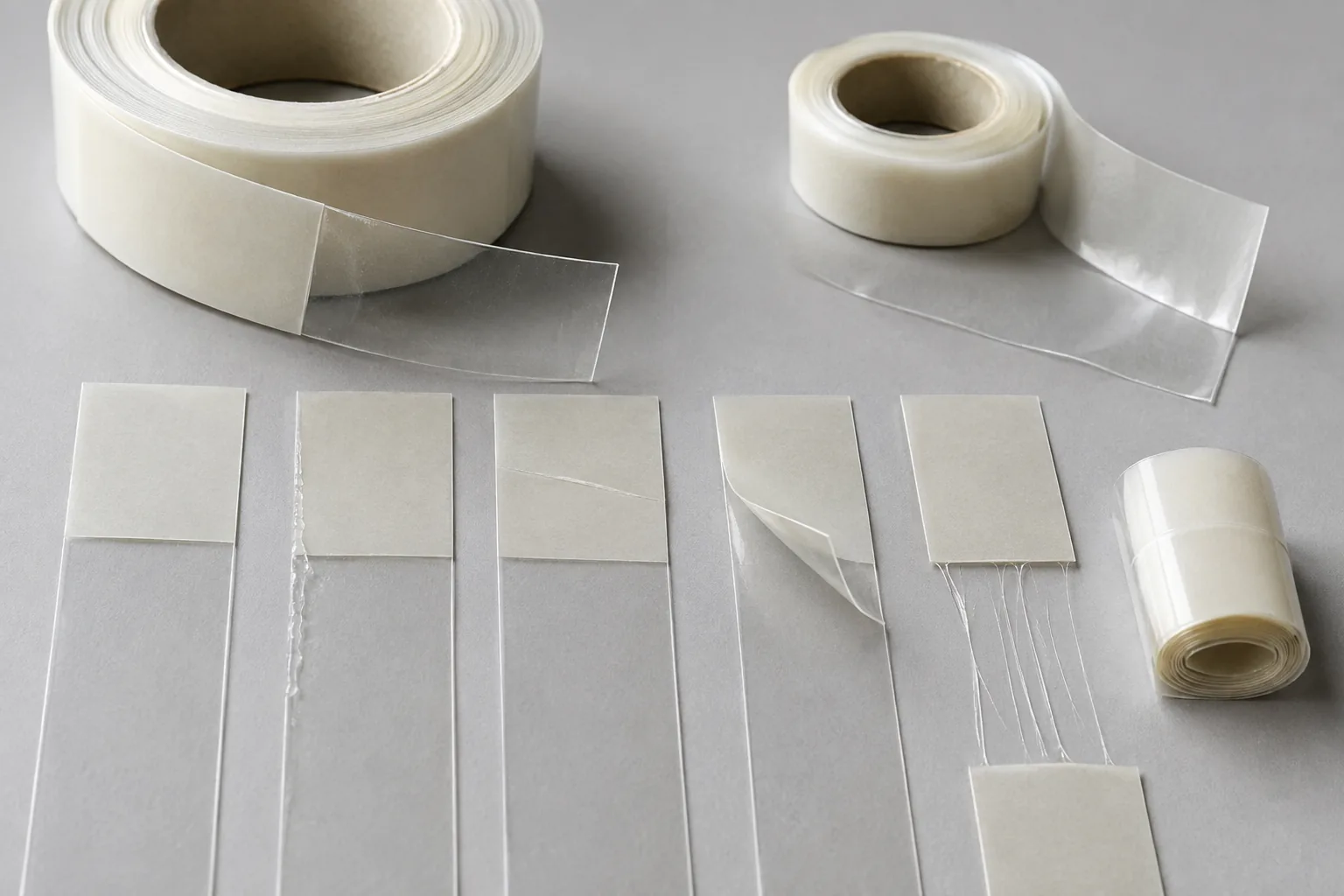
Surface-protection film can combine a thin face film, pressure-sensitive adhesive, and sometimes a release liner, so the cut must separate layers without spreading tacky material onto adjacent wraps. Selection begins with the real construction, aging condition, application surface, lane width, and rewind format because adhesive behavior often changes with temperature and pressure.
Updated
Where This Cutting Application Appears
Temporary surface-protection rolls for metal sheet
Coated film is slit to application widths while the adhesive edge remains contained and the face film stays free of transfer marks.
Panel and profile masking widths
Master rolls are converted into narrow bands for selected panel, extrusion, or fabricated-profile areas with controlled liner and edge alignment.
Die-cutting feed rolls with release liner
Film-and-liner constructions are slit into feeder widths that preserve liner integrity and prevent edge lift before later shape conversion.
Slitting process boundary
slitting for adhesive protective film is planned around longitudinal width conversion of a moving roll, web, sheet or strip into controlled lanes or daughter rolls; it is not transverse length cutting, profile formation or removal of only a narrow damaged margin.
Slitting setup checkpoint
For adhesive protective film, confirm unwind and rewind tension, lane widths, knife positions, edge guidance, core alignment, trim removal and discharge behavior.
Slitting acceptance checkpoint
For adhesive protective film, evaluate lane width, edge condition, camber or wandering, debris, telescoping, interleaving and stable winding or downstream transfer.
Define the Required Cut Result
- Separate every intended layer without scoring a liner that must remain functional
- Confine pressure-sensitive adhesive inside the roll edge instead of smearing outward
- Prevent face-film stretch that can create edge lift during application
- Wind narrow lanes with enough stability for storage, handling, and later unwinding
Problems to Diagnose Before Changing the Knife
Adhesive squeezes onto the slit face or builds on the knife
Review adhesive chemistry, coat weight, aging, roll temperature, winding pressure, cut friction, knife finish, speed, and cleaning interval.
The release liner is cut unevenly or scored instead of separated
Check liner material and caliper, total stack, penetration or overlap, support, pressure variation, runout, and whether the task is through-cutting or kiss-cutting.
The protective film lifts or curls along one edge
Compare film orientation, residual stress, adhesive distribution, slit-edge heat, tension differential, narrow width, liner curl, and time since conversion.
Slit rolls block, telescope, or leave adhesive strings on unwind
Inspect reel hardness, taper tension, core alignment, storage temperature, edge offset, adhesive ooze, static, and the direction and speed of downstream unwind.
Knife Forms That May Be Considered
| Possible knife form | When it may be considered | What must be confirmed |
|---|---|---|
| Circular shear slitting | Consider for supported film-and-liner laminates where layer separation and edge compression must be controlled. | Confirm all layer thicknesses, adhesive type, overlap or clearance, side load, holder accuracy, roll temperature, and approved edge condition. |
| Razor or score slitting | Consider according to the existing web support and whether the operation requires a through-cut or a controlled-depth cut. | Confirm cut depth, anvil or support, blade angle, adhesive exposure, liner requirement, speed, tension, and aged production samples. |
Information to Send for Technical Review
You do not need to know the exact blade name. Send the available workpiece, machine, current-knife and cut-result information so the application can be reviewed against a drawing or sample.
- Face-film polymer, thickness, stretch behavior, surface treatment, and protected-side orientation
- Adhesive family, coat weight if available, application temperature, aging state, and known ooze behavior
- Release-liner material and caliper plus whether it must be cut through, scored, or left intact
- Parent-roll dimensions, winding direction, storage history, edge condition, and current temperature
- Lane widths, narrowest roll, edge tolerance, trim layout, and permissible adhesive exposure
- Web speed, tension zones, support or anvil arrangement, guiding, and holder interface drawing
- Rewind cores, finished diameter, taper, lay-on pressure, edge offset, and downstream unwind direction
- Representative samples of buildup, liner damage, edge lift, or blocking indexed by roll and lane
Questions About This Cutting Application
Why does adhesive ooze increase after the roll has been stored?
Pressure, temperature, time, adhesive flow, and tight winding can move tacky material toward the edge. Review aged rolls, not only freshly slit samples.
Is protective-film slitting the same as liner kiss-cutting?
No. Slitting usually divides the roll through its intended stack, while kiss-cutting controls depth to leave a carrier intact. State which layers must separate.
What causes edge lift before the film reaches the application process?
Face-film stretch, residual curl, uneven adhesive, contaminated edges, excess cut heat, liner distortion, or roll pressure may start lifting during storage.
How should adhesive buildup be reported for troubleshooting?
Record roll age and temperature, lane, knife position, run length, buildup color and texture, cleaning interval, and whether the deposit came from adhesive or another layer.
Can the same settings be used after the adhesive formulation changes?
Do not assume so. Confirm coating weight, flow, tack, layer thickness, temperature response, liner, web path, and the accepted edge using the revised material.
Related product and service information
- BOPP Film Slitting With Stable Edges and Tension - BOPP film webs · web slitting
- PET Film Slitting for Clean Narrow Reels - PET film webs · precision slitting
- PE Film Edge Trimming Without Stretching - PE film webs · edge trimming
Request a Custom Cutting-Knife Review
Send the workpiece details, machine or holder information, current knife photos or sample, required quantity and examples of the present cut problem. Final dimensions, material, edge geometry and tolerances are confirmed from the approved requirements.