
Blade Application Guides / Application Guide / Hydrogen equipment manufacturing
PEM Electrolyzer Membrane Sheet Slitting Blades
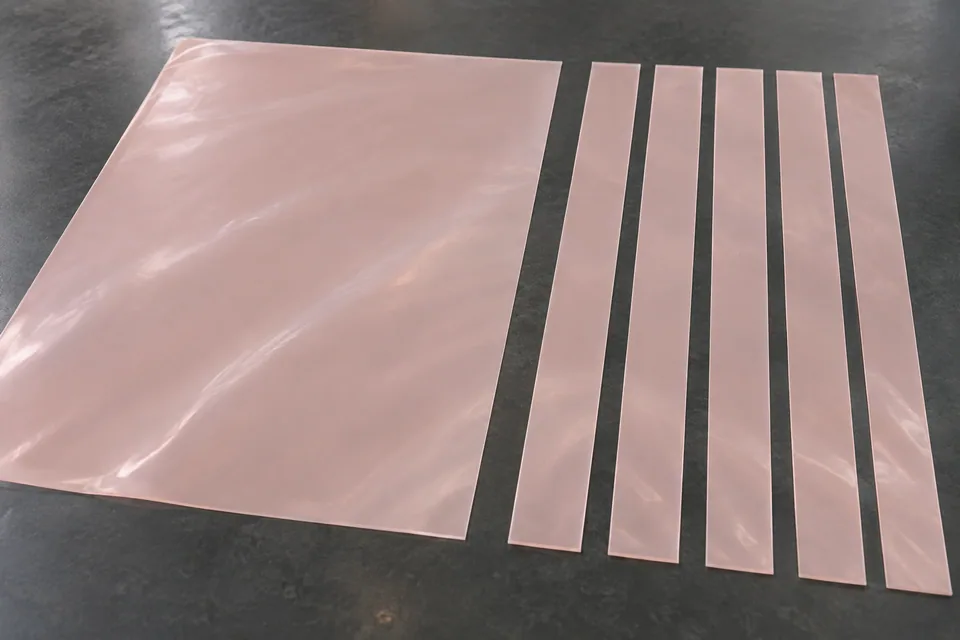
Sheet slitting creates narrower continuous lanes from a wider PEM water-electrolyzer membrane roll. It should be considered only when the chosen membrane grade and later cell layout call for lane conversion. Chemours documents PFSA membrane rolls with a backing film and protective coversheet that stabilize handling, while Gore lists electrolyzer PEM roll format and orientation. Those sources show why the actual supplied stack must govern the trial: a bare membrane, backed membrane and catalyst-coated assembly are not interchangeable. Record which layer faces the knife and whether both protective films remain in place. The accepted lane must meet width and surface criteria after subsequent handling, not only at the blade.
Updated
Where This Cutting Application Appears
Define longitudinal output
Specify the number of useful lanes, each finished width and outside waste allowance. Mark machine direction and functional face before unwinding; a later cell-cut layout may depend on that orientation.
Protect carrier and cover films
Confirm whether the supplied membrane has a backing and coversheet, and whether they are cut together. Inspect each layer for offset, lifted edges and trapped particles. Do not silently peel a protective film merely to make slitting easier.
Control tension and tracking
Keep the membrane supported and avoid disproportionate pull on narrow lanes. Compare width before and after winding or stacking, and note any curl or wrinkle that develops after environmental equilibration.
Inspect membrane integrity
Look for nicks, stretched translucent regions, contamination and local punctures along each new edge. Use the buyer’s accepted inspection method and retain samples from each lane position. Functional electrochemical acceptance belongs to the cell owner.
Define the Required Cut Result
- Produce continuous lanes at drawing-controlled widths.
- Preserve backing, coversheet and membrane alignment as specified.
- Avoid edge nicks, punctures, wrinkles and particle contamination.
- Maintain identification of face, orientation and material lot.
Problems to Diagnose Before Changing the Knife
Protective layers shift relative to membrane
- Review unwind direction and nip pressure.
- Inspect incoming roll before the knives.
- Check winding tension on each resulting lane.
A narrow lane curls
- Compare humidity/conditioning state.
- Review differential tension and support.
- Measure after the specified inspection interval.
Fine edge nick appears
- Map defect to knife station.
- Check blade condition and web support.
- Inspect both membrane and protective layers at the same location.
Knife Forms That May Be Considered
| Possible knife form | When it may be considered | What must be confirmed |
|---|---|---|
| Paired longitudinal slitter knives | For multiple continuous lanes on a compatible supported roll line. | Confirm stack cut-through, tool geometry and accepted edge on the supplied membrane. |
| Single longitudinal edge/width knife | Where a single useful lane is separated from wider stock. | Confirm scrap collection and whether the remaining protective films stay aligned. |
Information to Send for Technical Review
You do not need to know the exact blade name. Send the available workpiece, machine, current-knife and cut-result information so the application can be reviewed against a drawing or sample.
- PEM grade and supplied layer stack
- Roll width, thickness, orientation and conditioning instructions
- Required lane widths and waste allowance
- Whether membrane, backing and coversheet are cut together
- Accepted edge, cleanliness and surface samples
- Slitter guide, support, tension and winding drawings
- Cell owner’s subsequent blanking and test plan
Questions About This Cutting Application
Is sheet slitting the same as making a cell membrane blank?
No. Slitting produces continuous lanes. A later transverse or contour cut makes discrete cell pieces.
Can a bare film be trialed in place of protected stock?
No. Backing and coversheet change transport and edge behavior. Use the intended supplied stack.
Does this guide set electrolyzer performance?
No. It addresses conversion damage and dimensional checks; cell performance requires separate qualification.
Why mark the membrane face?
Some rolls have a specified side orientation and protective layers. Reversing them can invalidate handling and later assembly.
Public references and scope
These public sources provide material, cutting-method or safety context for this guide. Supplier pages describe their own materials or equipment; they do not establish a MEIRENTE blade specification or performance claim. Confirm the actual grade, machine setup and required cut with a drawing or sample.
Related product and service information
- Titanium Porous Transport Layer Sheet Slitting Blades - titanium porous transport layer · sheet slitting
- Electrolyzer Catalyst Decal Film Sheet Slitting Blades - electrolyzer catalyst decal film · sheet slitting
- AEM Electrolyzer Membrane Sheet Slitting Blades - AEM electrolyzer membrane · sheet slitting
Request a Custom Cutting-Knife Review
Send the workpiece details, machine or holder information, current knife photos or sample, required quantity and examples of the present cut problem. Final dimensions, material, edge geometry and tolerances are confirmed from the approved requirements.