
Blade Application Guides / Application Guide / Protective textile converting
Para-Aramid Prepreg Fabric Shear Slitting Blades
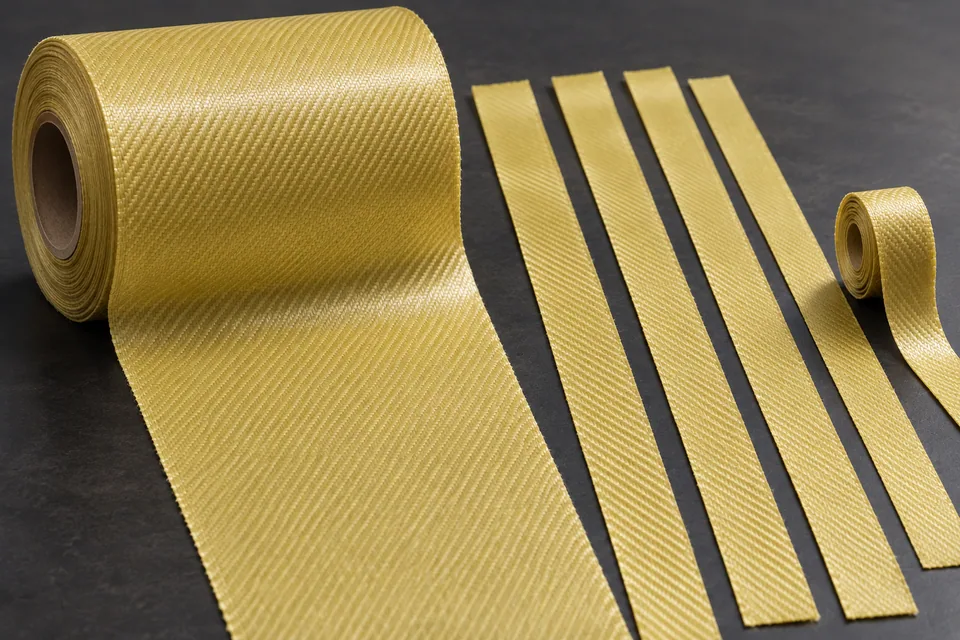
Para-aramid prepreg combines reinforcing fiber with a resin system and may carry a release liner. Resin type, tack and ply orientation vary, so the buyer must identify the actual grade and handling condition. Shear slitting makes narrow prepreg lanes before layup, with special attention to dragged fibers, resin smear and liner separation.
Updated
Where This Cutting Application Appears
Lay out the longitudinal lanes
Specify the para-aramid prepreg architecture, resin system, carrier or release liner and desired tape widths before choosing longitudinal knife positions. Mark warp or fiber direction and preserve the required layup orientation on every wound lane. The buyer’s handling instructions govern acceptable tack and conditioning.
Check the paired knife setup
In a shear-slitting trial, compare cut quality with the prepreg at the supplier-approved handling state. Track resin transfer to knife faces, liner drag and fiber pullout while recording the paired knife geometry and support. A clean dry-fabric setting may fail when the actual prepreg is tacky or carries a liner.
Inspect both slit sides
Measure each tape width and inspect both slit sides for exposed aramid fuzz, displaced resin and a liner that extends or recedes past the intended edge. Check the first and last material from a trial roll for changing deposits on the knife. Photograph representative defects against an accepted sample.
Follow winding and trim takeoff
Use the supplier’s specified storage and out-time procedure for cut rolls; no universal temperature or out-life belongs in the knife specification. Protect edges and identify fiber direction through packaging. Cure quality and final laminate strength are confirmed by downstream composite testing, not by the slitting result alone.
Material-specific acceptance
Inspect both faces for exposed aramid fuzz, resin transfer to the knife and any liner that remains attached past the intended edge. Record temperature and material age only according to the supplier’s procedure; do not invent a universal out-life. Final laminate strength is established after cure and assembly testing.
Define the Required Cut Result
- Meet tape width while maintaining the supplier’s prepreg handling state.
- Limit aramid fuzz, resin smear and liner misalignment at the edge.
- Preserve fiber direction and lot/out-time identification where applicable.
- Prevent sticking and damage during winding and protected storage.
Problems to Diagnose Before Changing the Knife
Aramid fibers bridge a prepreg slit
- Check blade edge and actual grade handling state.
- Inspect both faces and any release liner.
Resin accumulates on the knife
- Compare beginning and end of the run.
- Review supplier handling condition before changing tool geometry.
Liner extends beyond the tape
- Check liner tension, support and cutting engagement.
- Measure liner-to-prepreg offset on wound tape.
Cut rolls stick or wrinkle
- Check winding contact and specified storage method.
- Record lot and out-time only where applicable.
Knife Forms That May Be Considered
| Possible knife form | When it may be considered | What must be confirmed |
|---|---|---|
| Matched circular shear-slitter pair | For continuous longitudinal cutting on a compatible rotary line. | Confirm arbor fit, edge geometry, side clearance and overlap on the actual machine. |
| Circular edge-trim pair | When the line first removes an outside edge allowance. | Confirm trim width, collection path and retained-edge sample. |
Information to Send for Technical Review
You do not need to know the exact blade name. Send the available workpiece, machine, current-knife and cut-result information so the application can be reviewed against a drawing or sample.
- Para-aramid weave and fiber direction
- Thermoset or thermoplastic resin grade and liner stack
- Supplier handling, storage and out-time instructions if applicable
- Tape widths and downstream layup orientation
- Allowed fuzz, resin smear and liner offset
- Knife pair, support and winding drawings
- Accepted tape and late-run deposit samples
Questions About This Cutting Application
Why identify prepreg resin and liner first?
Aramid fabric with thermoset or thermoplastic resin, tack and release liner can behave differently at the knife.
What indicates a poor prepreg slit?
Look for aramid fuzz, uncut fibers, resin smear and a liner extending beyond or pulling back from the tape.
Can one out-life rule cover every prepreg?
No. Follow the supplied grade’s storage and handling instructions; thermoplastic and thermoset systems differ.
Why keep fiber-direction labels on rolls?
The cut tape must retain the layup orientation specified by the downstream composite drawing.
Does slitting establish laminate strength?
No. Strength depends on the layup, cure or consolidation and testing of the finished laminate.
Public references and scope
These public sources provide material, cutting-method or safety context for this guide. Supplier pages describe their own materials or equipment; they do not establish a MEIRENTE blade specification or performance claim. Confirm the actual grade, machine setup and required cut with a drawing or sample.
Related product and service information
- PTFE-Coated Fiberglass Cloth Shear Slitting Blades - PTFE-coated fiberglass cloth · shear slitting
- Ballistic UHMWPE Fabric Shear Slitting Blades - ballistic UHMWPE fabric · shear slitting
- Silicone-Coated Glass Fabric Shear Slitting Blades - silicone-coated glass fabric · shear slitting
Request a Custom Cutting-Knife Review
Send the workpiece details, machine or holder information, current knife photos or sample, required quantity and examples of the present cut problem. Final dimensions, material, edge geometry and tolerances are confirmed from the approved requirements.