
Blade Application Guides / Application Guide / Flexible packaging
Nylon Retort Pouch Film Edge Trimming Blades: Tough-Layer Edge Control
Nylon retort pouch film is a tough flexible laminate intended to withstand package processing, but its exact printed, barrier, adhesive and sealant layers depend on the approved structure. Elastic recovery, layer bonding and surface condition can all influence conversion, making production samples and post-retort acceptance data essential.
Updated
Where This Cutting Application Appears
Shelf-stable meal pouches
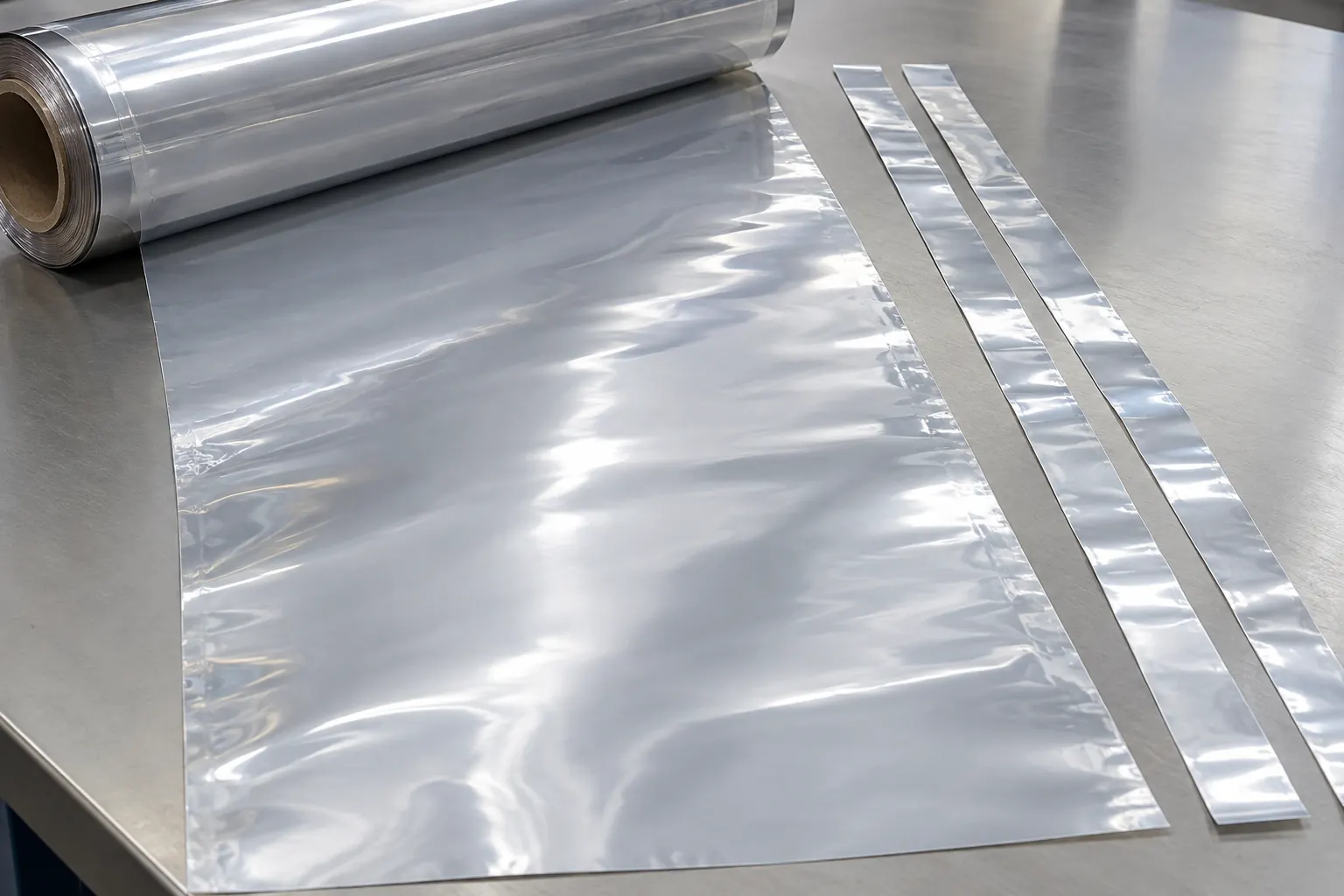
Retort laminates are converted for prepared foods, where edge geometry and layer integrity support forming, sealing and thermal processing. During width edge trimming, irregular or coated outer margins are removed before winding or finishing. Review both retained edges and trim-strip behavior under production tension.
Pet-food retort packaging
Tough pouch webs are sized for wet products, requiring stable winding and resistance to edge splitting during filling and retort handling. During width edge trimming, irregular or coated outer margins are removed before winding or finishing. Review both retained edges and trim-strip behavior under production tension.
Sauce and ingredient packs
Printed high-temperature pouches are prepared to repeat length or width, with registration and seal-area cleanliness controlled throughout conversion. During width edge trimming, irregular or coated outer margins are removed before winding or finishing. Review both retained edges and trim-strip behavior under production tension.
Width Edge Trimming process boundary
Width edge trimming removes controlled side margins to establish parallel finished edges and final web width; it is not a transverse length cut.
Width Edge Trimming setup checkpoint
Define both finished edge positions, centerline control, side guidance, trim width and reliable removal of the two continuous edge strips.
Width Edge Trimming acceptance checkpoint
Measure finished width across the run and inspect parallelism, camber, burr or fray, surface damage and trim-break frequency.
Define the Required Cut Result
- Remove the outer margin while leaving a stable, clean retained edge
- Hold finished web width and edge position within the approved tolerance
- Protect layer bonds, printed surface and sealant zone
- Deliver converted material accepted for pouch forming, filling, sealing and retort processing
Problems to Diagnose Before Changing the Knife
Tough-layer stretching or ragged edge formation
Compare nylon layer orientation, total laminate gauge, web tension, temperature, cut direction and edge recovery. Inspect immediately and after relaxation to separate elastic deformation from permanent damage.
Adhesive-line lift or interlayer fraying
Review lamination cure, bond strength by layer, ink coverage, storage history and the exact layer where separation begins. Include post-retort samples when that condition defines acceptance.
Finished-width drift or unequal side trim
Check web-centering control, sensor position, unwind alignment, trim-holder location, thermal movement and width readings from both retained edges.
Trim-strip breakage, flutter or poor removal
Review trim width, tensile behavior, tension, extraction or winding path, static and the location where the narrow strip first folds or breaks.
Knife Forms That May Be Considered
| Possible knife form | When it may be considered | What must be confirmed |
|---|---|---|
| Circular shear edge-trimming form | Consider where paired rotary edges are already used to retain a controlled web width and carry away narrow trim. | Confirm this form only from the nylon retort pouch film sample, installed equipment interface, operating motion, support condition and approved drawing. |
| Razor edge-trimming form | Consider only when the existing line supports and tensions the web appropriately and the trim strip can be removed safely and consistently. | Confirm this form only from the nylon retort pouch film sample, installed equipment interface, operating motion, support condition and approved drawing. |
Information to Send for Technical Review
You do not need to know the exact blade name. Send the available workpiece, machine, current-knife and cut-result information so the application can be reviewed against a drawing or sample.
- Approved laminate structure, gauge and layer orientation
- Lamination adhesive, cure history and bond-strength criteria
- Printed-side orientation, sealant side and critical seal zones
- Retort cycle and post-process edge acceptance requirements
- Incoming and required finished web widths plus trim allowance
- Web-guiding method, edge-sensor location and centering tolerance
- Line speed, tension range and trim-strip removal arrangement
- Existing trim-holder interface, cutting motion and setup drawing
Questions About This Cutting Application
Why should nylon retort film be inspected after relaxation during width edge trimming?
Nylon-containing structures can recover after tension or compression. Measuring too early may overstate or hide width, curl and edge changes, so record both immediate and conditioned results.
Is a room-temperature cut trial enough for retort packaging during width edge trimming?
It can establish conversion behavior, but final approval should include the customer's sealing and retort conditions because heat, pressure and moisture may reveal bond or edge weaknesses.
Why can one retained edge look different from the other during width edge trimming?
Cross-web thickness, coating orientation, web steering, holder alignment and trim-strip tension may differ by side. Photograph and measure both edges separately.
What makes a narrow trim strip unstable during width edge trimming?
Low tensile strength, tack, static, excessive free span, airflow and inconsistent trim width can cause flutter or breaks. Review the complete removal path with the cut.
Can edge-trimming geometry be chosen from finished width alone during width edge trimming?
No. The existing motion, holder, overlap or penetration, web support and trim disposal arrangement must be confirmed from equipment data and an approved drawing.
Related product and service information
- Alkaline Electrolyzer Diaphragm Cutting Blades - Alkaline electrolyzer diaphragm · Sheet and profile cutting
- EVOH Barrier Film Laminate Edge Trimming Blades: Layer and Barrier Integrity - EVOH barrier film laminate · width edge trimming
- Metallized PET Packaging Film Edge Trimming Blades: Coating and Edge Protection - metallized PET packaging film · width edge trimming
Request a Custom Cutting-Knife Review
Send the workpiece details, machine or holder information, current knife photos or sample, required quantity and examples of the present cut problem. Final dimensions, material, edge geometry and tolerances are confirmed from the approved requirements.