
Blade Application Guides / Application Guide / Flexible packaging
Metallized PET Packaging Film Edge Trimming Blades: Coating and Edge Protection
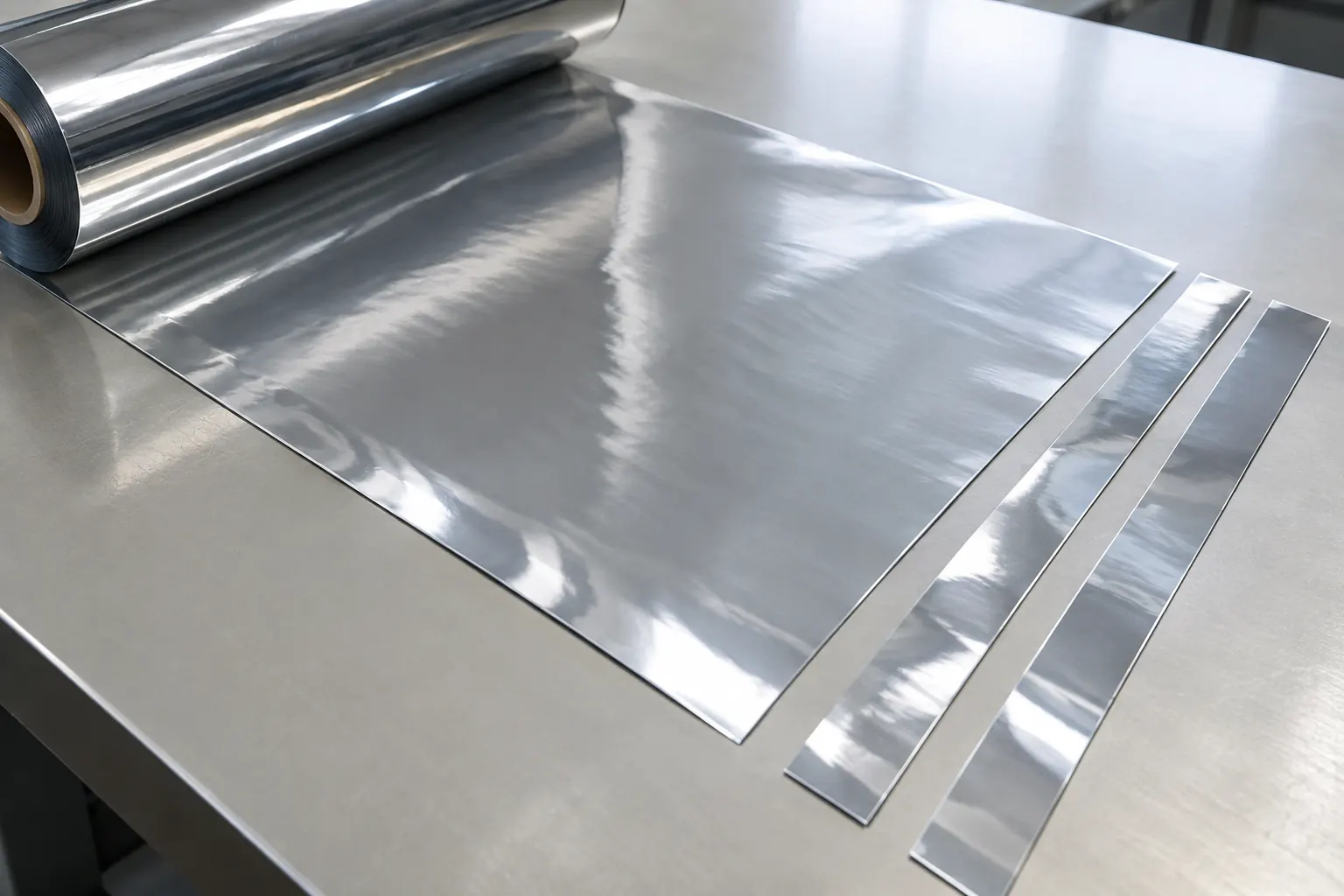
Metallized PET packaging film carries a thin deposited metal layer that provides appearance and functional properties specified by the package designer. Cutting and handling must limit scratches, flaking, static attraction and edge distortion while preserving the registration and winding needed for later lamination or pouch conversion.
Updated
Where This Cutting Application Appears
Snack and confectionery packaging
Reflective PET webs are converted for printed or laminated packs, where edge cleanliness and surface protection support appearance and line tracking. During width edge trimming, irregular or coated outer margins are removed before winding or finishing. Review both retained edges and trim-strip behavior under production tension.
Coffee and dry-food laminates
Metallized barrier webs are prepared for pouch structures, requiring controlled width and no avoidable coating debris in sealing areas. During width edge trimming, irregular or coated outer margins are removed before winding or finishing. Review both retained edges and trim-strip behavior under production tension.
Decorative packaging overwrap
High-gloss films are sized for visual presentation, where scratches, wrinkles and coating disturbance are readily visible. During width edge trimming, irregular or coated outer margins are removed before winding or finishing. Review both retained edges and trim-strip behavior under production tension.
Width Edge Trimming process boundary
Width edge trimming removes controlled side margins to establish parallel finished edges and final web width; it is not a transverse length cut.
Width Edge Trimming setup checkpoint
Define both finished edge positions, centerline control, side guidance, trim width and reliable removal of the two continuous edge strips.
Width Edge Trimming acceptance checkpoint
Measure finished width across the run and inspect parallelism, camber, burr or fray, surface damage and trim-break frequency.
Define the Required Cut Result
- Remove the outer margin while leaving a stable, clean retained edge
- Hold finished web width and edge position within the approved tolerance
- Protect metallized coating, optical finish and web flatness
- Deliver converted material accepted for printing, lamination, pouch making and inspection
Problems to Diagnose Before Changing the Knife
Metallized-layer scratching or edge flaking
Inspect which surface carries the metal layer, contact and winding surfaces, debris pattern, web tension and cut-edge magnification. Separate cutting-origin flakes from scratches created during transport or rewinding.
Static attraction and conductive-looking debris
Measure or document static-control conditions, humidity, grounding provisions and particle location. Do not assume all visible debris is metallic without material identification.
Finished-width drift or unequal side trim
Check web-centering control, sensor position, unwind alignment, trim-holder location, thermal movement and width readings from both retained edges.
Trim-strip breakage, flutter or poor removal
Review trim width, tensile behavior, tension, extraction or winding path, static and the location where the narrow strip first folds or breaks.
Knife Forms That May Be Considered
| Possible knife form | When it may be considered | What must be confirmed |
|---|---|---|
| Circular shear edge-trimming form | Consider where paired rotary edges are already used to retain a controlled web width and carry away narrow trim. | Confirm this form only from the metallized PET packaging film sample, installed equipment interface, operating motion, support condition and approved drawing. |
| Razor edge-trimming form | Consider only when the existing line supports and tensions the web appropriately and the trim strip can be removed safely and consistently. | Confirm this form only from the metallized PET packaging film sample, installed equipment interface, operating motion, support condition and approved drawing. |
Information to Send for Technical Review
You do not need to know the exact blade name. Send the available workpiece, machine, current-knife and cut-result information so the application can be reviewed against a drawing or sample.
- PET thickness, orientation and metallized-side identification
- Metallization specification, topcoat and surface-treatment details
- Optical-density or barrier acceptance method where applicable
- Scratch, flake and visible-edge acceptance samples
- Incoming and required finished web widths plus trim allowance
- Web-guiding method, edge-sensor location and centering tolerance
- Line speed, tension range and trim-strip removal arrangement
- Existing trim-holder interface, cutting motion and setup drawing
Questions About This Cutting Application
How should the metallized side be identified during a trial during width edge trimming?
Use the supplier's roll label or approved construction record and mark orientation before sampling. Visual judgment alone can be unreliable on coated or laminated structures.
Does an intact-looking cut edge confirm barrier performance during width edge trimming?
No. Appearance helps locate damage, but barrier acceptance must use the specified test method on the relevant laminate or finished package.
Why can one retained edge look different from the other during width edge trimming?
Cross-web thickness, coating orientation, web steering, holder alignment and trim-strip tension may differ by side. Photograph and measure both edges separately.
What makes a narrow trim strip unstable during width edge trimming?
Low tensile strength, tack, static, excessive free span, airflow and inconsistent trim width can cause flutter or breaks. Review the complete removal path with the cut.
Can edge-trimming geometry be chosen from finished width alone during width edge trimming?
No. The existing motion, holder, overlap or penetration, web support and trim disposal arrangement must be confirmed from equipment data and an approved drawing.
Related product and service information
- Mono-Material PE Pouch Film Roll Slitting - mono-material PE pouch film · roll slitting
- EVOH Barrier Film Laminate Edge Trimming Blades: Layer and Barrier Integrity - EVOH barrier film laminate · width edge trimming
- Nylon Retort Pouch Film Edge Trimming Blades: Tough-Layer Edge Control - nylon retort pouch film · width edge trimming
Request a Custom Cutting-Knife Review
Send the workpiece details, machine or holder information, current knife photos or sample, required quantity and examples of the present cut problem. Final dimensions, material, edge geometry and tolerances are confirmed from the approved requirements.