
Blade Application Guides / Application Guide / Hydrogen electrolyzer manufacturing
Alkaline Electrolyzer Diaphragm Cutting Blades
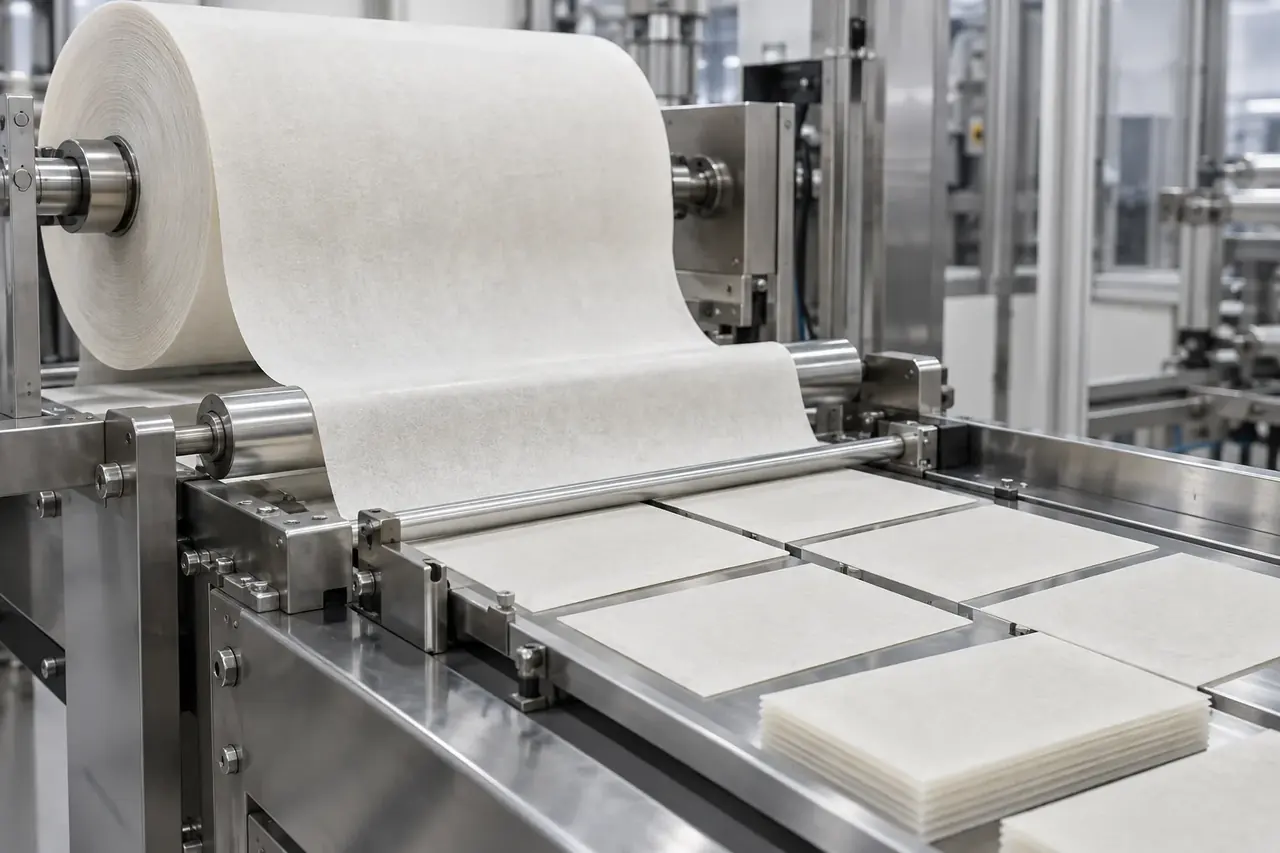
Alkaline electrolyzer diaphragm cutting blades are used to prepare separator sheets or profiles for electrolyzer component assembly. Because the diaphragm may be flexible, porous or supplied with protective layers, selection should begin with the actual material sample, supply format, finished outline, support method and accepted edge condition rather than assumptions based only on the application name.
Updated
Where This Cutting Application Appears
Diaphragm sheet sizing
Supplied diaphragm material is cut into controlled sheet formats for organized storage and downstream component preparation.
Assembly profile preparation
The material is converted to the outer shape and opening layout defined for the electrolyzer component stack.
Trial blank production
Small production sets are prepared to compare edge integrity, geometry and handling before a repeat process is approved.
Sheet And Profile Cutting process boundary
Sheet and profile cutting for Alkaline electrolyzer diaphragm is a linked sequence: the output condition and datum from each operation become the controlled input for the next. It should not be evaluated as one generic cut or accepted only by the final dimension.
Sheet And Profile Cutting setup checkpoint
For Alkaline electrolyzer diaphragm, define the operation order, intermediate dimensions, registration transfer, material support, web or part handling and waste route for every stage of Sheet and profile cutting.
Sheet And Profile Cutting acceptance checkpoint
Verify both intermediate and final results from Sheet and profile cutting, including dimensions, registration, edge or feature quality, material damage, waste separation and stable transfer between stages.
Define the Required Cut Result
- Complete profile separation without pulled areas, attached fibers or torn corners.
- Finished geometry aligned with the approved component drawing or master sample.
- Flat blanks without new folds, stretching or handling impressions.
- Controlled edge debris and protected functional surfaces through collection and packing.
Problems to Diagnose Before Changing the Knife
Ragged or pulled diaphragm edges
- Confirm the supplied diaphragm construction and whether any liner is cut at the same time.
- Review support immediately around straight edges, curves and internal openings.
- Compare defect direction with the material feed and sheet orientation.
Distortion around openings or narrow sections
- Identify the feature where movement begins and compare it with the approved geometry.
- Review registration, hold-down and waste-removal conditions for that feature.
- Check whether the blank was measured while supported or after free release.
Surface marking or embedded debris
- Map all equipment and packaging surfaces that contact the diaphragm.
- Separate marks created during feeding, cutting, removal and stacking.
- Confirm the cleaning method and customer acceptance criteria for contact marks.
Incomplete separation at corners
- Document the exact corner or transition where material remains connected.
- Confirm blank orientation and whether the condition repeats in the same position.
- Review tool support, waste escape and machine motion without assuming an unverified setting.
Knife Forms That May Be Considered
| Possible knife form | When it may be considered | What must be confirmed |
|---|---|---|
| Straight sheet cutting arrangement | For preparing rectangular diaphragm sheets before a separate profiling or assembly operation. | Supply format, required sheet size, feed reference, support surface and edge acceptance method. |
| Custom profile cutting arrangement | When the diaphragm requires an outer contour or functional openings matched to an assembly design. | Controlled drawing, opening geometry, registration features, waste removal and material orientation. |
| Liner-supported cutting arrangement | When a carrier or protective liner is needed to stabilize the diaphragm through cutting and transfer. | Layer order, liner release behavior, cut-through requirement, transfer method and surface restrictions. |
Information to Send for Technical Review
You do not need to know the exact blade name. Send the available workpiece, machine, current-knife and cut-result information so the application can be reviewed against a drawing or sample.
- Diaphragm product description, supplied layer construction and representative samples.
- Roll or sheet dimensions as provided by the customer, without estimating missing values.
- Finished-part drawing, revision status and clearly defined critical features.
- Material orientation, liner arrangement and identification of functional faces.
- Machine station, support method, feed direction and available interface information.
- Accepted and rejected edge photographs, including corners and openings.
- Handling, cleanliness, collection and packaging restrictions.
- Inspection method, trial quantity and expected repeat-production format.
Questions About This Cutting Application
Can alkaline electrolyzer diaphragm cutting blades be chosen from a drawing only?
A drawing defines geometry, but an actual material sample and information about layers, support and accepted edges are also needed for a meaningful review.
Should a protective liner be included in a cutting trial?
Use the same layer arrangement intended for production, and clearly state whether the liner must remain intact, be cut or be removed later.
What areas should be photographed after profile cutting?
Photograph straight edges, corners, internal openings, narrow sections and any location where fibers, deformation or debris appear.
Why is waste removal part of the review?
Separated waste can pull flexible features or contaminate the blank, so its removal sequence should be considered with the cut result.
How should an unknown diaphragm specification be handled?
Record it as unknown and provide samples or supplier documentation rather than assigning an assumed material value.
Related product and service information
- Photovoltaic Backsheet Film Slitting Blades - Photovoltaic backsheet film · Roll slitting and edge trimming
- Photovoltaic EVA Encapsulant Film Slitting Blades - Photovoltaic EVA encapsulant film · Roll slitting and edge trimming
- Labelstock Roll Slitting With Liner and Adhesive Control - pressure-sensitive labelstock rolls · roll slitting
Request a Custom Cutting-Knife Review
Send the workpiece details, machine or holder information, current knife photos or sample, required quantity and examples of the present cut problem. Final dimensions, material, edge geometry and tolerances are confirmed from the approved requirements.