
Blade Application Guides / Application Guide / Packaging equipment
Carton Sealing Tape Cutoff for Reliable Cycle Separation
In an automatic carton sealer, tape cutoff occurs during a short moving cycle after the adhesive has contacted the case. Reliable separation depends on backing stretch, adhesive tack, tape tension, wipe-down motion, contamination, and the installed cutoff geometry.
Updated
Where This Cutting Application Appears
Automatic top-and-bottom case sealing
Tape is applied and separated at the end of each carton cycle, where an incomplete cut can pull the seal from the case or stop the line.
Random-size carton closing
Changing box lengths alter application timing and tail position, making cutoff repeatability important across irregular cycle intervals.
Heavy-duty tape head operation
Thicker backings or high-tack adhesives are cut after firm wipe-down, with attention to stretch, adhesive strings, and residue growth.
Cutoff process boundary
cutoff for carton sealing tape is planned around separation across the material flow or part axis to establish a controlled repeat length or finished end; it is not longitudinal width conversion, shaped contour production or particle-size reduction.
Cutoff setup checkpoint
For carton sealing tape, confirm target length, datum or registration reference, feed indexing, support on both sides, cut timing and post-cut transfer.
Cutoff acceptance checkpoint
For carton sealing tape, evaluate length distribution, squareness or cutoff angle, both cut faces, deformation, registration drift and stacking or discharge consistency.
Define the Required Cut Result
- Separate the full tape width within the available cutoff stroke
- Leave consistent leading and trailing tails on the sealed case
- Avoid adhesive strings that reconnect the tape after separation
- Maintain reliable cycling as adhesive residue accumulates
Problems to Diagnose Before Changing the Knife
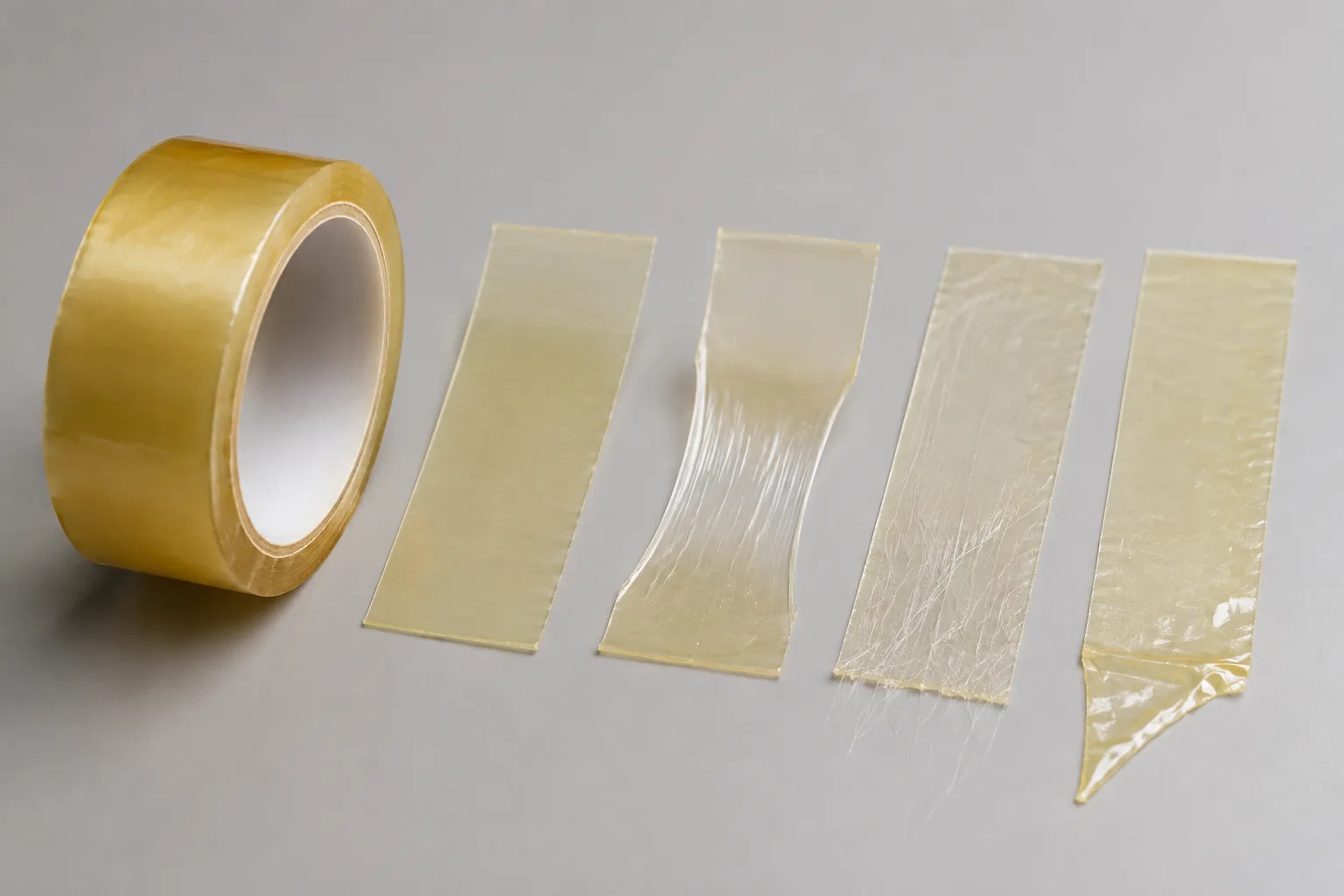
Tape stretches but does not fully separate
Review backing material and gauge, tape tension, cutoff motion, engagement depth, support, speed, and the uncut position across the width.
Adhesive strings reconnect the cut ends
Check adhesive type, temperature, dwell, separation angle, wipe pressure, contamination, and string length immediately after cutoff.
Tape tail length varies between cartons
Trace carton detection, tape-head reset, feed slip, brake tension, carton speed, and cutoff timing rather than assuming an edge defect.
Residue causes intermittent missed cuts
Record cycle count between cleaning, deposit location, cleaning method, tape changes, moving-part freedom, and the first sign of degradation.
Knife Forms That May Be Considered
| Possible knife form | When it may be considered | What must be confirmed |
|---|---|---|
| Serrated cutoff form | Consider where the tape head uses penetration and pull-off to separate stretched film tape. | Confirm tooth direction, pitch, section, stroke, tape path, mounting, and the approved tape-head drawing. |
| Straight cutoff form | Consider where the mechanism supplies supported shear across the complete tape width. | Confirm support surface, engagement, motion, tape tension, fastener pattern, and representative operating tape. |
Information to Send for Technical Review
You do not need to know the exact blade name. Send the available workpiece, machine, current-knife and cut-result information so the application can be reviewed against a drawing or sample.
- Tape backing material, width, gauge, and tensile direction
- Adhesive type, tack level, service temperature, and supplier grade
- Carton-sealer or tape-head manufacturer and model
- Current cutoff-part sample, dimensions, mounting, stroke, and motion
- Tape path, brake or feed tension, and wipe-down sequence
- Carton speed, cycle pattern, detection, and tail-length setting
- Photos or video of stretch, strings, missed cuts, and residue location
- Cleaning interval, accepted tail condition, quantity, and drawing status
Questions About This Cutting Application
Why does BOPP tape stretch before it separates?
The backing is under tension and may elongate if support, engagement, motion, or edge condition is insufficient. Record the uncut area and tape path during the cycle.
How can cutoff timing be separated from a cutting-edge issue?
Compare tail length, detection signal, feed movement, and cutoff stroke on successful and failed cartons. A timing error can present even when the tape edge looks clean.
What should a video of a missed cutoff show?
Capture the tape head from a safe fixed view through feed, wipe-down, cutoff, separation, and reset, with the tape grade and carton speed recorded separately.
Does adhesive residue always mean the cutoff material is wrong?
No. Adhesive, temperature, tape path, pressure, cleaning chemistry, and cycle count may control residue. Review the operating evidence before changing a specification.
Can a cutoff part be supplied from the tape-head model alone?
The model helps identify the application, but revisions and mounting details may differ. Send the current part or an approved drawing and confirm motion and orientation.
Related product and service information
- Corrugated Carton Slotting Without Liner Tear - corrugated carton blanks · slotting
- Masking Tape Log Cutting With Clean Roll Faces - masking tape logs · log cutting
- Woven Sack Mouth Cutting Without Yarn Unraveling - woven packaging sacks · mouth cutting
Request a Custom Cutting-Knife Review
Send the workpiece details, machine or holder information, current knife photos or sample, required quantity and examples of the present cut problem. Final dimensions, material, edge geometry and tolerances are confirmed from the approved requirements.