
Blade Application Guides / Application Guide / Paper converting
Kraft Interleaving Paper Roll Slitting: Low Dust and Stable Reels
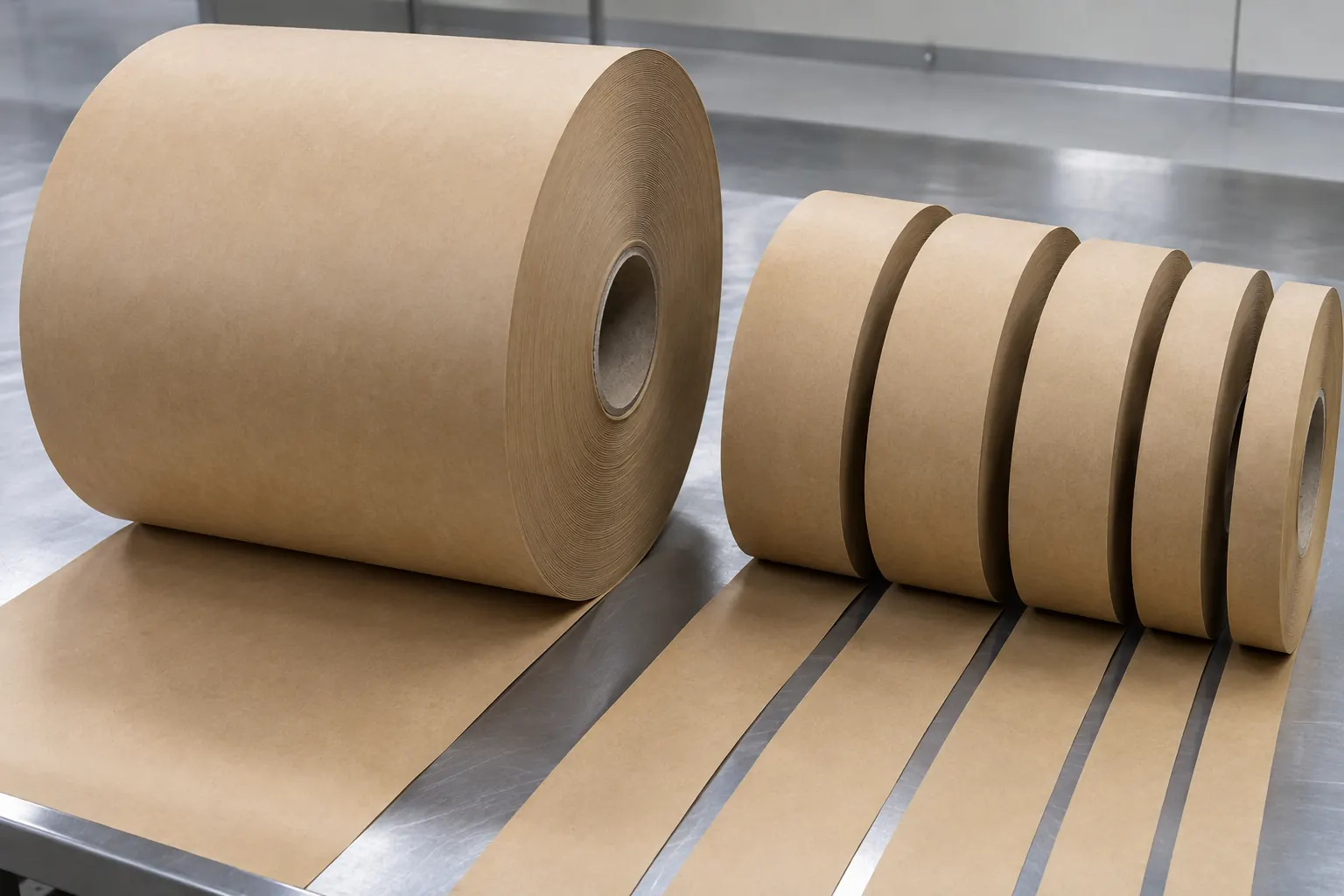
Kraft interleaving paper protects metal, glass, rubber and other surfaces, making loose fibers, abrasive inclusions and rough reel edges directly relevant to the protected product. Slitting review should define cleanliness and edge softness alongside width, tension and winding requirements.
Updated
Where This Cutting Application Appears
Metal coil interleaving
Kraft reels separate polished, coated or rolled metal layers, where edge particles and width must not compromise protected surfaces.
Glass and sheet-material protection
Narrow paper rolls are used between fragile or finished sheets to reduce abrasion and blocking during storage.
Rubber and composite layer separation
Interleaf paper controls contact between tacky or uncured materials and must unwind without tears or loose fibers.
Roll Slitting process boundary
Roll slitting divides a master roll longitudinally into narrower rolls; it does not separate the web transversely into sheets or fixed lengths.
Roll Slitting setup checkpoint
Confirm unwind and rewind tension, slit widths, knife positions, core alignment, trim removal and the winding behavior of every daughter roll.
Roll Slitting acceptance checkpoint
Inspect roll width, edge condition, telescoping, interleaving, debris and whether each rewound roll remains stable at the required diameter.
Define the Required Cut Result
- Minimize loose fibers that could mark protected surfaces
- Create smooth reel edges without hard protrusions
- Maintain width coverage for the mating product
- Build reels that unwind evenly without telescoping
Problems to Diagnose Before Changing the Knife
Long fibers project from the reel edge
Review furnish, recycled content, moisture, basis weight, cutting support, contact geometry and dust extraction.
Hard particles appear in slit-edge debris
Identify mineral, recycled-fiber or process contamination sources and compare incoming paper, dust collection and cutting-zone cleanliness.
Paper edge marks the protected material
Check edge feathering, reel width, alignment, wrinkles, tension, debris and contact pressure in the customer process.
Thin interleaf reel telescopes
Review core accuracy, roll hardness, tension taper, shaft support, edge friction and packing restraints.
Knife Forms That May Be Considered
| Possible knife form | When it may be considered | What must be confirmed |
|---|---|---|
| Circular shear slitting | Consider where paired rotary edges slit protective kraft paper into narrow reels. | Confirm dimensions, overlap, side loading, rotation and edge geometry from the actual equipment and approved drawing. |
| Score slitting | Consider only where the line and backup surface support score cutting and the resulting edge is accepted. | Confirm penetration, anvil condition, holder compliance and debris level using representative interleaf trials. |
Information to Send for Technical Review
You do not need to know the exact blade name. Send the available workpiece, machine, current-knife and cut-result information so the application can be reviewed against a drawing or sample.
- Kraft furnish, virgin or recycled content and basis weight
- Moisture, surface treatment, porosity and cleanliness grade
- Master-roll width, diameter, core and hardness
- Finished widths, tolerances and protected-product width
- Line speed, tension, web direction and rewind configuration
- Current slitting form, holders, mounting and dust collection
- Edge fibers, particle debris and marked-product samples
- End-use material, packing, cleanliness and inspection standards
Questions About This Cutting Application
Why is edge softness important for interleaving paper?
A hard, rough or contaminated edge can contact and mark the protected coil or sheet. Acceptance should reflect the actual interleaving contact.
Can recycled kraft create different cutting debris?
Yes. Recycled furnish may vary in fiber length and contain fines or contaminants. Confirm the actual grade and inspect collected particles.
How should cleanliness be specified?
Define particle or fiber acceptance, sampling area, inspection method, packaging and the protected surface rather than asking only for a visually clean edge.
Does wider paper always protect the product better?
Not necessarily. Excess width may fold or contact equipment, while insufficient width exposes the product. Match width and tolerance to the application.
What determines the appropriate slitting form?
The existing machine action, holder, paper grade, widths, speed, cleanliness target and accepted reel sample must all be confirmed.
Related product and service information
- Kraft Interleaving Paper Rotary Cutting: Protective Shapes With Low Fiber - kraft interleaving paper · rotary die cutting
- Silicone Release Paper Roll Slitting: Clean Edges and Stable Reels - silicone release paper · roll slitting
- Glassine Liner Paper Roll Slitting: Dense Edges and Reliable Rewinding - glassine liner paper · roll slitting
Request a Custom Cutting-Knife Review
Send the workpiece details, machine or holder information, current knife photos or sample, required quantity and examples of the present cut problem. Final dimensions, material, edge geometry and tolerances are confirmed from the approved requirements.