
Blade Application Guides / Application Guide / Paper converting
Silicone Release Paper Roll Slitting: Clean Edges and Stable Reels
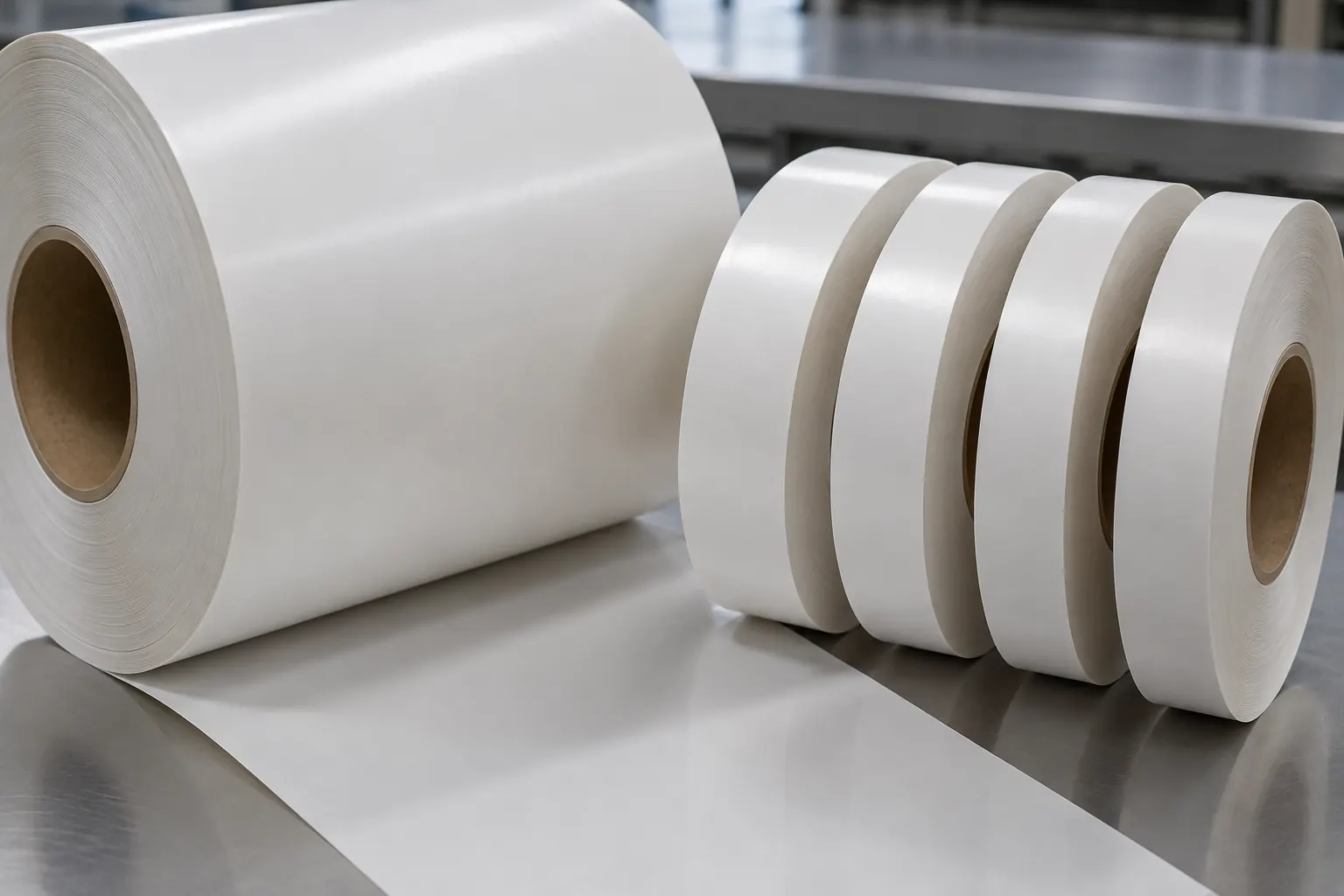
Silicone release paper combines a fibrous base sheet with a low-surface-energy coating that can transfer, glaze or reveal base-paper defects during roll slitting. A useful technical review separates coating-side behavior from paper moisture, web tension, roll hardness and the geometry already installed on the converter.
Where This Cutting Application Appears
Pressure-sensitive labelstock conversion
Siliconized paper is slit into release-liner widths before adhesive coating, laminating or label converting, where clean edges support stable web tracking.
Tape and graphic-film liners
Master rolls are width-converted for adhesive tape, protective film and graphic media, with attention to coating transfer and telescoping.
Industrial release interleaves
Narrow reels are prepared for composite, rubber or adhesive processes that require consistent release performance and low loose-fiber contamination.
Common Ways to Describe This Cutting Problem
- silicone release paper roll slitting blades
- release liner reel slitting edge quality
- how to reduce silicone coating pickup during slitting
- siliconized paper narrow roll cutting solution
- release paper slitter blade technical review
- silicone liner roll width tolerance control
- clean edge slitting for coated release paper
- custom slitting parts RFQ for silicone release rolls
Define the Required Cut Result
- Limit silicone coating pickup and edge glazing
- Hold finished reel width throughout the master roll
- Control paper dust without damaging the release surface
- Maintain a stable reel build for downstream unwinding
Problems to Diagnose Before Changing the Knife
Silicone or coating buildup near the cutting zone
Compare release-coat chemistry, coat weight, cure condition, surface side, web temperature, speed and cleaning interval before changing the cutting setup.
Feathered edge with exposed paper fibers
Review base-paper furnish, moisture, caliper, local support, cutting overlap or penetration and whether the defect occurs on one or both slit edges.
Reel width drift
Check web guiding, spacer stack, shaft runout, lateral loading, thermal change and the method used to measure width across the roll.
Telescoping after rewinding
Separate edge friction from unwind alignment, tension taper, core roll hardness, core core condition and nip settings by recording when layers begin to move.
Knife Forms That May Be Considered
| Possible knife form | When it may be considered | What must be confirmed |
|---|---|---|
| Circular shear slitting | Consider where the existing line uses a paired rotary shear action for coated-paper webs. | Confirm diameter, bore, thickness, overlap, side load, rotation and material only from equipment data, samples or an approved drawing. |
| Score slitting | Consider only where the converter uses controlled penetration against a compatible backup surface. | Confirm holder interface, edge profile, penetration, backup condition and acceptable edge sample before quotation. |
Information to Send for Technical Review
You do not need to know the exact blade name. Send the available workpiece, machine, current-knife and cut-result information so the application can be reviewed against a drawing or sample.
- Base-paper grade, basis weight, caliper and moisture range
- Release coating type, coated side, coat weight and cure condition
- Master-roll width, diameter, core size and roll hardness
- Required slit widths, tolerance and accepted edge samples
- Line speed, web tension, unwind direction and rewind arrangement
- Existing cutting action, holder details and mounting dimensions
- Photos of coating pickup, dust, edge feathering or telescoping
- Trial quantity, inspection method and downstream converting step
Questions About This Cutting Application
Why can silicone release paper leave deposits during slitting?
Deposit behavior can reflect release chemistry, incomplete cure, heat, pressure, contamination or the interaction between coating and installed cutting geometry. Compare operating records and residue samples before assigning one cause.
Does the coated side change the review?
Yes. Coating orientation can change friction, support and residue transfer. State whether one or both sides are siliconized and identify which surface contacts guides or backup components.
What should a slit-reel trial measure?
Record width, edge feathering, visible coating disturbance, dust, reel hardness, telescoping and downstream release performance at defined positions across the master roll.
Can a material sample determine the final knife specification?
No. A sample helps assess paper and coating behavior, but final dimensions and form require the equipment interface, operating motion and an approved drawing or existing part.
How should coating pickup be reported?
Photograph the residue and cut edge, note running time and position, identify the coated side, and record speed, tension, temperature and cleaning history.
Request a Custom Cutting-Knife Review
Send the workpiece details, machine or holder information, current knife photos or sample, required quantity and examples of the present cut problem. Final dimensions, material, edge geometry and tolerances are confirmed from the approved requirements.