
Blade Application Guides / Application Guide / Paper converting
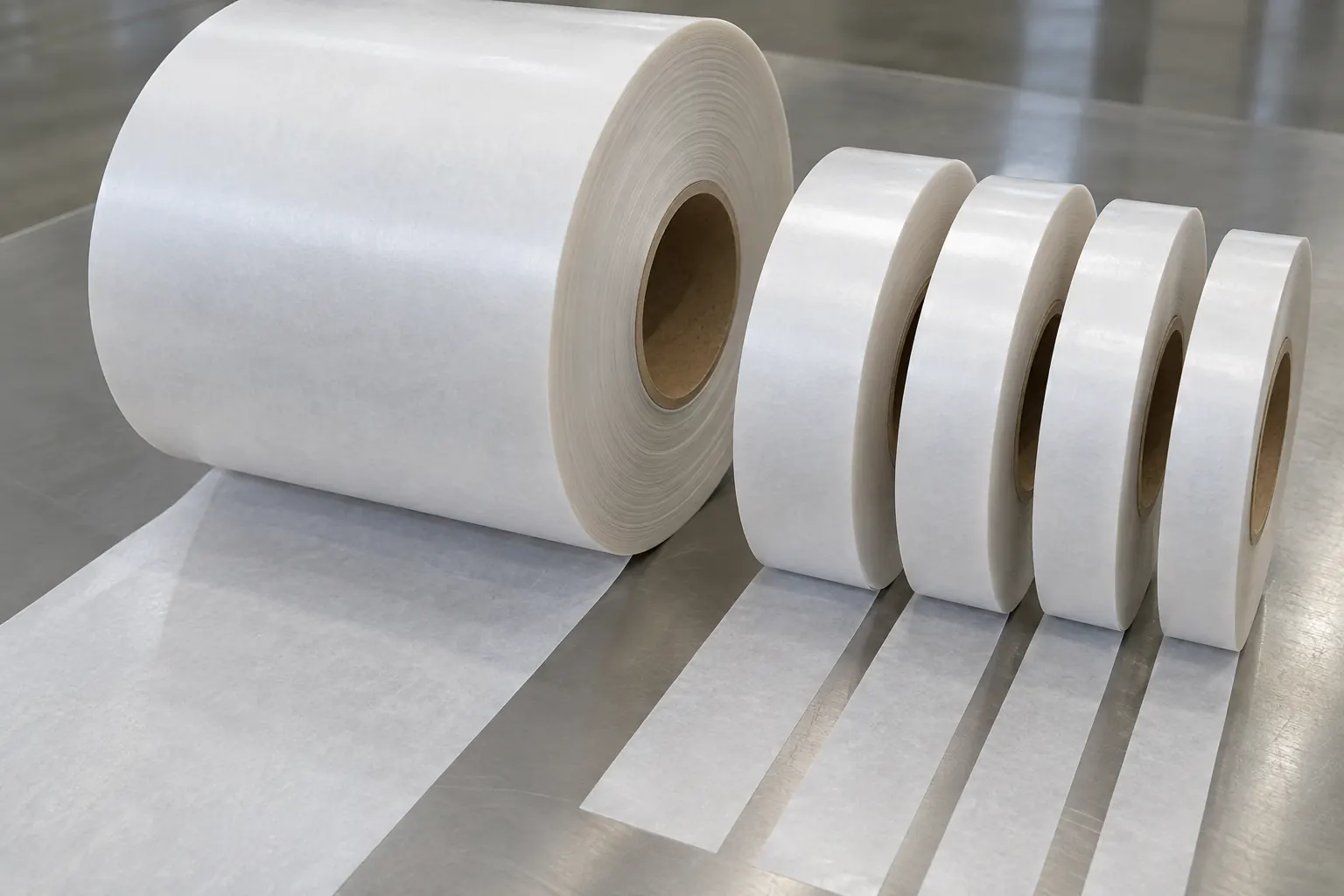
Glassine Liner Paper Roll Slitting: Dense Edges and Reliable Rewinding
Glassine liner is highly calendered and comparatively dense, so a slit edge can show glazing, brittle fracture or fine compact dust rather than the long feathering seen on open paper grades. Coating, moisture, caliper and winding conditions must be reviewed with the actual slitting action to keep narrow reels stable.
Updated
Where This Cutting Application Appears
Self-adhesive label liners
Glassine master rolls are slit for labelstock coating and conversion, where reel width and a low-debris edge support high-speed processing.
Medical and hygiene release liners
Narrow liner rolls are prepared for adhesive dressings and hygiene components with heightened attention to loose particles and coating integrity.
Tape and specialty adhesive webs
Calendered release liners are width-converted for tape and technical laminates that depend on even rewinding and predictable release.
Roll Slitting process boundary
Roll slitting divides a master roll longitudinally into narrower rolls; it does not separate the web transversely into sheets or fixed lengths.
Roll Slitting setup checkpoint
Confirm unwind and rewind tension, slit widths, knife positions, core alignment, trim removal and the winding behavior of every daughter roll.
Roll Slitting acceptance checkpoint
Inspect roll width, edge condition, telescoping, interleaving, debris and whether each rewound roll remains stable at the required diameter.
Define the Required Cut Result
- Avoid brittle edge chips and compact glassine dust
- Preserve the calendered and release-coated surfaces
- Maintain narrow-reel width and edge straightness
- Build firm reels without telescoping or edge steps
Problems to Diagnose Before Changing the Knife
Brittle chips or glazed edge bands
Compare density, moisture, calendering, coating cure, support, slitting geometry, speed and heat at the cutting position.
Fine dust transferred into the reel
Review dust source, extraction, static charge, web cleaning, winding nip and whether particles are generated continuously or after wear develops.
Narrow reels dish or telescope
Check roll hardness profile, tension taper, core straightness, shaft support, edge friction and finished-roll handling.
Width differs between lanes
Inspect spacer accuracy, shaft runout, holder side load, web spreading, thermal conditions and calibrated reel-width measurements.
Knife Forms That May Be Considered
| Possible knife form | When it may be considered | What must be confirmed |
|---|---|---|
| Circular shear slitting | Consider where dense glassine is separated by paired rotary edges on the existing line. | Confirm diameter, bore, thickness, bevel, overlap, side load and material from operating data and an approved drawing. |
| Score slitting | Consider only on equipment designed to press-cut glassine against a suitable anvil. | Confirm edge profile, penetration, anvil condition, holder compliance and finished-edge acceptance by trial. |
Information to Send for Technical Review
You do not need to know the exact blade name. Send the available workpiece, machine, current-knife and cut-result information so the application can be reviewed against a drawing or sample.
- Glassine grade, color, density, basis weight and caliper
- Release coating, coated sides, cure and surface treatment
- Master-roll dimensions, core, hardness and storage condition
- Slit widths, lane count, tolerances and minimum trim width
- Speed, tension, web direction and rewind configuration
- Existing slitting form, holder interface and dimensional drawing
- Dust, chipping, glazing and reel-build samples or photographs
- Cleanliness criteria, downstream process and inspection method
Questions About This Cutting Application
Why does glassine produce fine hard dust?
Its highly calendered structure can fracture into compact particles. Moisture, density, coating, support and the current cutting contact all influence the amount generated.
What causes a shiny band on the slit edge?
A glazed band may indicate rubbing, compression, heat, residue or an unsuitable contact relationship. Compare the band with speed and running-time records.
Are narrow glassine reels harder to rewind?
They can be more sensitive to core alignment, tension taper, roll hardness and edge friction. Reel build should be assessed separately for each width range.
Can glassine grade alone define the cutting form?
No. The installed motion, holder, dimensions, support, speed, coating and accepted edge must be confirmed before specifying a form.
What should be retained from a slitting trial?
Keep labeled edge strips and reel samples from each lane, together with width, dust, speed, tension, run time and position records.
Related product and service information
- Glassine Liner Paper Rotary Die Cutting: Profiles Without Brittle Fracture - glassine liner paper · rotary die cutting
- Silicone Release Paper Roll Slitting: Clean Edges and Stable Reels - silicone release paper · roll slitting
- Clay-Coated Label Paper Roll Slitting: Coating and Edge-Dust Control - clay-coated label paper · roll slitting
Request a Custom Cutting-Knife Review
Send the workpiece details, machine or holder information, current knife photos or sample, required quantity and examples of the present cut problem. Final dimensions, material, edge geometry and tolerances are confirmed from the approved requirements.