
Blade Application Guides / Application Guide / Paper converting
Clay-Coated Label Paper Roll Slitting: Coating and Edge-Dust Control
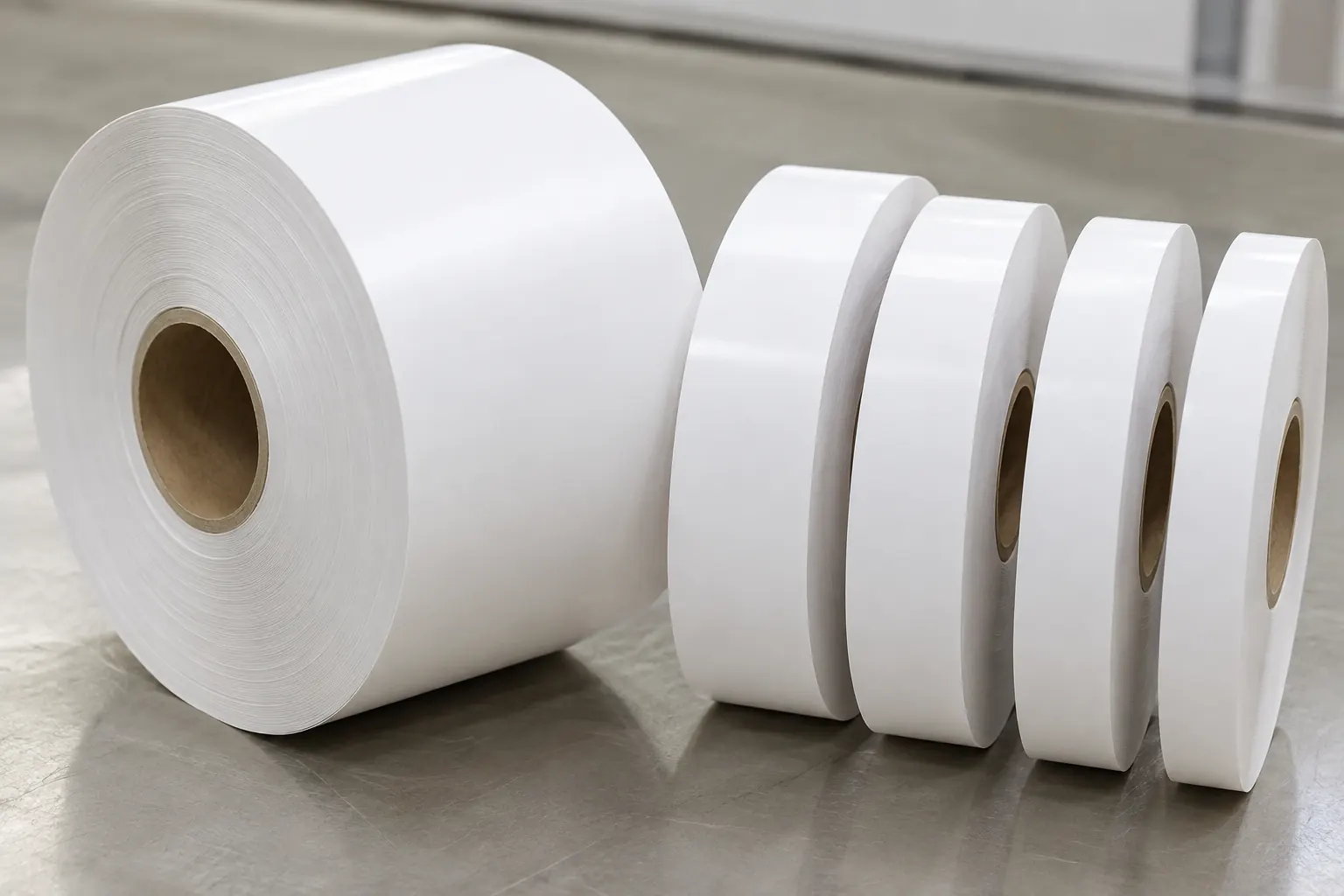
Clay-coated label paper contains a mineral-rich surface layer over a fibrous base, so roll slitting may generate both coating particles and paper fibers. Surface cracking, edge dust and reel blocking should be evaluated against coat weight, print or varnish condition, moisture and the installed slitting arrangement.
Updated
Where This Cutting Application Appears
Wet-glue labelstock rolls
Coated paper is slit for beverage, food and household-product labels where print surface and edge cleanliness affect converting.
Printed label web finishing
Wide printed rolls are divided into lane widths while registration margins, varnish and finished reel build are protected.
Coated paper converting stock
Master rolls are prepared for laminating, embossing or secondary cutting with consistent width and low debris.
Roll Slitting process boundary
Roll slitting divides a master roll longitudinally into narrower rolls; it does not separate the web transversely into sheets or fixed lengths.
Roll Slitting setup checkpoint
Confirm unwind and rewind tension, slit widths, knife positions, core alignment, trim removal and the winding behavior of every daughter roll.
Roll Slitting acceptance checkpoint
Inspect roll width, edge condition, telescoping, interleaving, debris and whether each rewound roll remains stable at the required diameter.
Define the Required Cut Result
- Minimize clay-coating flakes and paper fiber dust
- Prevent cracks from entering the printed face
- Maintain lane width and registration margin
- Produce reels that unwind without blocking or edge steps
Problems to Diagnose Before Changing the Knife
White mineral dust collects on reel edges
Compare coat formulation and weight, surface strength, moisture, cutting contact, speed, extraction and the onset of dust during a run.
Coating chips extend into printed areas
Review cut position relative to print and varnish, coating brittleness, web support, side force, vibration and edge acceptance under magnification.
Ink or varnish marks transfer between layers
Separate slitting effects from cure, roll temperature, winding pressure, surface tack and storage by checking freshly slit and aged reels.
Registration margin varies by lane
Check web guiding, print-reference location, spacer stack, lateral holder movement and roll-width measurement against the artwork datum.
Knife Forms That May Be Considered
| Possible knife form | When it may be considered | What must be confirmed |
|---|---|---|
| Circular shear slitting | Consider where label paper is slit by matched rotary edges with controlled side contact. | Confirm dimensions, overlap, side load, bevel, rotation and finish from equipment details, current parts and trial samples. |
| Score slitting | Consider only if the line uses a compatible anvil and the edge acceptance permits this cutting action. | Confirm penetration, holder compliance, backup condition and coating response through controlled production trials. |
Information to Send for Technical Review
You do not need to know the exact blade name. Send the available workpiece, machine, current-knife and cut-result information so the application can be reviewed against a drawing or sample.
- Base paper, basis weight, caliper, moisture and grain direction
- Clay coat weight, surface strength, print, ink and varnish details
- Master-roll width, diameter, core and hardness profile
- Lane widths, trim widths, tolerances and print registration datum
- Line speed, web tension, unwind and rewind arrangement
- Current slitting form, mounting dimensions and side-load method
- Dust, chipping, transfer and reel-edge samples or photographs
- Downstream labeling process, inspection level and packing method
Questions About This Cutting Application
Why is clay-coated paper dust different from fiber dust?
The coating contributes fine mineral particles while the base sheet contributes fibers. Examining residue and the fractured edge helps identify which layer is failing.
Can printed label rolls be slit before full ink cure?
That decision belongs to the printing and converting process. Incomplete cure can increase transfer and blocking, so cure status and roll temperature should be recorded.
How should coating chipping be measured?
Define the maximum chip depth or affected band from the finished edge, magnification, sampling locations and whether defects may enter printed graphics.
Does one knife form suit all coated label papers?
No. Base furnish, coating, caliper, print layers, speed, support and installed machine interface determine what should be trialed.
What samples are most useful for review?
Send unprinted and printed material if available, accepted and rejected slit edges, collected dust and the current part or verified drawing.
Related product and service information
- Clay-Coated Label Paper Rotary Die Cutting: Profiles With Intact Print - clay-coated label paper · rotary die cutting
- Water-Based Coated Poster Paper Slitting: Surface and Reel Quality - water-based coated poster paper · roll slitting
- Silicone Release Paper Roll Slitting: Clean Edges and Stable Reels - silicone release paper · roll slitting
Request a Custom Cutting-Knife Review
Send the workpiece details, machine or holder information, current knife photos or sample, required quantity and examples of the present cut problem. Final dimensions, material, edge geometry and tolerances are confirmed from the approved requirements.