
Blade Application Guides / Application Guide / Paper converting
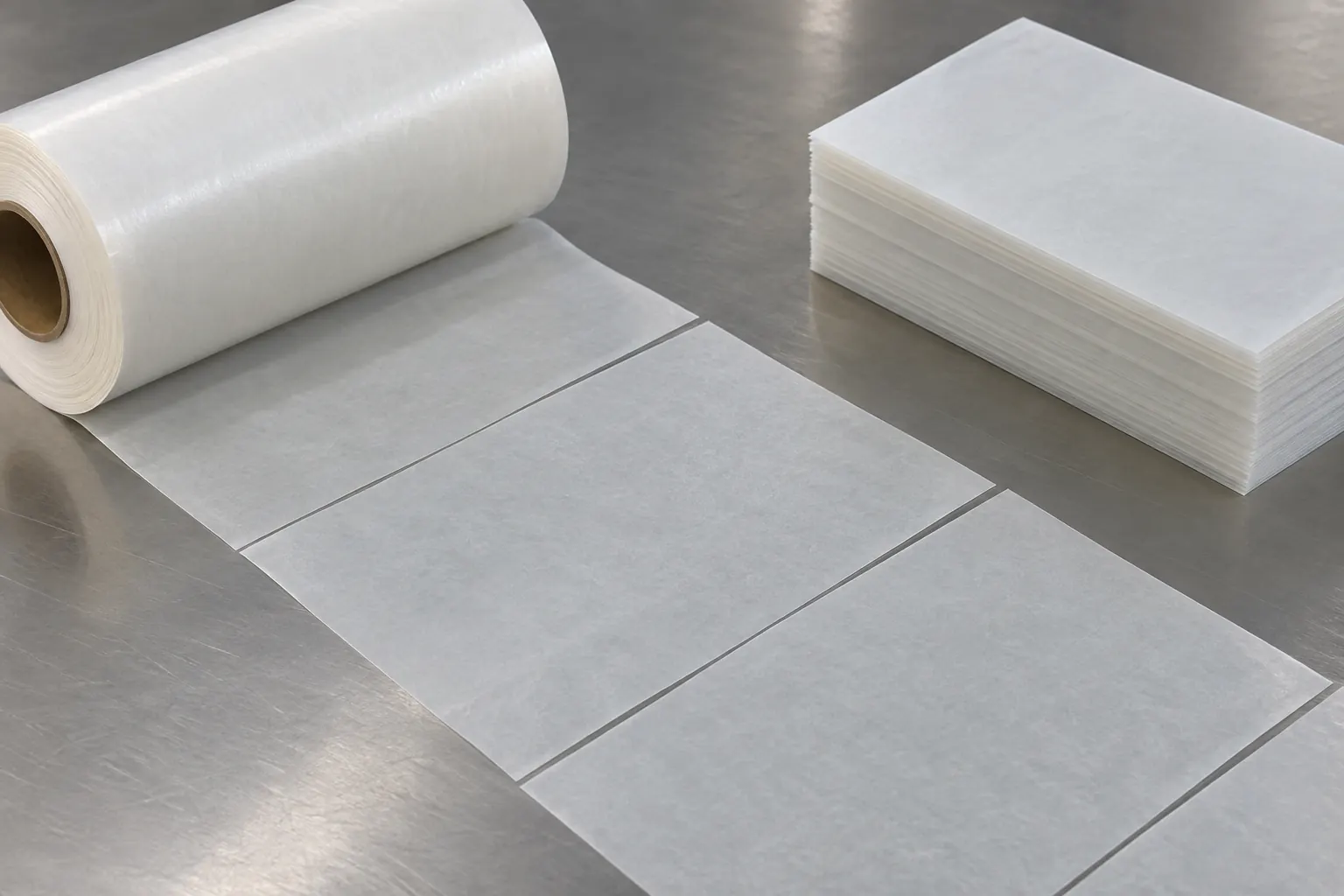
Glassine Liner Paper Cross Cutting: Accurate, Flat Release Sheets
When glassine liner is cross cut, its dense calendered structure can crack at the edge while roll set and static interfere with delivery. A sound review defines sheet geometry, surface condition and stack performance, then connects those results to feed accuracy, material moisture and the installed cutoff mechanism.
Updated
Where This Cutting Application Appears
Adhesive component release sheets
Glassine rolls are sheeted as protective liners for adhesive-backed components, where flatness and clean handling are essential.
Food and specialty wrapping interleaves
Approved glassine grades are cut to rectangular sheets for wrapping or separation, with edge cleanliness and dimensions controlled.
Label-converting setup sheets
Liner sheets are prepared for secondary lamination, printing or die-cut operations that depend on squareness and reliable feeding.
Transverse Cross Cutting process boundary
Transverse cross cutting separates material across the web into sheets or repeated lengths; it is distinct from longitudinal roll slitting.
Transverse Cross Cutting setup checkpoint
Confirm repeat length, registration reference, web speed, cut timing, support across the width and sheet transfer immediately after separation.
Transverse Cross Cutting acceptance checkpoint
Measure repeat length and squareness, then inspect leading and trailing edges, registration error, sheet curl and stacking consistency.
Define the Required Cut Result
- Prevent dense-edge cracking and corner chips
- Hold sheet length and squareness at production speed
- Control curl and static during sheet delivery
- Protect release-coated surfaces from scuffing
Problems to Diagnose Before Changing the Knife
Edge cracks propagate from a corner
Review grain direction, density, moisture, sheet support, cutoff contact, edge profile and whether the crack begins at entry or exit.
Sheet length varies with speed
Check feed-roll traction, encoder scaling, web tension, cutoff synchronization and acceleration during speed changes.
Sheets cling or mis-stack
Evaluate static charge, humidity, coating surface, delivery airflow, deceleration, sheet curl and grounding arrangements.
Glossy surface becomes scratched
Trace contact surfaces, debris, hold-down elements, conveyor condition and stack movement from unwind to packing.
Knife Forms That May Be Considered
| Possible knife form | When it may be considered | What must be confirmed |
|---|---|---|
| Straight cutoff knife | Consider on sheeters using a linear, swing or coordinated straight cutoff action. | Confirm mounting pattern, edge geometry, motion, counterface and dimensions from the current part or approved equipment drawing. |
| Rotary cutoff knife | Consider where a synchronized cylinder performs repetitive transverse cuts. | Confirm cutting diameter, cylinder interface, timing, edge arrangement and allowable runout from machine data and trials. |
Information to Send for Technical Review
You do not need to know the exact blade name. Send the available workpiece, machine, current-knife and cut-result information so the application can be reviewed against a drawing or sample.
- Glassine density, basis weight, caliper and grain direction
- Coating type, coated side, moisture and conditioning practice
- Web width, target sheet dimensions and squareness tolerance
- Production speed, cutoff rate and feed-control method
- Tension zones, sheet support, static control and delivery layout
- Existing cutoff part, counterface, mounting and operating motion
- Accepted sheets plus chipped, curled or scratched samples
- Packing format, downstream use and sampling procedure
Questions About This Cutting Application
Why can glassine crack at the sheet corner?
Dense paper structure, grain direction, low moisture, insufficient support or concentrated cutting contact can initiate a corner crack. Mark the web direction on samples.
How can static be separated from a cutting defect?
Observe whether sheets are cleanly separated at cutoff but shift later during transport. Record humidity, grounding, ionization and delivery behavior.
What tolerances should be stated for glassine sheets?
State length, width, diagonal or squareness, flatness, edge-chip allowance, surface acceptance and the environmental condition used for inspection.
Does translucency affect technical review?
Translucency itself does not choose a cutting form, but density, calendering, coating and optical inspection may influence how defects are detected and accepted.
Why is the current cutoff sample needed?
It provides the actual mounting and edge reference. Final manufacture should follow verified equipment dimensions or an approved drawing, not a generic glassine description.
Related product and service information
- Kraft Interleaving Paper Cross Cutting: Clean Protective Sheets - kraft interleaving paper · transverse cross cutting
- Silicone Release Paper Cross Cutting: Flat Sheets Without Edge Damage - silicone release paper · transverse cross cutting
- Clay-Coated Label Paper Cross Cutting: Clean Printed Sheets - clay-coated label paper · transverse cross cutting
Request a Custom Cutting-Knife Review
Send the workpiece details, machine or holder information, current knife photos or sample, required quantity and examples of the present cut problem. Final dimensions, material, edge geometry and tolerances are confirmed from the approved requirements.