
Blade Application Guides / Application Guide / carpet recycling
Discarded Carpet Roll Cutting
Discarded carpet combines long pile yarn with dense primary and secondary backing, latex or hot-melt binders, and often trapped sand or hard debris. Rolled carpet stores elastic energy and presents thick layered edges, so splitting and shredding require controlled restraint and contamination management.
Updated
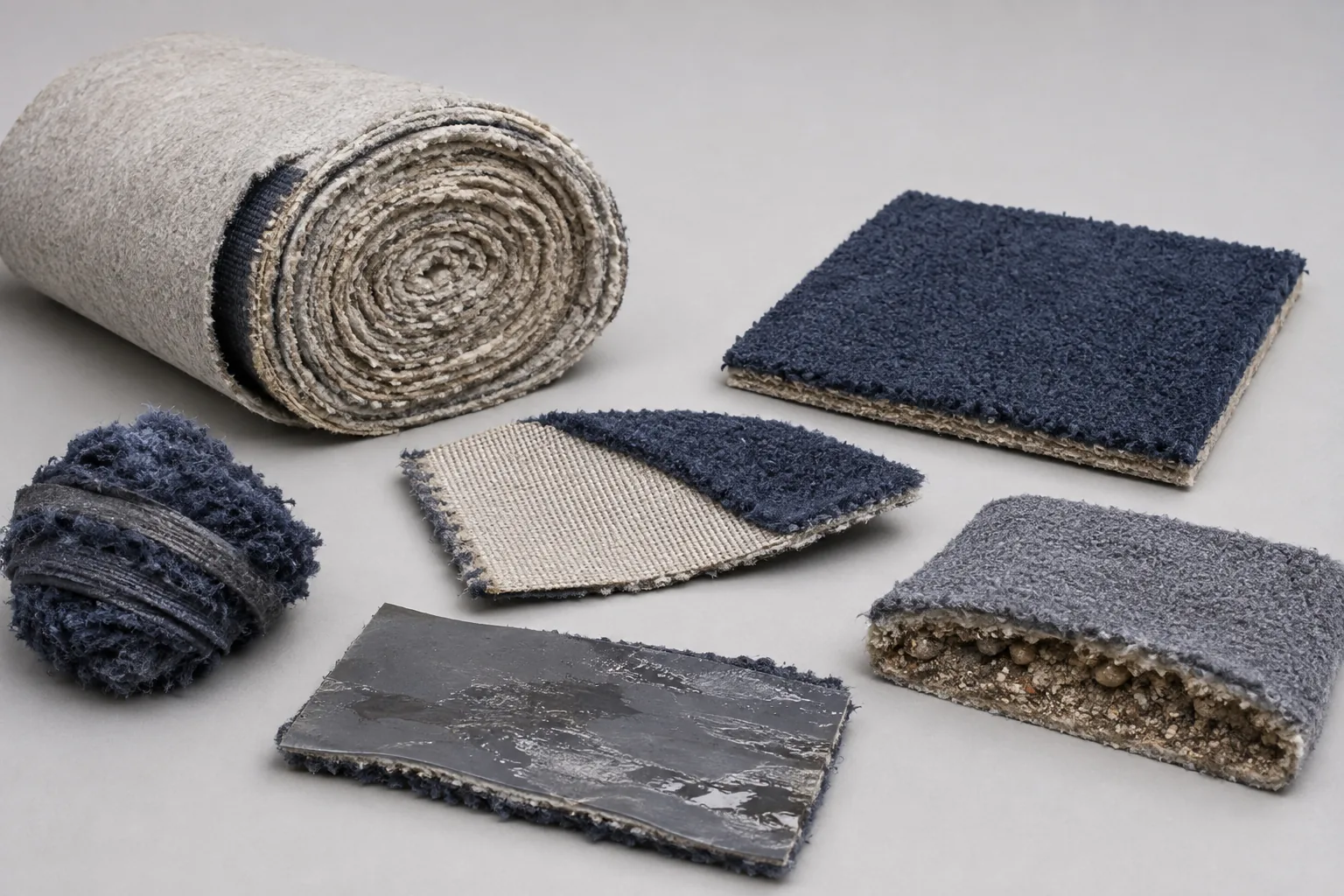
Where This Cutting Application Appears
Splitting carpet rolls for feeding
Open or divide compressed rolls into sections that fit the recycler's conveyor or primary shredder.
Reducing carpet tiles and broadloom offcuts
Cut layered pile-and-backing pieces before fiber, polymer or energy-recovery processes.
Shredding pre-cleaned carpet strips
Shorten controlled feed after gross debris removal while limiting long-fiber wrapping.
Roll Splitting And Shredding process boundary
roll splitting and shredding for discarded carpet rolls is a linked sequence: the output condition and datum from each operation become the controlled input for the next. It should not be evaluated as one generic cut or accepted only by the final dimension.
Roll Splitting And Shredding setup checkpoint
For discarded carpet rolls, define the operation order, intermediate dimensions, registration transfer, material support, web or part handling and waste route for every stage of roll splitting and shredding.
Roll Splitting And Shredding acceptance checkpoint
Verify both intermediate and final results from roll splitting and shredding, including dimensions, registration, edge or feature quality, material damage, waste separation and stable transfer between stages.
Define the Required Cut Result
- Controlled roll opening without sudden uncontrolled unwind
- Complete separation of pile and backing layers
- Limited fiber wrapping around shafts and rotor ends
- Wear resistance appropriate to declared sand and debris
Problems to Diagnose Before Changing the Knife
A compressed roll springs open during splitting
Review restraint, cut sequence, roll diameter, stored tension and support on both sides.
Pile yarn wraps rather than cuts
Check input strand length, rotor capture, counter-edge clearance and shaft-end accumulation.
Backing smears or folds through the gap
Inspect binder type, temperature, edge condition, feed density and shear overlap.
Localized chips appear in the knives
Identify stones, metal tack strips or fasteners; compare impact marks with feed-inspection records.
Knife Forms That May Be Considered
| Possible knife form | When it may be considered | What must be confirmed |
|---|---|---|
| hook knife | A contained hooked profile may help initiate a split in thick flexible rolls on equipment designed for that action. | Confirm hook geometry, guard, stroke, roll restraint and maximum roll construction from the machine design. |
| serrated straight knife | Progressive teeth may cut pile and backing in a supported straight station. | Confirm tooth pitch, depth, direction, cutting bed and acceptable yarn pull on representative carpet. |
| shredder knife | A rotor-mounted profile may suit primary size reduction after rolls are opened and hard debris is controlled. | Confirm rotor, counter-tool, cutting circle, screen and incoming piece size from equipment documentation. |
Information to Send for Technical Review
You do not need to know the exact blade name. Send the available workpiece, machine, current-knife and cut-result information so the application can be reviewed against a drawing or sample.
- Carpet type, pile fiber and construction
- Primary and secondary backing plus binder
- Roll diameter, width, mass range and winding tightness
- Moisture, sand and hard-contaminant condition
- Whole roll, tile, strip or pre-cut feed stage
- Required output and downstream separation process
- Splitter or shredder drawings, restraints and clearances
- Samples showing wrap, backing smear, impact chips and trapped debris
Questions About This Cutting Application
Why is roll restraint part of knife selection?
A wound carpet can release stored energy when cut. The machine's safe restraint and sequence must be established by the operator or equipment designer.
Can vacuum cleaning remove all abrasive risk?
No. Grit can remain deep in pile and backing. Describe the cleaning stage and inspect actual feed.
Why does latex-backed carpet smear?
Binder can soften with heat or friction, especially with dull edges and repeated circulation.
What causes yarn to wrap rotor ends?
Long flexible strands may migrate laterally when capture and shaft-end control are insufficient.
Should carpet tiles and broadloom use the same knives?
Not automatically. Backing, thickness, pile and hard inclusions differ; qualify each declared feed stream.
Related product and service information
- Discarded Fishing Net Cutting - discarded fishing nets · net cutting and shredding
- Corrugated Board Scrap Cutting - corrugated board scrap · sheet shredding
- Tobacco Leaf and Sheet Cutting - tobacco leaf and reconstituted sheet · leaf and sheet cutting
Request a Custom Cutting-Knife Review
Send the workpiece details, machine or holder information, current knife photos or sample, required quantity and examples of the present cut problem. Final dimensions, material, edge geometry and tolerances are confirmed from the approved requirements.