
Blade Application Guides / Application Guide / Paper converting
Water-Based Coated Poster Paper Slitting: Surface and Reel Quality
Water-based coated poster paper can vary with drying, humidity and ink coverage, while its coated surface may crack or mark during roll slitting. Technical review should compare fully conditioned material with production rolls and define acceptable edge appearance, width and reel build for the next printing or display-converting step.
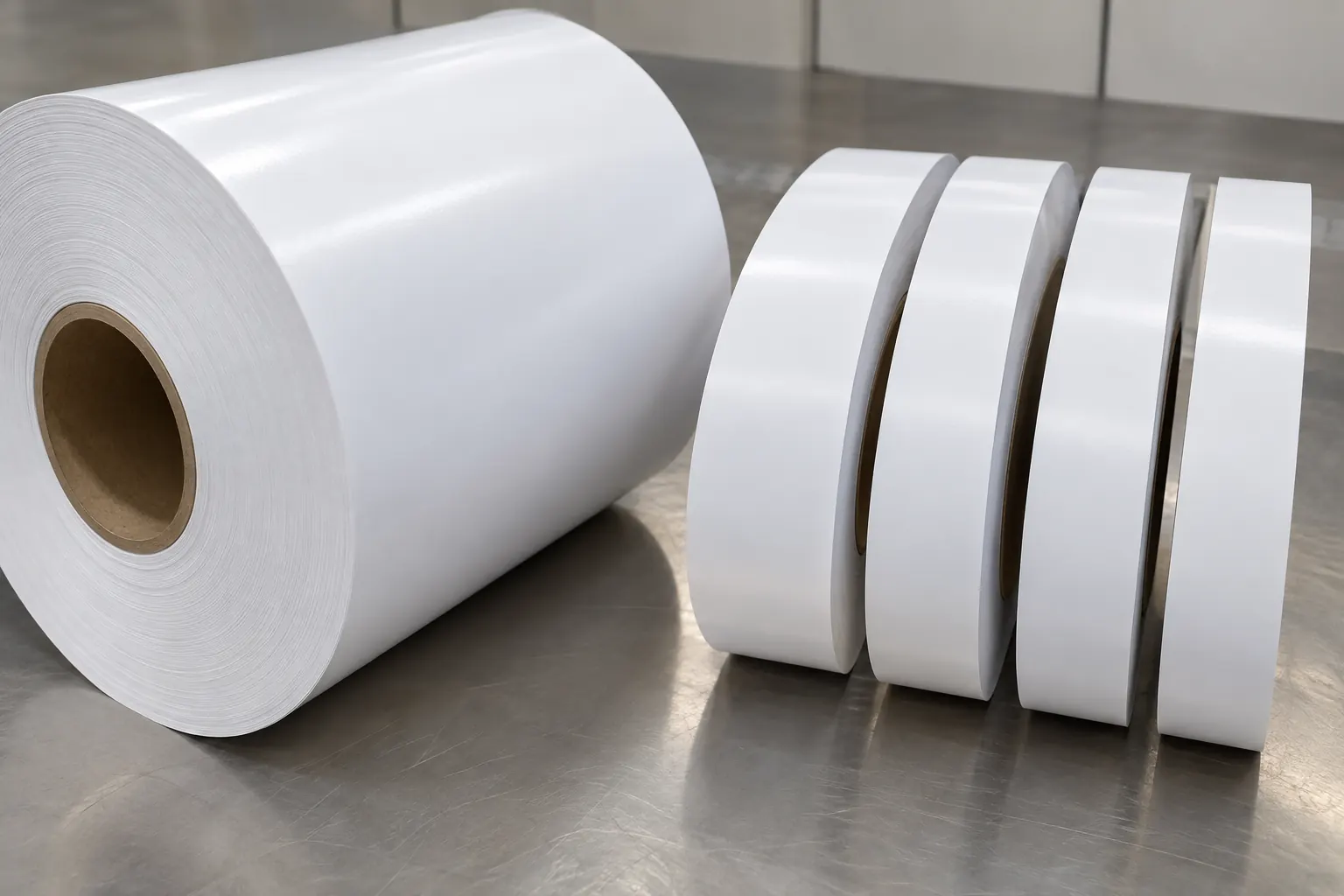
Where This Cutting Application Appears
Wide-format printing media
Coated master rolls are slit to printer-compatible widths while surface smoothness and edge tracking are retained.
Retail display graphics
Printed or printable poster stock is width-converted for display panels, signs and promotional graphics.
Laminated poster constructions
Coated paper is slit before or after lamination, requiring aligned edges and stable winding for secondary finishing.
Common Ways to Describe This Cutting Problem
- water-based coated poster paper roll slitting blades
- coated poster roll width slitting
- aqueous coated paper clean reel edge
- poster paper coating crack during slitting
- printed display paper roll conversion
- water based coating dust control slitter
- wide format poster roll edge quality
- custom slitting RFQ for coated poster stock
Define the Required Cut Result
- Limit coating cracks and powder at the slit edge
- Protect printable or printed faces from marks
- Hold media width for reliable downstream feeding
- Rewind smooth reels without blocking or telescoping
Problems to Diagnose Before Changing the Knife
Coating powders along the reel edge
Compare coating formulation, dry state, humidity, base sheet, contact geometry, speed, heat and extraction over the run.
Printed face develops pressure marks
Review winding nip, roll hardness, debris, surface cure, tension and whether marks align with slit lanes or handling contact.
Media wanders in the downstream printer
Check slit-edge straightness, finished width, reel telescoping, core alignment, curl and the printer feed path.
Edge wave appears after conditioning
Evaluate cross-web moisture, coating balance, drying history, winding tension and environmental change between slitting and inspection.
Knife Forms That May Be Considered
| Possible knife form | When it may be considered | What must be confirmed |
|---|---|---|
| Circular shear slitting | Consider when coated poster media is separated by paired rotary edges. | Confirm dimensions, overlap, side load, edge geometry, rotation and finish from the installed line and accepted media trials. |
| Score slitting | Consider only on lines designed for supported score cutting and where the resulting edge meets print-media requirements. | Confirm penetration, anvil, holder, coating response and finished-roll feeding through documented trials. |
Information to Send for Technical Review
You do not need to know the exact blade name. Send the available workpiece, machine, current-knife and cut-result information so the application can be reviewed against a drawing or sample.
- Base-paper furnish, basis weight, caliper and moisture profile
- Water-based coating type, coat weight and drying condition
- Print, ink, overcoat or laminate construction if present
- Master-roll dimensions, target widths, cores and tolerances
- Line speed, tension, winding nip and environmental conditions
- Existing slitting action, holder interface and verified dimensions
- Edge powder, cracking, marking and downstream feed samples
- Printer or converting destination and roll acceptance criteria
Questions About This Cutting Application
Why does aqueous coating behavior change with humidity?
Moisture can alter paper dimensions, coating toughness, curl and surface friction. Record conditioning and production humidity with edge observations.
Can edge powder affect wide-format printing?
Yes. Loose particles may contaminate feed paths or printed surfaces. Define an acceptable cleanliness level and inspect after transport and unwinding.
Should printed and unprinted rolls use the same review?
The base review is related, but ink coverage, cure, overcoat, friction and blocking can change slitting and winding behavior.
How is downstream feedability checked?
Trial representative finished reels in the intended printer or converter, recording tracking, edge contact, curl, dust and print defects.
Can coating chemistry alone select a knife form?
No. Confirm the line interface, cutting action, media construction, width, speed, support and accepted samples before selection.
Request a Custom Cutting-Knife Review
Send the workpiece details, machine or holder information, current knife photos or sample, required quantity and examples of the present cut problem. Final dimensions, material, edge geometry and tolerances are confirmed from the approved requirements.