
Blade Application Guides / Application Guide / Electrical equipment manufacturing
Ceramic-Fiber Electrical Insulation Paper Sheet Slitting Blades
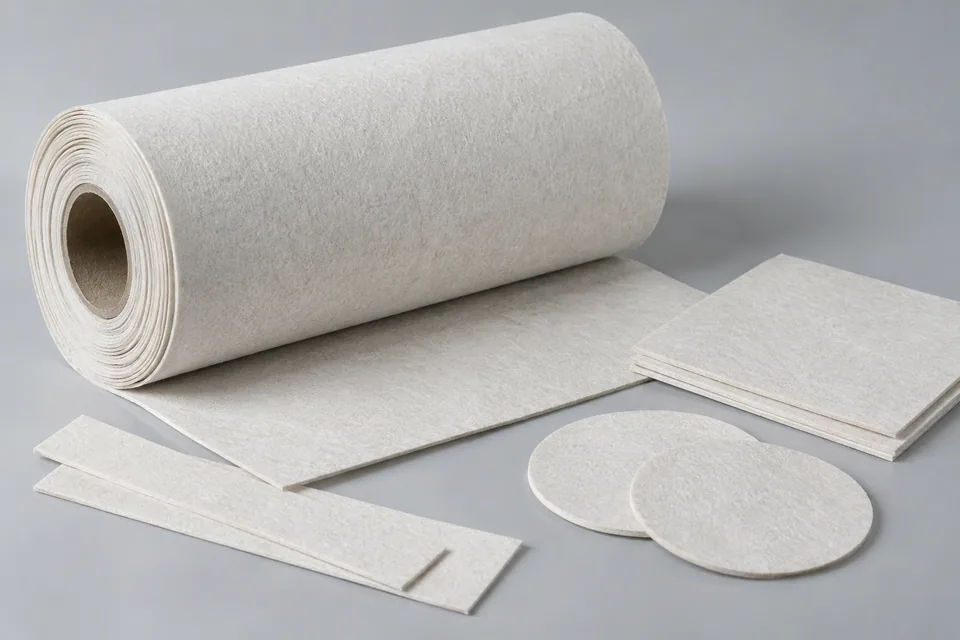
ETERNIFIBER describes ceramic-fiber paper as a sheet supplied for high-temperature electrical insulation and cut into sizes and shapes. Anchor-Tech lists custom slitting of ceramic-fiber paper, while Kairo discusses paper for insulating electrical heating and induction equipment. These sources support a named ceramic-paper strip trial, but ceramic fiber composition, binder, thickness and supply form vary across makers. This guide uses a flat sheet or flat-fed section to create long straight strips for an electrical apparatus barrier or wrap. It is not a claim that ceramic paper substitutes for transformer cellulose pressboard or oil-impregnated crepe paper. The cutting station must support the weak fibrous edge and collect loose material. Final electrical and thermal performance require device-level testing.
Updated
Where This Cutting Application Appears
Specify the actual paper grade and duty
Obtain the fiber chemistry, binder system, sheet thickness and intended electrical installation position. Mark strip width and direction on a representative flat sheet. Do not infer dielectric behavior from a generic temperature classification or from a different maker’s paper.
Trial sheet-to-strip separation
Use a guided long blade or validated sheet cutter with support along the cut. Observe whether the paper lifts, fractures or leaves compressed edges when a narrow strip is removed. Collect fine trim and loose fibers at the point of cut under the site’s approved handling procedure.
Inspect each newly exposed edge
Measure width at several points and check straightness, thickness loss, torn fibers and local cracking. Compare both faces and the strip ends; a broad flat surface can look sound while its edge sheds material into adjacent electrical components.
Protect strips for installation
Package pieces without tight bending or point loads, retaining grade and lot labels. The equipment builder should install a sample at the actual temperature and field geometry, then test the assembly by its own electrical and mechanical acceptance method.
Define the Required Cut Result
- Produce straight strips from the specified ceramic-paper sheet.
- Limit edge crumbling and loose fiber transfer.
- Maintain width and thickness near the cut.
- Preserve grade identity for apparatus testing.
Problems to Diagnose Before Changing the Knife
Paper tears rather than separating
- Review blade edge, support and incoming binder condition.
- Compare different cut directions on the same sheet.
Strip width varies along the panel
- Check flat-sheet guide and drag.
- Measure at multiple locations.
Loose fibers accumulate on parts
- Inspect collection and packing.
- Check whether handling adds more shedding.
Knife Forms That May Be Considered
| Possible knife form | When it may be considered | What must be confirmed |
|---|---|---|
| Guided straight sheet slitter | For flat ceramic-fiber paper divided into specified strips after sample validation. | Check width, retained thickness and fiber shedding. |
Information to Send for Technical Review
You do not need to know the exact blade name. Send the available workpiece, machine, current-knife and cut-result information so the application can be reviewed against a drawing or sample.
- Named ceramic-fiber paper grade and supplier
- Fiber and binder construction
- Sheet size, thickness and conditioning
- Strip width and intended apparatus location
- Allowed loose-fiber and edge-fracture criteria
- Blade support and collection plan
- Flat packaging and lot traceability
- Final device electrical/thermal test owner
Questions About This Cutting Application
Is this the same as cellulose transformer paper?
No. This is a specified ceramic-fiber sheet for a high-temperature electrical location.
Why inspect the cut-edge thickness?
A compressed fibrous edge may be thinner than the nominal central sheet.
Does slitting itself prove dielectric performance?
No. Test the installed part under the actual electrical and thermal conditions.
Can every ceramic paper use one blade?
No. Binder, density and thickness require material-specific trials.
What should an RFQ include?
Send the named sheet, strip drawing and fiber-shedding acceptance examples.
Public references and scope
These public sources provide material, cutting-method or safety context for this guide. Supplier pages describe their own materials or equipment; they do not establish a MEIRENTE blade specification or performance claim. Confirm the actual grade, machine setup and required cut with a drawing or sample.
Related product and service information
- NMN Motor-Insulation Laminate Contour-Cutting Blades - NMN motor-insulation laminate · contour cutting
- Polyimide-Mica Insulation Laminate Sheet Slitting Blades - polyimide-mica insulation laminate · sheet slitting
- Transformer Electrical Pressboard Sheet Slitting Blades - transformer electrical pressboard · sheet slitting
Request a Custom Cutting-Knife Review
Send the workpiece details, machine or holder information, current knife photos or sample, required quantity and examples of the present cut problem. Final dimensions, material, edge geometry and tolerances are confirmed from the approved requirements.