
Blade Application Guides / Application Guide / Wind-turbine blade manufacturing
Blade-Root Reinforcement Fabric Shear Slitting Blades
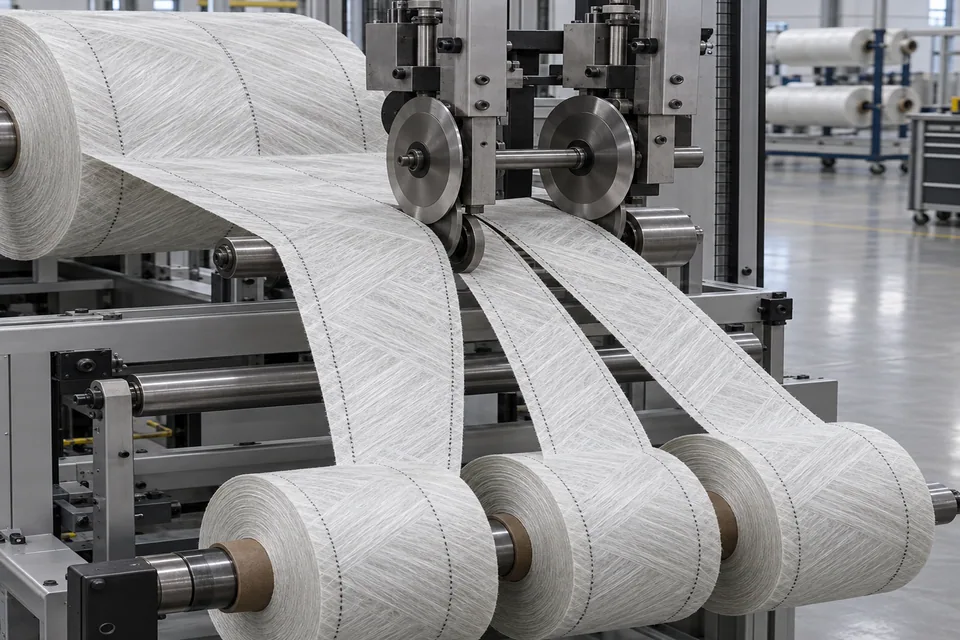
SAERTEX documents multiaxial non-crimp fabrics for wind blade roots and the separate cutting and kitting of dry reinforcement. DIENES describes shear slitting with interacting upper and lower circular knives and includes textiles among possible webs. Together these support a conditional shear-slitting route for a suitable roll of dry blade-root reinforcement fabric. The title specifies the cutting mechanism, unlike generic roll slitting: a matched knife pair progressively shears the travelling web. Acceptance must be based on the actual stitched architecture and subsequent root-ply process.
Updated
Where This Cutting Application Appears
Define what the shear pair must preserve
Use the root ply plan to set lane widths and permitted edge condition. Record main fiber angles, stitch thread, veil and number of layers. A cut running along a glass bundle may behave unlike one intersecting bias layers. Specify whether loose filaments or a locally loosened stitch are rejectable before adjusting the knives.
Set up a representative paired-knife trial
Mount upper and lower circular knives on a machine capable of controlled engagement, support and web tracking. Change overlap and side contact only within the equipment maker’s rules. Trial production-like feed and winding, since a stationary sample can hide edge pull. Observe whether the knife pair shears each layer or drags a fiber bundle between knife faces.
Inspect both sides of every lane
Examine cut edges under the buyer’s agreed inspection method for glass fuzz, carbon filaments if present, stitch-loop breakage and separation of angled layers. Inspect the waste as well; a clean retained edge with a pulled waste strip can still indicate unstable cutting. Confirm width from the wound roll and monitor knife buildup or wear through the trial run.
Separate cutting defects from fabric construction
Compare uncut master-roll zones with slit zones. Stitch pattern, fiber lay direction and any pre-existing gaps can affect what appears at the edge. Do not tighten a shear pair simply to hide a material irregularity if the result crushes the web or disturbs the stitching. Record which fabric variants passed rather than extrapolating one trial to all blade-root textiles.
Feed a finished lane to root-ply cutting
Unwind a narrow roll at the downstream station. Check width, tracking and whether filaments released during winding now shed onto the cutting table. The final root ply contour and laminate infusion still need separate qualification. A successful shear-slitting coupon establishes only the agreed conversion edge and roll handling. If glass and carbon are mixed in one construction, inspect each exposed layer rather than treating the outermost glass layer as representative.
Define the Required Cut Result
- Shear continuous dry root textile with matched circular knives.
- Retain stitched layer alignment and fiber orientation.
- Control filaments, width and stable roll build.
- Document fabric-specific knife setup evidence.
Problems to Diagnose Before Changing the Knife
Bias fibers pull across the edge
- Review knife engagement and web support.
- Compare layers and both lane edges.
- Assess machine speed in a controlled trial.
Stitch thread is severed beyond the cut line
- Check side pressure and blade condition.
- Inspect uncut fabric stitch pattern.
- Validate downstream unwinding.
Knife Forms That May Be Considered
| Possible knife form | When it may be considered | What must be confirmed |
|---|---|---|
| Upper and lower rotary shear pair | For continuous textile slitting when the real fabric passes trials. | Verify engagement, stitch retention and both cut edges. |
| Replaceable circular shear inserts | For controlled maintenance where the machine accepts them. | Recheck edge quality after any tool change. |
Information to Send for Technical Review
You do not need to know the exact blade name. Send the available workpiece, machine, current-knife and cut-result information so the application can be reviewed against a drawing or sample.
- Stitched fiber architecture and areal weight
- Lane widths and machine web path
- Upper/lower knife geometry permitted by equipment
- Filament and stitch acceptance standard
- Roll-build and downstream feed trial
Questions About This Cutting Application
How is shear slitting different from generic roll slitting?
It uses interacting upper and lower rotary knives; roll slitting describes the feed-to-rewind task.
Will every NCF fabric shear cleanly?
No. Fiber angle, stitching and layer support require testing.
Why inspect wound rolls?
Edge fibers can loosen or width can change after rewind.
Is shear slitting the root-ply contour cut?
No. The contoured ply is made later from the converted roll.
Public references and scope
These public sources provide material, cutting-method or safety context for this guide. Supplier pages describe their own materials or equipment; they do not establish a MEIRENTE blade specification or performance claim. Confirm the actual grade, machine setup and required cut with a drawing or sample.
Related product and service information
- Wind-Blade Lightning-Protection Foil Edge-Trimming Blades - wind-blade lightning-protection foil · edge trimming
- Wind-Blade Structural Adhesive Film Shear Slitting Blades - wind-blade structural adhesive film · shear slitting
- Blade Leading-Edge Protection Tape Shear Slitting Blades - blade leading-edge protection tape · shear slitting
Request a Custom Cutting-Knife Review
Send the workpiece details, machine or holder information, current knife photos or sample, required quantity and examples of the present cut problem. Final dimensions, material, edge geometry and tolerances are confirmed from the approved requirements.