
Blade Application Guides / Application Guide / Wind-turbine blade manufacturing
Blade Leading-Edge Protection Tape Shear Slitting Blades
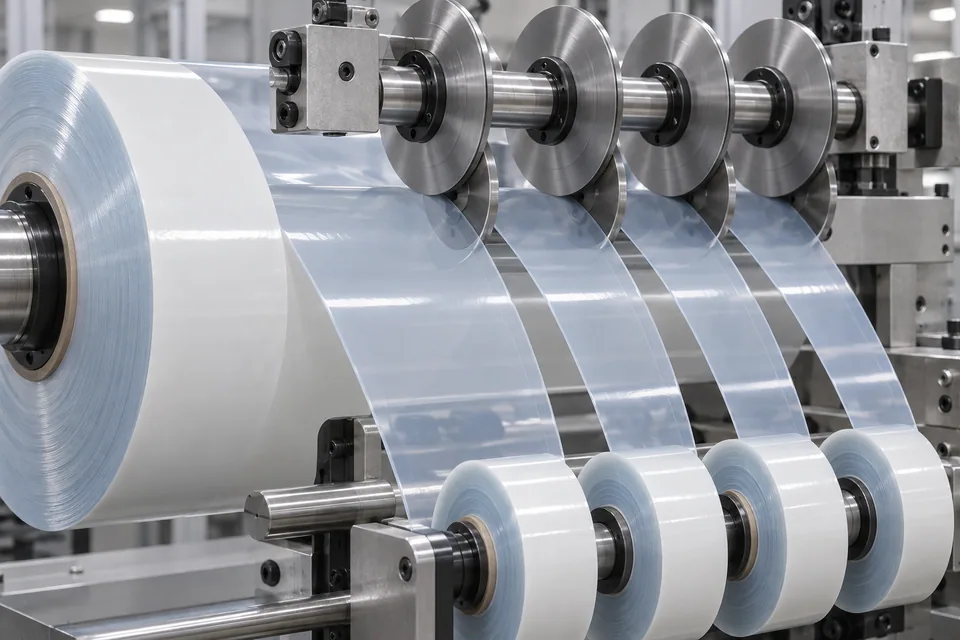
3M identifies polyurethane wind-blade protection tape with pressure-sensitive acrylic adhesive and several roll widths. DIENES describes shear slitting as a travelling-web process using interacting upper and lower circular knives. Combining these facts supports a conditional paired-knife trial on authorized source tape stock. It does not show that a specific commercial tape grade is already qualified for shear cutting. The workpiece is a backing, adhesive and liner laminate; a sharp edge on the polyurethane alone is not sufficient if adhesive is squeezed sideways or the release liner bridges.
Updated
Where This Cutting Application Appears
Confirm the construction and cut line
Obtain the exact protection-tape grade and approved source-roll width. Draw each target lane and specify which face contacts the upper knife. Note liner type, backing thickness and any supplier rules for converting. The blade application drawing controls the final width and edge condition.
Set a controlled shear pair
Use matched circular upper and lower knives on a supported web path. Establish engagement and side loading from the equipment maker’s rules, then refine on real coupons. Too little engagement may leave a liner bridge; excessive compression can smear adhesive or deform the polyurethane backing. Check the first and last lanes because web tracking changes the effective knife contact.
Examine each laminate layer
Inspect backing lip, adhesive sidewall and liner cut under the buyer’s method. Look for strings, compressed ridges, tack exposed beyond the liner and small nicks that can start a tear when the narrow tape is peeled. Examine waste and blade faces for buildup. Repeat inspection after a production-like run so wear or adhesive accumulation does not hide.
Assess wound-roll behavior
Rewind at a controlled tension and compare width along the lane. Verify straight roll faces, clean liner release and no adhesive blocking after the allowed dwell. A paired knife may deliver a good loose strip but a poor wound roll if side pressure curls one edge.
Feed into an application trial
Use a slit length on the intended leading-edge fixture. Verify conformability, liner peel and no edge lift under the product installation procedure. Shear conversion cannot itself demonstrate resistance to rain erosion or long-term adhesion. Record the approved knife setting only for the tested grade and liner combination. An inspection sample should include both edges from an inner lane, since the left and right knife faces can leave different adhesive ridges. Record that difference before changing side load or web orientation.
Define the Required Cut Result
- Use a paired shear mechanism on qualified tape stock.
- Sever backing, adhesive and liner together.
- Limit compressed ridges, stringing and edge curl.
- Deliver narrow rolls that peel and apply correctly.
Problems to Diagnose Before Changing the Knife
Adhesive is squeezed beyond the liner
- Reduce unqualified side pressure.
- Inspect blade buildup and support.
- Check wound turns for blocking.
Liner remains connected at the cut
- Inspect underside and waste.
- Review knife engagement within machine limits.
- Reject rolls that tear during peel.
Knife Forms That May Be Considered
| Possible knife form | When it may be considered | What must be confirmed |
|---|---|---|
| Matched rotary shear pair | For an authorized tape laminate passing edge trials. | Confirm full-stack separation and stable roll build. |
| Replaceable circular shear inserts | For maintained tooling where the machine supports them. | Recheck edge quality after replacement. |
Information to Send for Technical Review
You do not need to know the exact blade name. Send the available workpiece, machine, current-knife and cut-result information so the application can be reviewed against a drawing or sample.
- Approved protection-tape grade and conversion permission
- Backing, adhesive and liner construction
- Target width and lane layout
- Shear station engagement limits
- Edge, peel and installation acceptance
Questions About This Cutting Application
What makes this shear slitting?
Upper and lower circular knives interact to create longitudinal cuts.
Is the adhesive cut alone enough?
No. Backing and liner must also separate as specified.
Why inspect after rewinding?
Blocking and curl may appear only in a wound narrow roll.
Does a shear edge prove blade durability?
No. Installed protection must meet separate product requirements.
Public references and scope
These public sources provide material, cutting-method or safety context for this guide. Supplier pages describe their own materials or equipment; they do not establish a MEIRENTE blade specification or performance claim. Confirm the actual grade, machine setup and required cut with a drawing or sample.
Related product and service information
- Blade-Root Reinforcement Fabric Edge-Trimming Blades - blade-root reinforcement fabric · edge trimming
- Wind-Blade Structural Adhesive Film Shear Slitting Blades - wind-blade structural adhesive film · shear slitting
- Wind-Blade Lightning-Protection Foil Shear Slitting Blades - wind-blade lightning-protection foil · shear slitting
Request a Custom Cutting-Knife Review
Send the workpiece details, machine or holder information, current knife photos or sample, required quantity and examples of the present cut problem. Final dimensions, material, edge geometry and tolerances are confirmed from the approved requirements.