
Blade Application Guides / Application Guide / Technical films
Anti-Fog Packaging Film Rotary Die Cutting
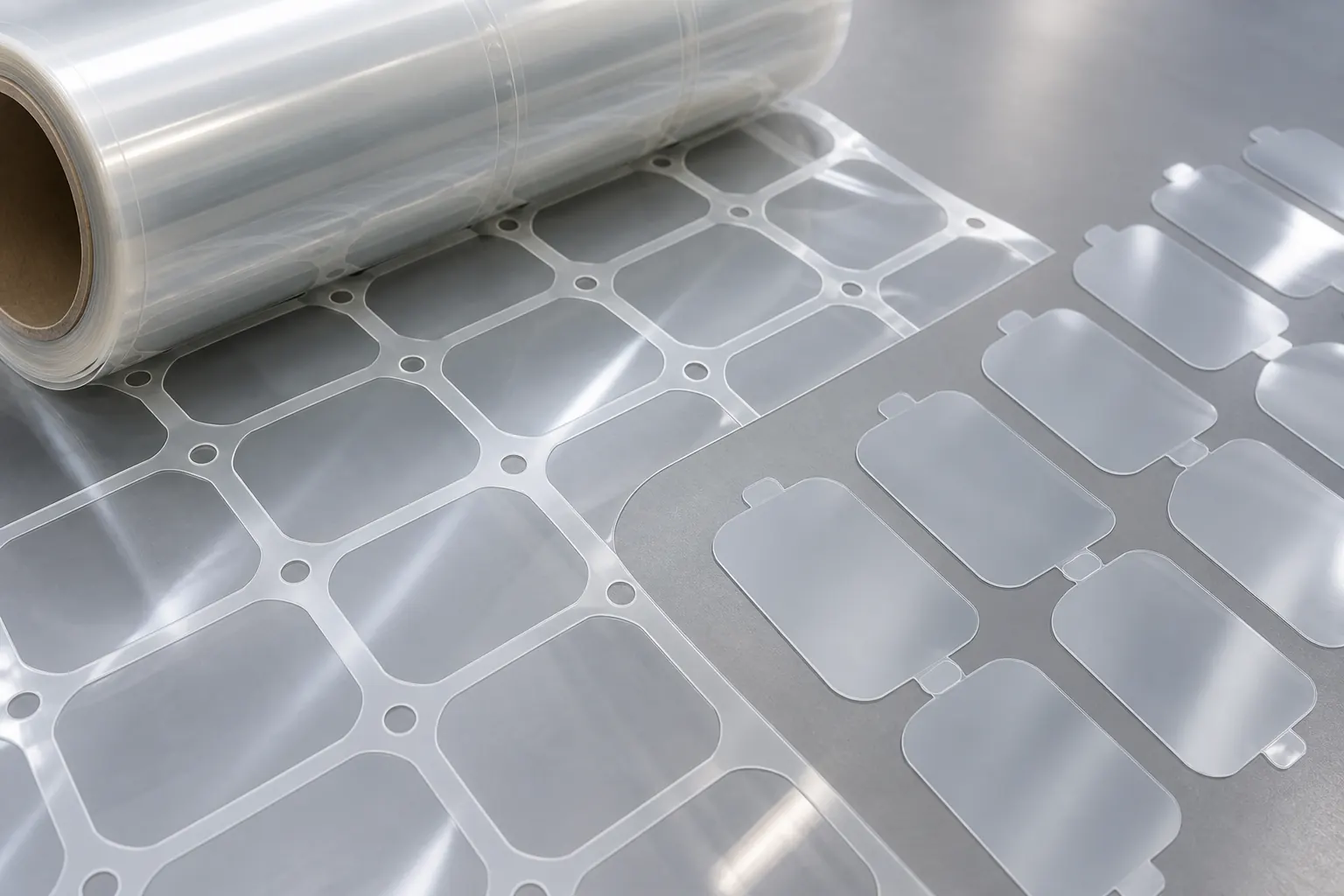
Rotary die cutting can add vents, openings or shaped anti-fog film components for fresh-food packaging. The process must keep loose slugs and treatment residue away from product and seal areas. Feature geometry, registration and treatment performance should be validated after conversion, sealing and cold conditioning.
Updated
Where This Cutting Application Appears
Fresh-produce ventilation features
Create repeated vents that balance package atmosphere and visibility.
Shaped lidding components
Convert anti-fog film profiles for trays, cups or specialized packs.
Access and drainage openings
Cut registered functional features while protecting surrounding seal areas.
Rotary Die Cutting process boundary
Rotary die cutting repeats registered profiles with a rotating tool across a moving web; it differs from straight slitting, cross cutting and simple edge trimming.
Rotary Die Cutting setup checkpoint
Confirm repeat pitch, registration marks, anvil condition, web tension, cutting depth and the waste path for every profile and internal feature.
Rotary Die Cutting acceptance checkpoint
Inspect registration, profile dimensions, corner quality, complete separation or controlled depth, liner condition and continuous waste removal.
Define the Required Cut Result
- Hold feature size and registration to the package datum.
- Prevent loose slugs, strings and treatment flakes.
- Keep the anti-fog face clean and optically functional.
- Protect nearby seal areas during matrix or slug removal.
Problems to Diagnose Before Changing the Knife
Small vent slugs remain in the web
- Review slug retention and removal method.
- Check static and feature density.
- Inspect support and cut consistency.
Treatment streaks around the aperture
- Identify treated face and surface chemistry.
- Map contact during cutting and stripping.
- Compare performance after chilling.
Vent pattern shifts toward the seal
- Define package and print datums.
- Review web tension and repeat control.
- Measure drift across production rolls.
Waste removal wrinkles thin film
- Review matrix strength and stripping angle.
- Check web restraint and static.
- Inspect narrow bridges around features.
Knife Forms That May Be Considered
| Possible knife form | When it may be considered | What must be confirmed |
|---|---|---|
| Rotary profile die arrangement | For repeated vents or shapes in supported anti-fog packaging web. | Confirm feature drawing, repeat, resin stack, support, interface, slug and waste handling. |
| Rotary perforating arrangement | For controlled tear or ventilation patterns using retained bridges. | Confirm hole or bridge pattern, package function, opening test, cleanliness and registration. |
Information to Send for Technical Review
You do not need to know the exact blade name. Send the available workpiece, machine, current-knife and cut-result information so the application can be reviewed against a drawing or sample.
- Film resin, gauge, layers and anti-fog treatment
- Treated-face and food-contact orientation
- Feature drawing, density, repeat, datum and tolerance
- Print, package and seal-zone registration requirements
- Speed, tension, temperature, humidity and static conditions
- Rotary station interface, support and current sample
- Slug retention, extraction, matrix stripping and contamination controls
- Fog, seal, cleanliness and cold-chain acceptance tests plus volume
Questions About This Cutting Application
Why are loose vent slugs a serious issue?
They may contaminate the package, seal interface or downstream equipment and therefore require defined control.
Can die cutting reduce anti-fog performance?
Surface rubbing, treatment transfer or contamination may affect local performance, so converted samples should be tested.
How close can a feature be to a seal?
That must follow the package design and validated seal testing; it cannot be set from film type alone.
Why does thin waste wrinkle during stripping?
Low matrix strength, static, tack, geometry and stripping load can distort the web.
What is required before defining a perforation?
Provide ventilation or tear function, pattern, bridge requirement, package orientation and end-use test method.
Related product and service information
- Anti-Fog Packaging Film Cross Cutting - anti-fog packaging film · transverse cross cutting
- Window Tint Film Rotary Die Cutting - window tint film · rotary die cutting
- Holographic Transfer Film Rotary Die Cutting - holographic transfer film · rotary die cutting
Request a Custom Cutting-Knife Review
Send the workpiece details, machine or holder information, current knife photos or sample, required quantity and examples of the present cut problem. Final dimensions, material, edge geometry and tolerances are confirmed from the approved requirements.