
Blade Application Guides / Application Guide / Technical films
Holographic Transfer Film Rotary Die Cutting
Rotary die cutting holographic transfer film may create registered security features, decorative shapes or transfer patches. Because an optical motif can be both functional and visually inspected, profile position and coating integrity must be evaluated together. The required cut may involve the carrier, transferable layers or a liner, so the finished layer relationship must be explicitly defined.
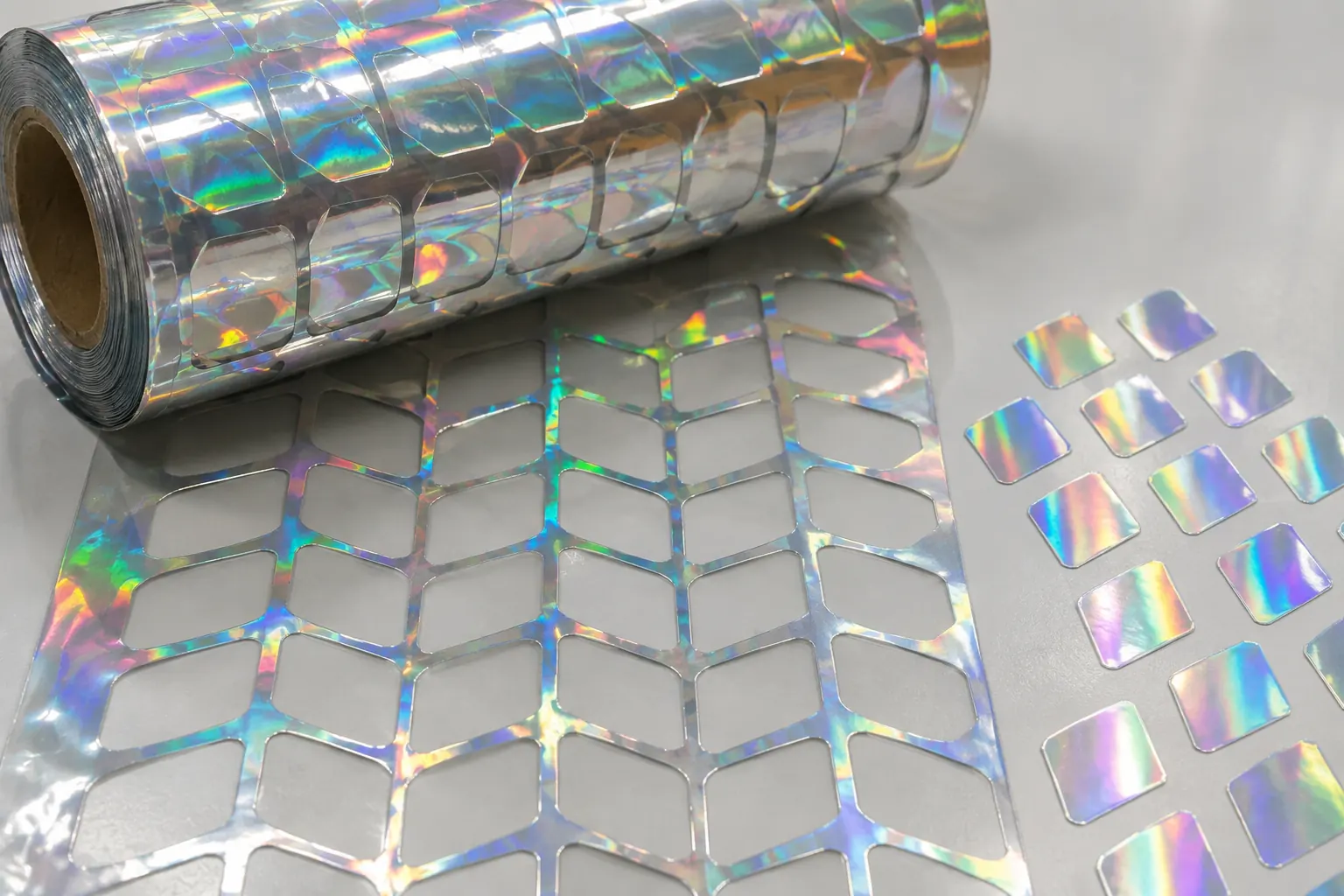
Where This Cutting Application Appears
Registered security patches
Cut optical features to a controlled profile and datum for later transfer or integration.
Decorative transfer motifs
Create repeated shapes while preserving reflective edges and visual consistency.
Holographic labels or inserts
Convert discrete components with defined release and waste-removal behavior.
Common Ways to Describe This Cutting Problem
- holographic transfer film rotary die-cutting blades
- registered hologram security patch die cutter
- rotary profile cutting holographic hot stamping foil
- die cut diffractive transfer film shapes
- holographic motif to cut registration
- prevent metallized flakes around hologram profile
- security foil waste matrix stripping
- custom rotary die review for optical transfer film
Define the Required Cut Result
- Hold profile position to the selected optical datum.
- Prevent visible coating fracture, flakes and perimeter haze.
- Release finished shapes without curl or surface scratching.
- Strip waste reliably without displacing registered features.
Problems to Diagnose Before Changing the Knife
Profile is offset from the holographic motif
- Define a measurable optical datum.
- Review sensor response and repeat variation.
- Check skew and web-tension changes.
Reflective coating fractures around tight radii
- Inspect layer adhesion and corner geometry.
- Compare web orientations and support.
- Use magnified directional-light samples.
Small parts remain in the waste
- Review release layer and stripping angle.
- Check static and part-retention method.
- Inspect geometry around narrow bridges.
Converted patch curls after separation
- Record carrier and coating stress balance.
- Mark web direction.
- Measure after consistent conditioning.
Knife Forms That May Be Considered
| Possible knife form | When it may be considered | What must be confirmed |
|---|---|---|
| Registered rotary profile die arrangement | For repeated shapes aligned to an optical motif or printed datum. | Confirm datum, repeat, layer stack, press interface, support, waste layout and approved drawing. |
| Rotary kiss-cut arrangement | When selected holographic layers or a face material must separate while a carrier remains. | Confirm exact layer relationship, release construction, depth acceptance and matrix removal trial. |
Information to Send for Technical Review
You do not need to know the exact blade name. Send the available workpiece, machine, current-knife and cut-result information so the application can be reviewed against a drawing or sample.
- Carrier, transferable, release, embossed, metal and protective layers
- Required cut-through or kiss-cut layer relationship
- Optical motif, datum, repeat, web direction and registration tolerance
- Profile drawing, radii, pitch and finished-part dimensions
- Speed, tension, sensor, static and cleanliness conditions
- Rotary station interface, support and existing tooling sample
- Matrix layout, stripping direction, part retention and collection
- Limits for flakes, haze, scratches, curl and downstream transfer result
Questions About This Cutting Application
How is cut-to-hologram registration defined?
Choose a stable visible or machine-readable motif datum and specify position tolerance in both web directions.
Why are tight corners risky?
They concentrate stress and can make brittle optical coatings crack or flake even when the carrier separates.
Can the carrier remain uncut?
Possibly, but only when the required layer relationship and release construction support a controlled kiss cut.
Why do tiny pieces move during stripping?
Low mass, static, release variation and matrix forces can overcome their adhesion or retention.
What should a trial include?
Evaluate registration, coating perimeter, matrix release, part curl, cleanliness and the final transfer process.
Request a Custom Cutting-Knife Review
Send the workpiece details, machine or holder information, current knife photos or sample, required quantity and examples of the present cut problem. Final dimensions, material, edge geometry and tolerances are confirmed from the approved requirements.