
Blade Application Guides / Application Guide / Technical films
Window Tint Film Rotary Die Cutting
Rotary die cutting can create tint-film shapes, samples or installation components while leaving a release liner intact or cutting through the full laminate. The cutting depth strategy cannot be assumed from the product name. It must follow the required finished construction, liner function, optical face and waste-removal sequence.
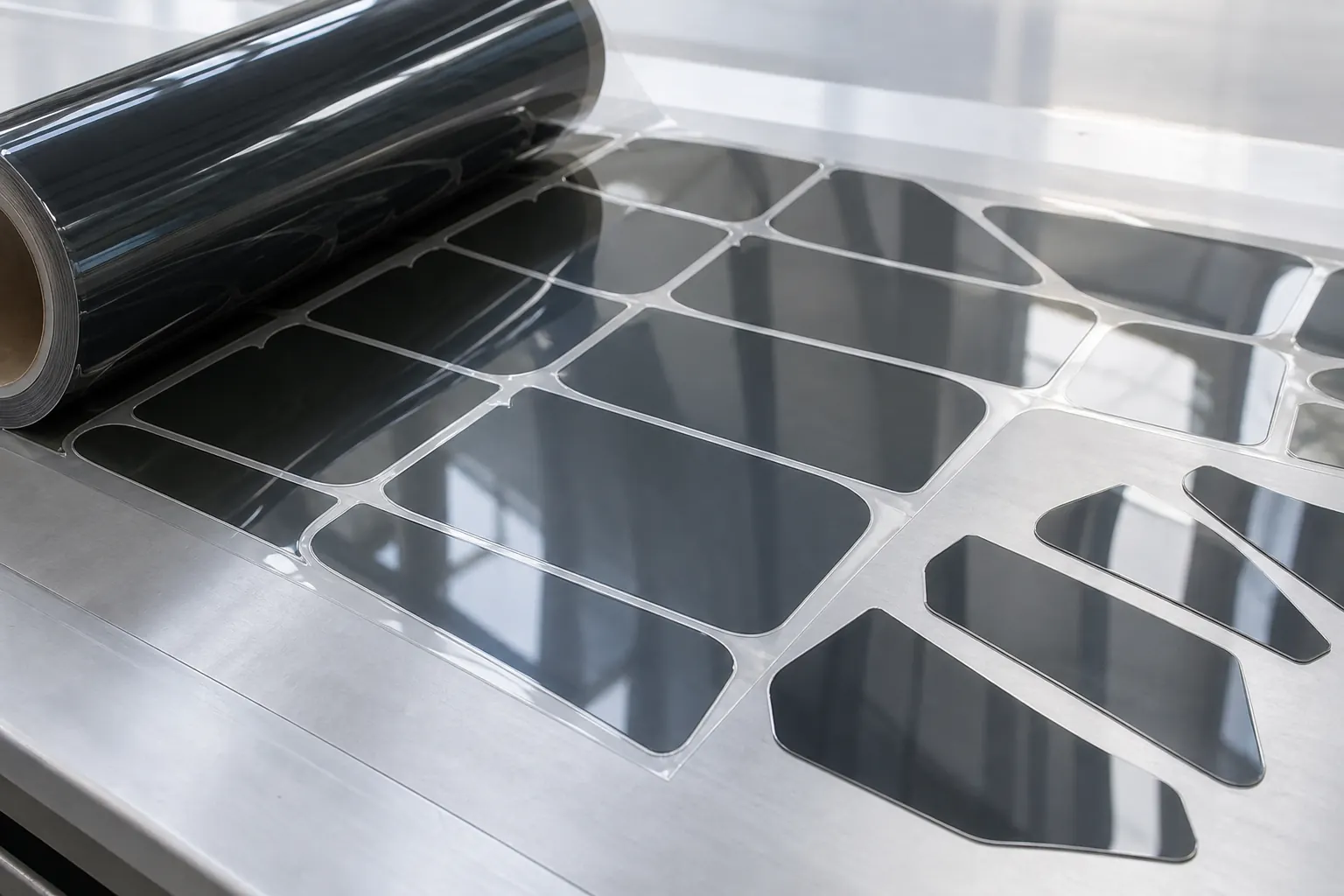
Where This Cutting Application Appears
Precut vehicle tint patterns
Convert adhesive tint shapes while retaining controlled liner support for handling.
Architectural decorative motifs
Produce repeated privacy or solar-control film elements with clean visible perimeters.
Tint sample swatches
Create consistent demonstration pieces without scratching the optical face.
Common Ways to Describe This Cutting Problem
- window tint film rotary die-cutting blades
- kiss cut adhesive automotive tint film
- rotary profile cutting architectural window film
- die cut privacy film shapes on release liner
- window tint sample swatch rotary cutting
- protect hard coat during tint film die cutting
- weed matrix from adhesive solar control film
- custom rotary die review for lined window film
Define the Required Cut Result
- Control whether the liner remains intact or is fully separated.
- Hold profile registration and relaxed dimensions.
- Avoid coating haze, adhesive strings and liner debris.
- Remove surrounding matrix without lifting usable shapes.
Problems to Diagnose Before Changing the Knife
Liner is cut when it should remain intact
- Document liner thickness and release level.
- Map cut-through positions across the web.
- Review support and material gauge variation.
Usable shape lifts with the matrix
- Check release balance and feature corners.
- Review stripping angle and speed.
- Inspect adhesive ooze and static.
Profile shrinks or curls after weeding
- Measure after defined conditioning.
- Mark web orientation and winding memory.
- Review residual stress in the laminate.
Hard coat is visibly marked
- Map all contact surfaces.
- Check particles and matrix rubbing.
- Compare protected and exposed faces.
Knife Forms That May Be Considered
| Possible knife form | When it may be considered | What must be confirmed |
|---|---|---|
| Rotary kiss-cut die arrangement | When the tint shape must separate while a release liner remains as the carrier. | Confirm all layer gauges, required cut depth, release level, support, repeat and trial acceptance. |
| Rotary through-cut profile arrangement | When the complete film-and-liner construction is separated into discrete pieces. | Confirm profile, part retention, slug handling, delivery, cylinder interface and approved drawing. |
Information to Send for Technical Review
You do not need to know the exact blade name. Send the available workpiece, machine, current-knife and cut-result information so the application can be reviewed against a drawing or sample.
- Complete tint-film, coating, adhesive and liner stack
- Required kiss-cut or through-cut layer relationship
- Profile drawing, web direction, repeat and dimensional tolerance
- Optical-face orientation and protected contact surfaces
- Line speed, tension, temperature and registration method
- Rotary interface, support cylinder and existing tooling sample
- Matrix layout, stripping direction and finished-part delivery
- Accepted limits for liner marks, haze, adhesive strings and particles
Questions About This Cutting Application
What is the difference between kiss cutting and through cutting?
Kiss cutting separates selected upper layers while retaining a carrier liner; through cutting separates the complete stack.
Can nominal total thickness set cut depth?
No. Layer variation, liner construction, support and process capability must be evaluated with trial samples.
Why do corners lift during weeding?
Sharp geometry, release balance, stripping direction, adhesive tack and static can concentrate lifting force.
How is optical quality checked?
Inspect both reflected and transmitted light under controlled conditions before and after matrix removal.
What must a drawing identify?
It should show profile, datum, repeat, cut layer relationship, web direction and critical tolerances.
Request a Custom Cutting-Knife Review
Send the workpiece details, machine or holder information, current knife photos or sample, required quantity and examples of the present cut problem. Final dimensions, material, edge geometry and tolerances are confirmed from the approved requirements.