
Blade Application Guides / Application Guide / Thermal insulation fabrication
Aerogel Insulation Blanket Cutting Blades
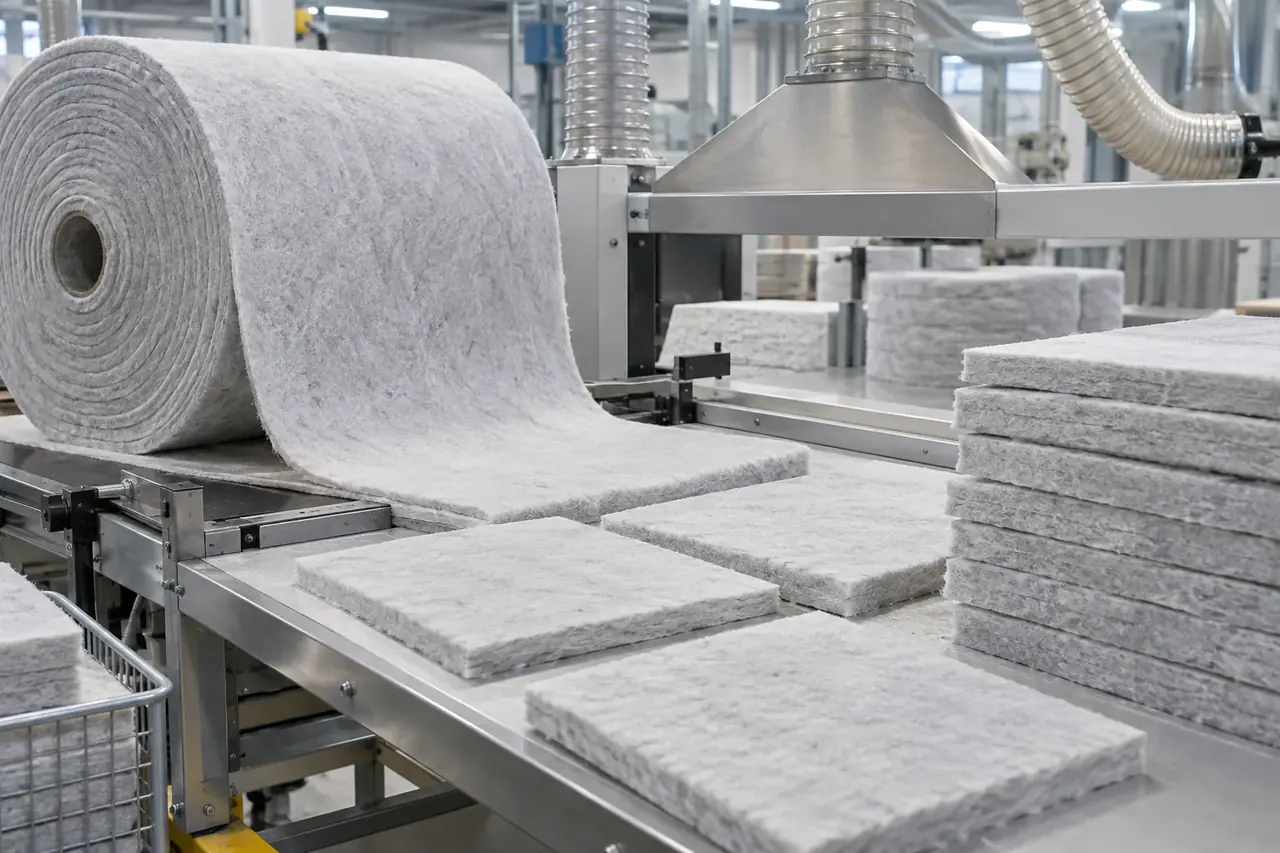
Aerogel insulation blanket cutting blades are used to size rolls, sheets and fabricated insulation profiles before installation or component assembly. The cutting review should account for the supplied blanket construction, any facing or reinforcement, compression during support, dust-control requirements, finished geometry and the way cut pieces will be collected and packaged.
Updated
Where This Cutting Application Appears
Blanket roll width conversion
Wide aerogel blanket stock is divided into narrower formats for later fabrication, packing or installation preparation.
Sheet and panel sizing
Blanket material is cut into rectangular pieces according to an approved cutting list or layout.
Fabricated insulation profiles
Openings, corners and defined outer contours are prepared for insulation kits or component-specific coverage.
Blanket Sizing And Profile Cutting process boundary
Blanket sizing and profile cutting for Aerogel insulation blanket is a linked sequence: the output condition and datum from each operation become the controlled input for the next. It should not be evaluated as one generic cut or accepted only by the final dimension.
Blanket Sizing And Profile Cutting setup checkpoint
For Aerogel insulation blanket, define the operation order, intermediate dimensions, registration transfer, material support, web or part handling and waste route for every stage of Blanket sizing and profile cutting.
Blanket Sizing And Profile Cutting acceptance checkpoint
Verify both intermediate and final results from Blanket sizing and profile cutting, including dimensions, registration, edge or feature quality, material damage, waste separation and stable transfer between stages.
Define the Required Cut Result
- Complete separation without excessive pulling of reinforcement or facing layers.
- Controlled profile geometry after the blanket recovers from normal cutting support.
- Reduced loose edge fragments and managed dust through cutting and collection.
- Finished pieces that remain identifiable, flat and protected during packing.
Problems to Diagnose Before Changing the Knife
Dust release and loose edge fragments
- Confirm the supplied blanket construction and identify reinforcement or facing layers.
- Observe where dust is generated and how it is collected around the cut path.
- Use the customer's inspection and housekeeping requirements to compare trial results.
Reinforcement frays or remains uncut
- Inspect which layer remains connected and its orientation within the blanket.
- Compare straight cuts, corners and profile transitions on the same sample.
- Review support and material movement at the location of incomplete separation.
Compressed or distorted cut edge
- Record the support and hold-down method used during cutting.
- Inspect geometry both immediately after cutting and after normal recovery.
- Distinguish temporary compression from permanent tearing or layer displacement.
Profile dimensions change during handling
- Confirm how the flexible piece is supported when measured.
- Review unloading, stacking and packaging for stretching or edge displacement.
- Compare measurement references with the approved drawing and installation need.
Knife Forms That May Be Considered
| Possible knife form | When it may be considered | What must be confirmed |
|---|---|---|
| Serrated blanket cutting arrangement | For separating thicker or reinforced flexible blanket stock where a sawing-style edge action suits the existing process. | Blanket construction, facing layers, support method, machine motion and accepted edge condition. |
| Straight sizing arrangement | For producing rectangular sheets or strips from roll and sheet stock. | Cutting list, material orientation, support area, collection method and dimensional inspection. |
| Custom profile cutting arrangement | When fabricated insulation pieces require openings, corners or non-rectangular outlines. | Controlled profile drawing, feature layout, part support, waste removal and packing sequence. |
Information to Send for Technical Review
You do not need to know the exact blade name. Send the available workpiece, machine, current-knife and cut-result information so the application can be reviewed against a drawing or sample.
- Aerogel blanket product description, supplied construction and representative samples.
- Identification of reinforcement, facing, backing or protective layers.
- Roll or sheet format, finished cutting list and controlled profile drawings.
- Material orientation, support, hold-down and unloading sequence.
- Machine position, available interface information and current cutting method.
- Photographs of dust, fray, incomplete cuts, compression and accepted edges.
- Dust-control, contact, collection and packaging requirements.
- Inspection method, trial quantity and repeat-production expectations.
Questions About This Cutting Application
Can aerogel insulation blanket cutting blades be selected by blanket thickness alone?
No. Construction, reinforcement, facing, support, profile geometry and dust requirements also need review.
When should the finished piece be measured?
Use the customer's defined condition and note whether the flexible blanket is supported, compressed or allowed to recover.
What defect photographs are most useful?
Show the full part plus close views of dust, frayed reinforcement, connected areas, compressed edges and profile transitions.
Why must facing layers be identified?
A facing or backing may cut and separate differently from the blanket body and can change the accepted edge result.
Should unknown aerogel blanket data be estimated?
No. Keep unknown specifications unconfirmed and base the review on samples, supplier information and documented trials.
Related product and service information
- Stone Wool Lamella Mat Cross-Cutting Blades - Foil-faced stone wool lamella mats · Cross-cutting and profile sizing
- Corrugated Carton Slotting Without Liner Tear - corrugated carton blanks · slotting
- Masking Tape Log Cutting With Clean Roll Faces - masking tape logs · log cutting
Request a Custom Cutting-Knife Review
Send the workpiece details, machine or holder information, current knife photos or sample, required quantity and examples of the present cut problem. Final dimensions, material, edge geometry and tolerances are confirmed from the approved requirements.